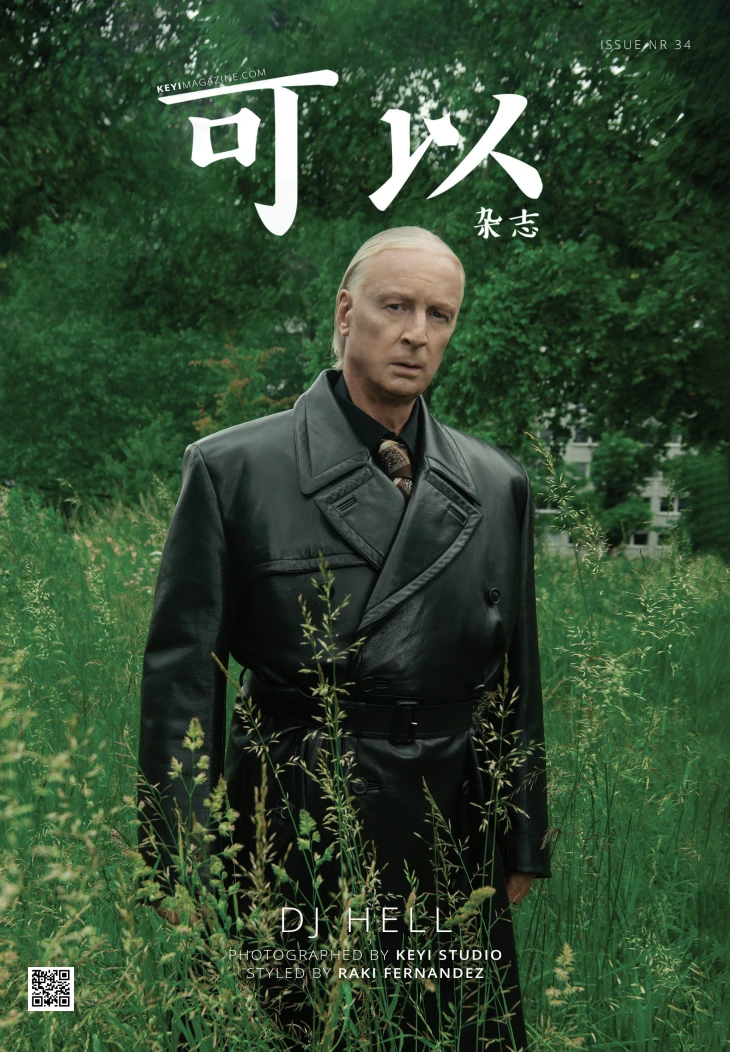
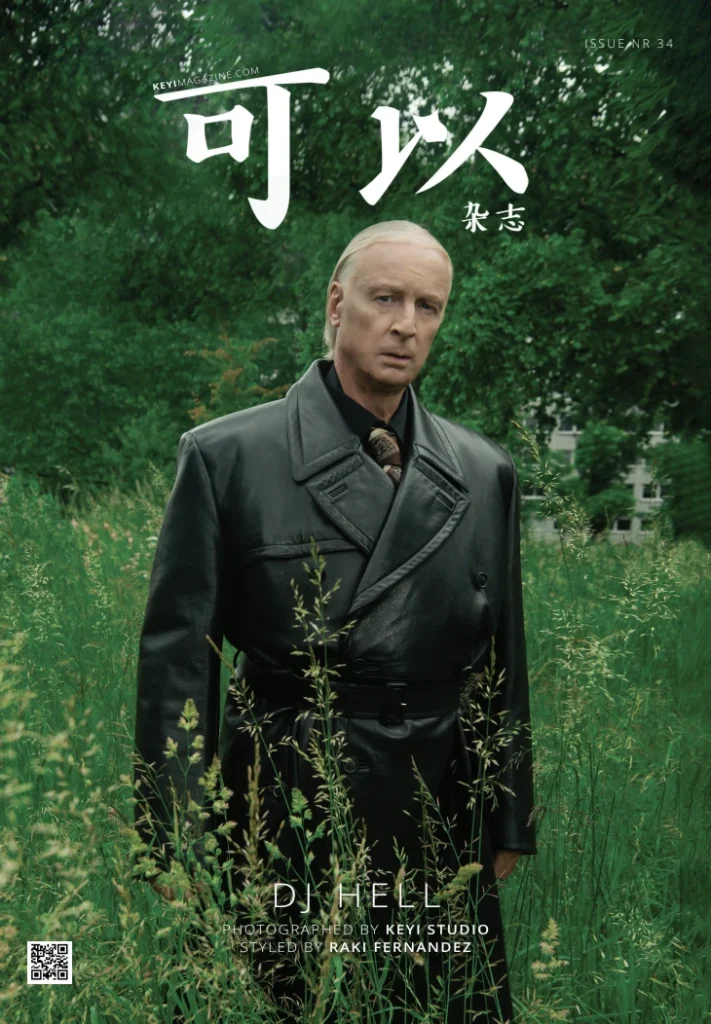
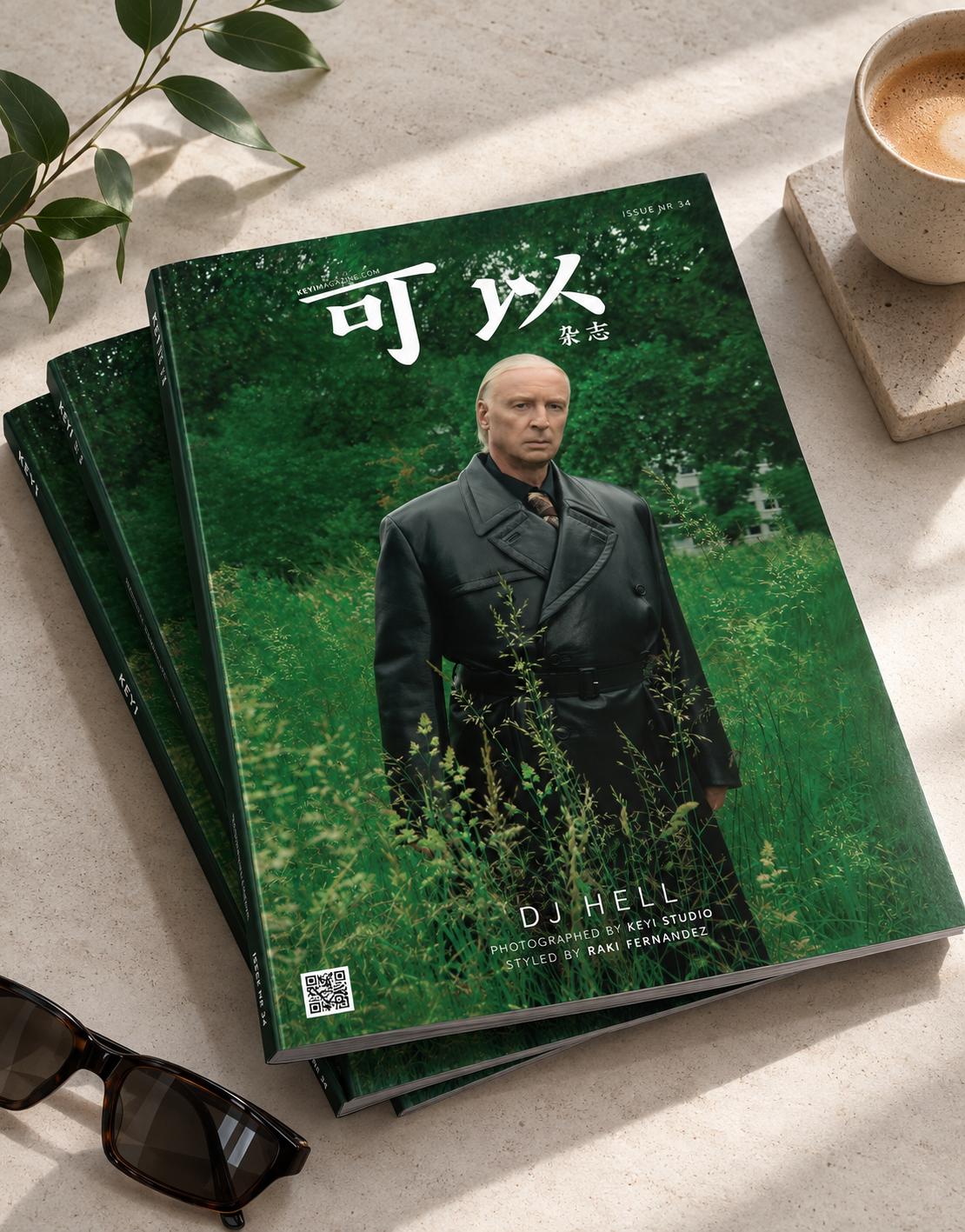
Few figures in electronic music embody the collision of past, present, and future as DJ Hell. For nearly five decades, the Bavarian-born provocateur has moved restlessly between worlds: Munich discotheques and Berlin basements, New York churches turned nightclubs, fashion runways in Paris, studios in Cape Town, and festival stages across the globe.
Born Helmut Geier, he has been called many things: innovator, iconoclast, even the godfather of electroclash as DJ HELL. His label, International Deejay Gigolo Records, defined an era when art, fashion, and music collided head-on, releasing game-changing records by Miss Kittin & The Hacker, Fischerspooner, Tiga, Vitalic, Dopplereffekt, and Peaches. But long before Gigolo, he was already shaping nightlife — as a resident DJ at Munich’s Libella, as one of the first Germans to champion house and techno, and as a trusted collaborator to figures like Jeff Mills.
Now, as he reflects on fifty years in nightlife, he remains restless: planning a biography, dreaming of futuristic live shows with avatars and holograms, and still pushing music into spaces where it doesn’t quite belong yet. In conversation, Hell is equal parts storyteller and provocateur, laughing as often as he drops history.
Awesome. It’s so nice to have you here again. Let’s start with something simple: our theme today is past, present, future or no future. So: who is DJ Hell?
Wow, that’s the start? Okay. Who am I… I’m still a DJ traveling the world. It’s hard to define yourself. Honestly, I don’t think I’ve changed much since the first time I stepped into a nightclub and tried to play music people might enjoy.
The difference is, back then I was so excited I couldn’t stand behind the decks — I’d always run to the dancefloor. That’s changed. (laughs)
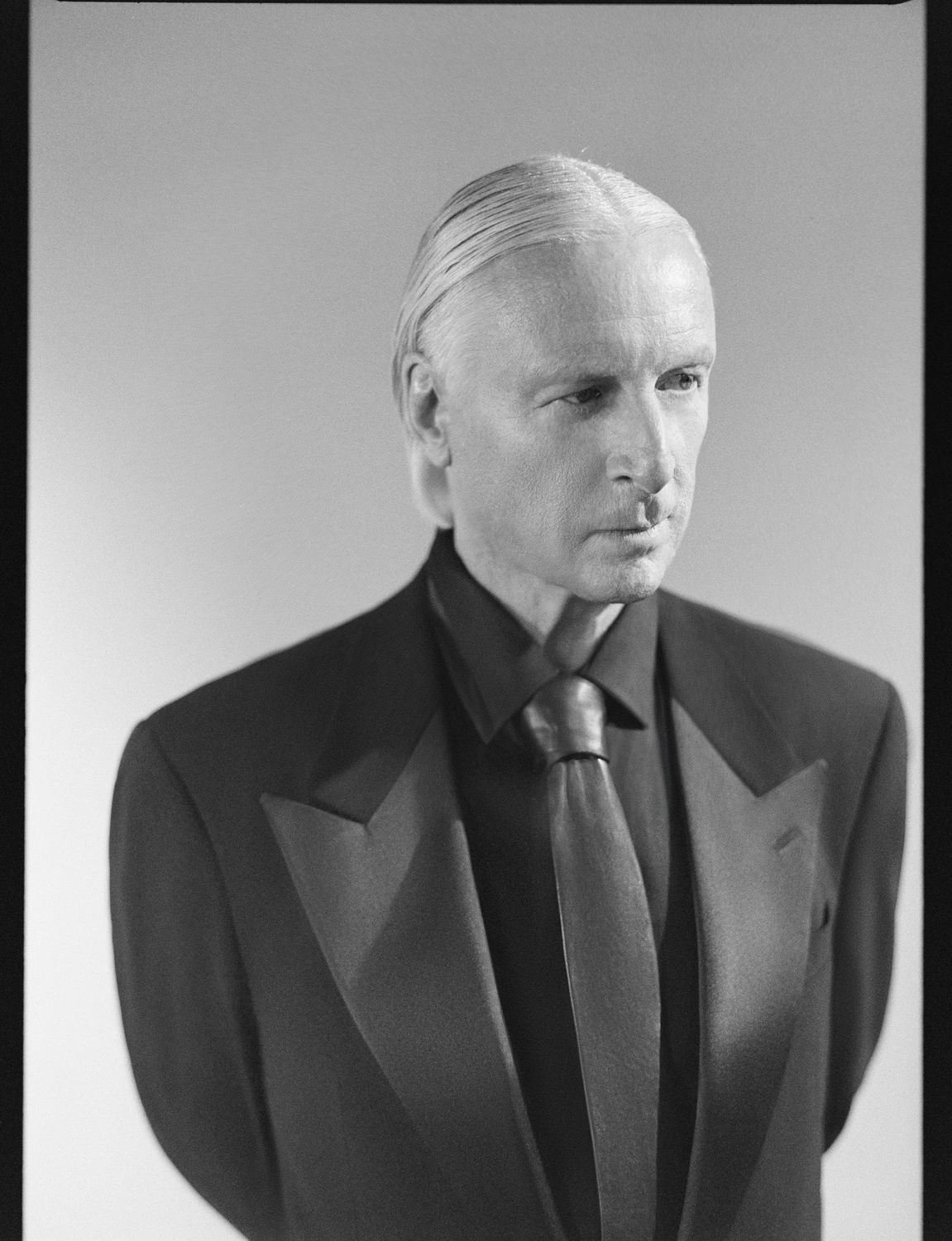
Now I do a lot of productions, remixes, collaborations. I never made a master plan like others do, timing everything perfectly. I just go with what inspires me. Even this suit I’m wearing — I designed it for a German brand called Trigema, and it’s coming out in two months. I love collaborations, like Adidas does with different artists.
I’m also reaching out to fashion and outdoor designers. Just last week I contacted a Munich-based brand with a Japanese designer whose work I love. That’s who I am: always asking what’s next, what haven’t I touched yet? Musically too — I push limits, explore new areas.
There’s still so much I haven’t done. I want to write my biography. Some film directors want to do a documentary about my life. That’s a big project. I’m glad people are interested — not just doing things for no one to notice. I don’t feel like “the old guy who doesn’t get it anymore.” If anything, I’m pushing harder than ever.
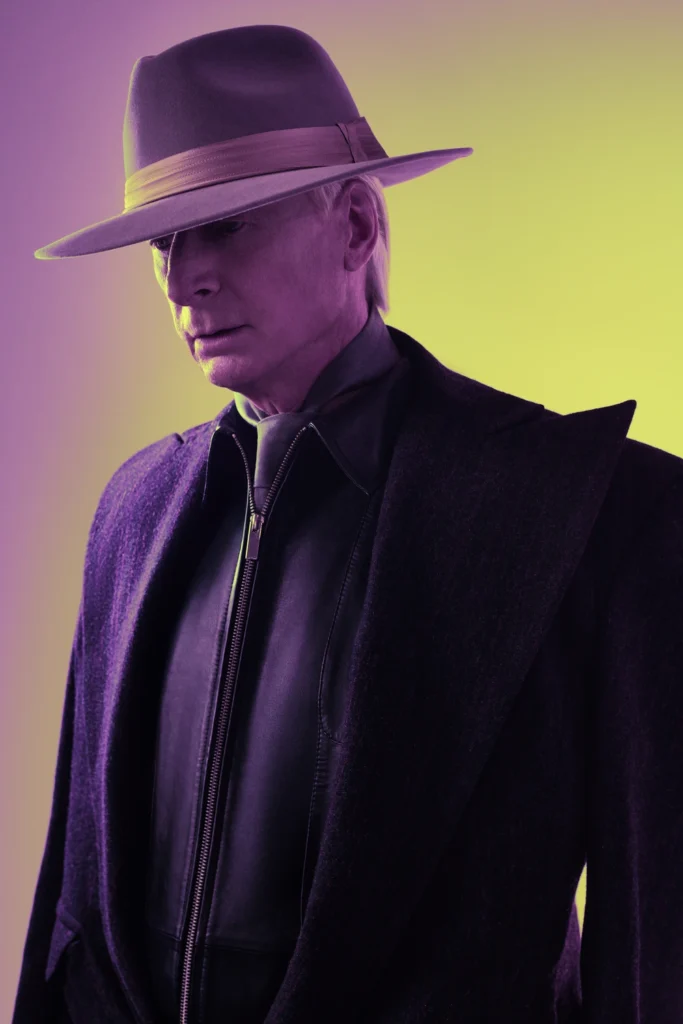
There’s still so much I haven’t done. I want to write my biography. Some film directors want to do a documentary about my life. That’s a big project. I’m glad people are interested — not just doing things for no one to notice. I don’t feel like “the old guy who doesn’t get it anymore.” If anything, I’m pushing harder than ever.
Let’s rewind. How did you first get into music?
I think about that question a lot. When I was about 14 or 15, I was already playing records in a youth center. My friends were busy with pool, table soccer, pinball, but I was the one behind the turntable. It wasn’t even called “DJing” then — someone just had to play the records.
There was one track I couldn’t stop playing: Love Machine by Supermax, an Austrian band. I repeated it ten times in a row, on one turntable — no mixing, just restarting it. People loved it, and I loved dancing to it too. That was probably my real beginning, even if I didn’t realize it then.
Later, in the early ’80s, we formed a group to play new kinds of music: punk, new wave, ska, dub. And soon after, house records arrived, then acid, then Detroit techno — an explosion of innovation.
And I’ll never forget when Run-DMC and DJ Scratch walked into my club one night. They didn’t bring their records, but I had doubles of breakbeat compilations. Suddenly we had a live jam session: me, DJ Scratch, and Run-DMC freestyling on the mic. Someone even recorded it, though I never found the tape. That was one of the greatest moments of my career.
And your first residency?
That was at Club Libella in the mid-’80s. A promoter who’d heard me in Bavaria offered me the job. Back then, being a DJ meant being a resident — you had one club, your home, with its own huge record collection.
Suddenly, people came from all over, and I thought: maybe I’m good enough for Munich, or Berlin. So I jumped. I was one of the first in Munich to play house music — Farley “Jackmaster” Funk, James “JM” Silk, 1985 stuff. That’s when I really learned proper mixing.
And I’ll never forget when Run-DMC and DJ Scratch walked into my club one night. They didn’t bring their records, but I had doubles of breakbeat compilations. Suddenly we had a live jam session: me, DJ Scratch, and Run-DMC freestyling on the mic. Someone even recorded it, though I never found the tape. That was one of the greatest moments of my career.
Incredible. And from there you moved into production?
My first single was My Definition of House Music, in 1992 on R&S Records — one of the biggest techno labels then. Aphex Twin, Joey Beltram, all those legends were there. My track did really well — probably the most-sold record I ever released. Funny enough, I recorded it while working at Logic Records in Frankfurt, the label behind Snap! (“Rhythm is a Dancer”). They let me use their amazing studio while they were in Ibiza.
I pressed white labels, handed them out at Love Parade, and Renat from R&S signed it on the spot after hearing me play it. That was my real breakthrough.
At the same time you were involved with clubs like Tresor and E-Werk.
Yes, I was resident at both. E-Werk leaned more into house, while Tresor’s basement was pure techno — hard, raw, Detroit-inspired. I even played hardcore and gabber for a while. But after a festival in Holland, where I realized my 160 BPM “fast techno” wasn’t enough for real gabber heads, I knew it wasn’t my path. That was a turning point: I shifted back to house, electro, Italo, the more innovative side of things.
And then came your labels — first Disko B, later International Deejay Gigolo.
Exactly. Disko B was a Munich label, and I was involved in its early releases. We reissued Silicon Soul’s Who Needs Sleep Tonight?, which had been a super-rare New York art-disco record. To finance the license, I even sold original copies I got from the band. (laughs) Strategic thinking!
But by 1996, I wanted something of my own. That’s when Jeff Mills pushed me: “Hell, it’s time to start your own label.” He even gave me the name: International Deejay Gigolo Records. And he gave me one of the first releases, Shifty Disco.
Jeff taught me a lot. Keep contracts one-page, simple. Don’t be afraid of little mistakes in tracks — if it’s funky, it works. He’s still, in my opinion, the most innovative techno artist ever.
Looking back, your story is full of connections — hip hop, disco, house, techno, fashion, art. Always pushing forward.
Yes. That’s me. I don’t want to repeat the past. I want to discover what I’ve never touched yet — musically, conceptually, visually. That’s my drive.
Somewhere in my collection, I still have a dubplate from back then. I could do it again, you know? (laughs) Good idea. But, uh… so there was never an album he did — no, he was thinking about my concepts, but there was no Hell Purpose Maker release. We tried, we really tried hard. We were close, really close. And I respect him so much. He’s one of the greatest innovators in electronic and techno music.
You mentioned New York before — yes, I was resident at Limelight. That was something else. A church turned into a nightclub. Can you imagine? It was crazy. One of the most amazing places I’ve ever played.
There was a Wednesday night called Disco 2000 — still going at that time. They had cage dancers in fetish costumes, hanging on chains, lifted twenty meters above the dancefloor. Two thousand people below, and suddenly — it started raining money. Real dollar bills, maybe three thousand dollars in singles, just falling on the crowd. People going insane, scrambling for them. Every week. And then there was the Hot Body Contest: people got naked on stage, and whoever got the loudest reaction from the crowd won a thousand dollars.
Me and Jeff played there, really hard, technical stuff. Early ’90s hardcore techno — and people loved it. That was New York: excess, danger, pure energy.
And then, yes, Gigolo Records. Such an amazing list of artists. And people call me one of the founders of electroclash. That’s true. Miss Kittin & The Hacker, Tiga, Fischerspooner, Vitalic, David Carretta, Peaches… legends now. But in the late ’90s, it was all new.
In 1998 I was living in New York, and I was getting music from everywhere — Australia, France, the UK, the U.S. I felt something growing. So I said: let’s give it a name. Electroclash. That was my idea. Later, another guy made a festival and used the name — I won’t say who, it doesn’t matter. At first we worked together: I brought the music, the artists, the concept. He was supposed to do promotion. But then he started booking people who had nothing to do with it — his friends, not real artists. I hated that. So I walked away.
But make no mistake: electroclash was Gigolo Records. Every artist, every real release, came through us. Fischerspooner’s first show in Berlin, Miss Kittin exploding, Tiga, Vitalic, Dopplereffekt, even Peaches with her raw drum programming that sounded more like a rock drummer than a techno machine. That was the scene. The true story.
But make no mistake: electroclash was Gigolo Records. Every artist, every real release, came through us. Fischerspooner’s first show in Berlin, Miss Kittin exploding, Tiga, Vitalic, Dopplereffekt, even Peaches with her raw drum programming that sounded more like a rock drummer than a techno machine. That was the scene. The true story.
Now, funny enough, electroclash is back again. A new generation is rediscovering it. I call it New Electroclash. Cycles. It surprises me how quickly it returned, but I love it.
My second album, Munich Machine, came out around that time. Many of the tracks were made in South Africa, during a holiday in Cape Town. We had just samplers and small equipment in a rented house. Limitations, but good ones. Songs like Suicide Commando or Copa Copacabana. People still remember that one. Not my best track, but it stuck.
Fashion was always there too. Gigolo became popular, and suddenly fashion designers wanted our music for catwalks. Raf Simons, Donatella Versace, Hugo Boss. I produced soundtracks, sometimes even costumes. With Gigolo, art, fashion, and music were one world. The covers, the videos, the visuals at festivals — we always pushed that connection.
Every Love Parade, I did the last Sunday night at VMF club in Berlin. I invited every Gigolo artist. No fees, just flights, hotel, food. Thirty-five artists in one night. First Fischerspooner show. Vitalic’s first live set. Dopplereffekt, Terence Fixmer, Miss Kittin, all on stage. Those were historic nights.
I even got photographed by Karl Lagerfeld once, for V Magazine. In Paris, heavy makeup, haircut I didn’t want, a suit. Honestly, I didn’t like the photo — it wasn’t me, it was Lagerfeld’s fantasy of me. But the experience of meeting him, watching him work — unforgettable.
Then came the reissues. Fifteenth anniversary of Teufelswerk. Distribution asked me, because the original was selling for crazy prices on Discogs. So we made a special version: new cover, poster, colored vinyl. That album is maybe my best work — with Bryan Ferry, P. Diddy, so many. Still proud of it.
And about new generations: I saw Rampa, Adam Port, &ME — Keinemusik — go from underground Berlin kids to the biggest DJs in the world. I knew them early, even released Rampa on Gigolo. They worked hard, and what they do is innovative. I support them 100%. Success always brings jealousy, especially in Germany, but they deserve everything.
For myself, I’ve got twenty unreleased tracks from the pandemic. Some will be on my next album. One already went to you on Flexidisc. (laughs) Sneak peek.
The future? Writing my biography — fifty years in nightlife, art, fashion, music. There’s so many stories. Also a documentary, but unlike others I want it full of music, not just talking heads. And Munich Machine — a theater project, telling Munich’s story with soundtracks, not just club beats.
I’ve never done a live show. I don’t want to stand on stage with machines — boring. I want something futuristic. Holograms, avatars, even smells. I experimented with a digital version of myself performing. Imagine me playing Berlin, Tokyo, and Paris simultaneously — all avatars, controlled live. That’s my dream.
I remember Gary Numan with Tubeway Army, driving a futuristic car on stage, musicians on towers, fog on the floor. Not a band, but a spectacle. That’s the level I want. A two-hour show that’s truly new.
And Asia? I’ve played Beijing, Shanghai, Hong Kong. Early on, the government didn’t trust techno — no lyrics, no message, just beats. They didn’t know how to handle it. Mostly tourists came to the clubs then. I wanted the Chinese kids to hear it, but they weren’t there yet. Only one DJ — a comedian with a radio show — was allowed to play techno. Because he was funny, they tolerated it. I went on his show. Played music. A strange time, but the scene is bigger now. Much more interesting. Asia is the future too.
Team Credits:
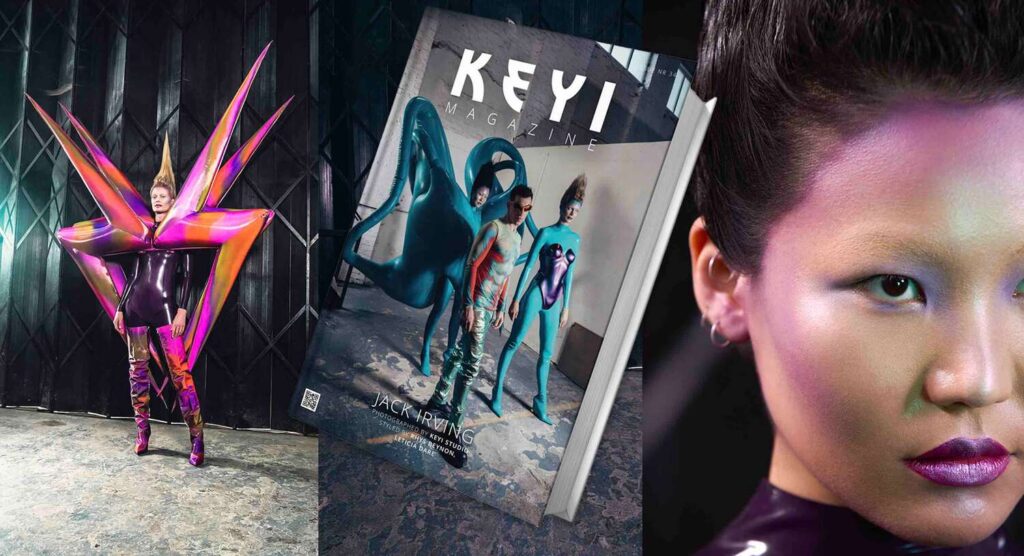
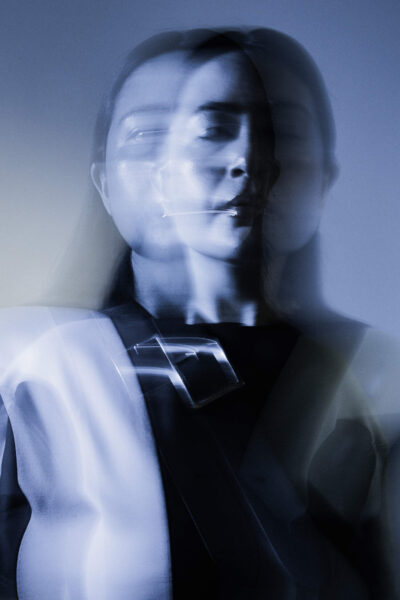
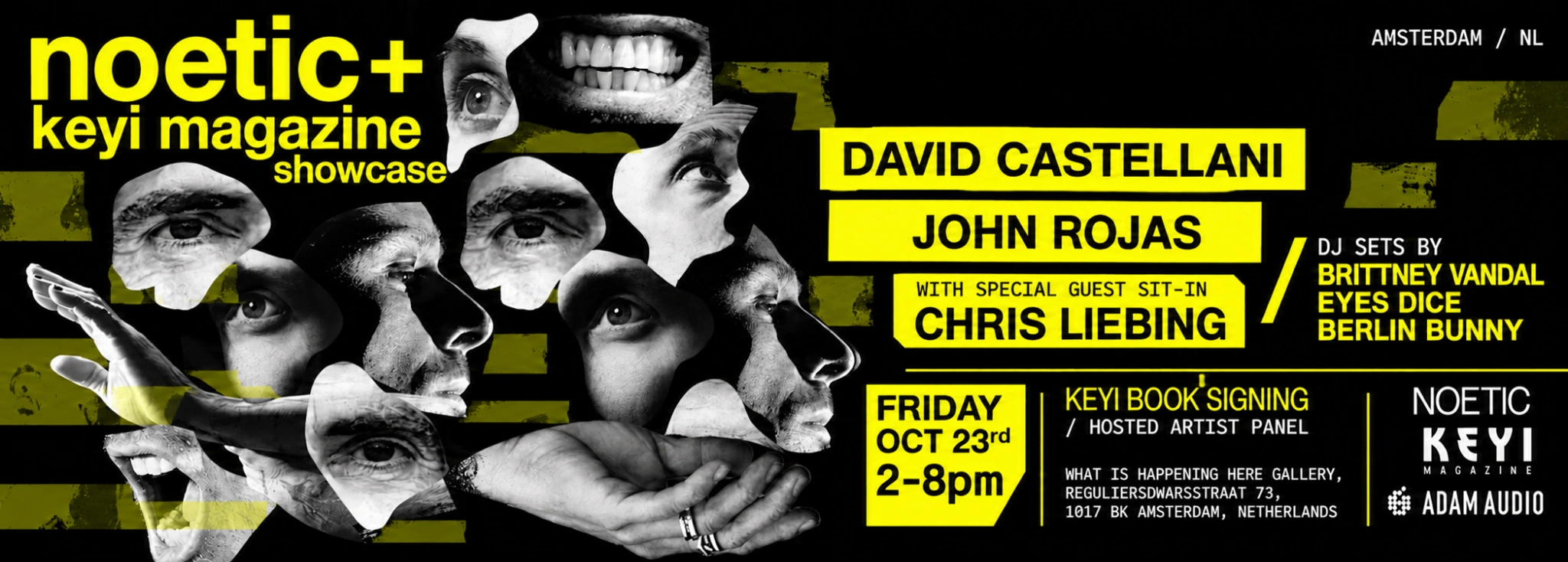
Photo + KEYI STUDIO @keyistudio / www.keyi.eu
Styling: Raki
Hair: Attila
interview by Grzegorz Bacinski
Our next event : Phantom Bar – 26.09.2026 Get Your Reduced 30% Off TICKETS
Check more music related articles here.