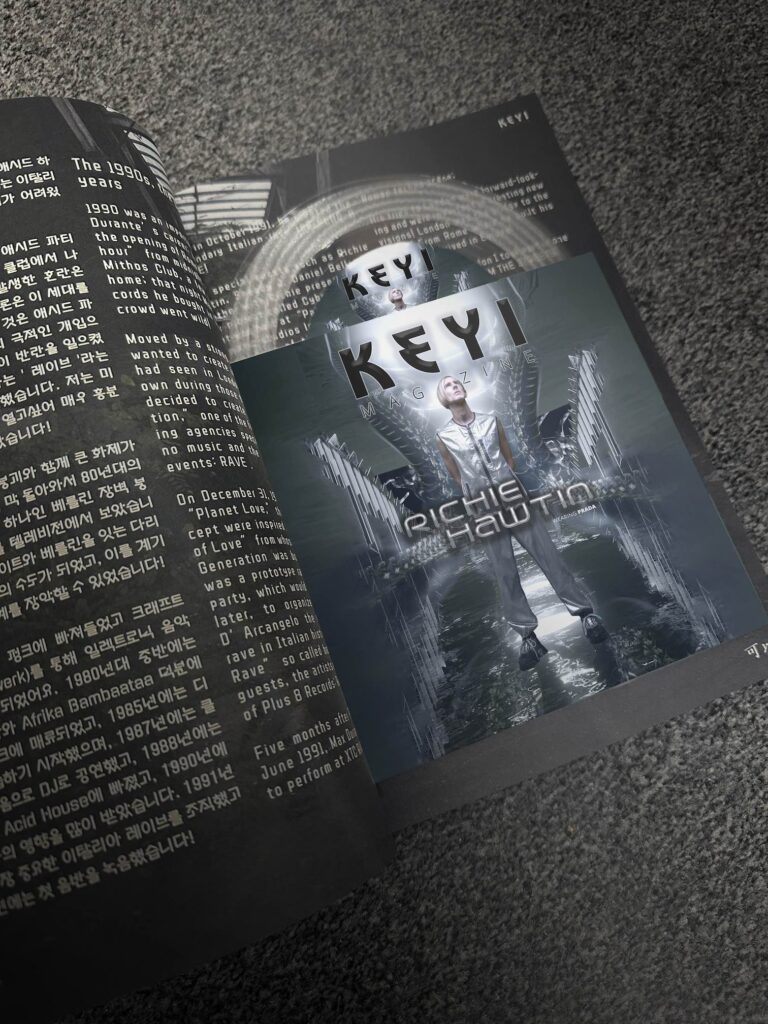

After meeting a few times in the past, present and future, we sat down with the electronic music legend, Richie Hawtin. Known for his revolutionary contributions to techno and his pioneering spirit, Hawtin has been a key figure in shaping the global electronic music landscape. In this in-depth interview, we explore the fascinating story of his life—his early influences, his journey through the world of underground techno, and his continuous evolution as an artist and innovator. Here is the story of Richie Hawtin, told in his own words.
Let’s go back to your past before we chat about the present and the future.

Let’s start with the introduction, who is ‘ Richie Hawtin ’?
“Who is Richie Hawtin ?” That is a good question. Sometimes I don’t know, I’m 53 now. It feels like I have been through so many different versions of myself, you learn so much as you live through life. There is always a main inner being but you’re always changing through experiences in the world. I’m traveling all the time so the outside surface changes a little bit, but on the inside, I still feel like I’m the introverted geeky kid who loves technology and music. Those are the two forces that keep pushing me along this journey.
現在と未来の話をする前に、まず過去を振り返ってみましょう。
Richie Hawtinとは何者ですか?
「Richie Hawtinとは何者か?」いい質問ですね。時々、私自身が一体何者なのかわからなくなる時があります。現在53歳。人生を振り返るとその時々の状況のなかで、多くのことを学んで、様々な自分を通り過ぎてきたように感じます。内面世界は常に変わりませんが、同時に世界中で経験したことを通じて絶え間なく変化していることも真実です。いつも旅をしているので、外側の表層的な姿は若干変化しています。一方で、目に見えない内側の自分を音楽とテックを愛する「内向的でギークな少年」のようにも感じることも未だにあります。この2つの要素が私を現在に至るまでの人生の旅に導いてくれているのです。
You lived in the UK, Canada, USA and Europe, how did each period influence you and your career as a musician? What was the music scene back then? What are the biggest differences between what we experience now?

When I was really young and I moved to Canada it was a big shift in my life. I think it really made me malleable and able to navigate situations, it kind of put me in a place as someone who is really comfortable with going into the unknown, whether it’s a new city, new people, new club, I’m pretty open. Detroit was really important to me in the beginning because of the music scene, the heritage of techno and music and that kind of gave me my first understanding of being a part of music and understanding it deeply. Then when I moved to New York, it was different, Manhattan, Brooklyn, club kids, it was a totally different vibe. And then coming to Berlin in the early 2000s it was super hedonistic. It was a place of freedom and a place to experiment. I don’t know if it is still free now, it’s hard to understand because I have been here so long I see the city differently. At the end of the day, music needs free, uncontrolled places for people to express themselves whether that’s in a dance club with music or in a warehouse. You need as few rules as possible to allow that expression to come out naturally. The most important cities in the world are places where that happens. And I don’t mean the whole city has to be free, as long as there is a safe place where people are free, where they can open up. There are more places now than ever before, people understand that it is healthy, that people need to find somewhere to release themselves, you can’t just work, work, work, You need somewhere to sweat. And enjoy. That’s some of the best things you can do on a dance floor.
あなたはこれまでにイギリスやカナダ、それからアメリカとヨーロッパ大陸の複数の都市を拠点に暮らしてきました。それぞれの街に暮らした期間があなたとミュージシャンとしてのキャリアにどのように影響を与えてきたと感じますか? また当時の音楽シーンはどのようなもので、現在直面している状況との最大の違いは何だと思いますか?
幼少期の頃にカナダに移住したときが人生において最大のシフトチェンジでした。その時期の経験が柔軟で異なる状況に適応できるような人間にしてくれました。新しい街、新しい人々、新しいクラブなど。未知の出来事や場所を探求することそのものを快適に感じられるような割と外交的な人間になれました。デトロイトは青年時代の自分にとって非常に重要でした。テクノ音楽のレガシーとなったシーンが存在する都市なので、音楽と共に生きることを深く理解するための最初のステップを踏んだのです。それから、ニューヨーク。マンハッタンやブルックリンの街はまた全然異なる雰囲気でした。クラブに訪れるようなキッズについてもそうです。そして、ベルリン。2000年代初頭に移住したとき、非常に快楽主義的でした。自由のための場所であり、新たなことを試すための場所でした。今でもこの街がそうであるかは分かりませんが。ここにあまりにも長く住んでいるため、うまく判断することができません。ただ街の移ろいを異なる視点で見つめているのです。
結局のところ、音楽は自由で制御されていない場所を必要としています。人々が自然な形で自分自身を強く表現するためには、規制がほとんどないダンスクラブ、あるいは倉庫のような自然な形で表現できる場所が必要なのです。世界の重要都市というのは、そうしたことが自然と起こる場所のことです。なにも「街全体が自由でなければならない」ということではありません。限られた安全な場所が少しでも街の中にあれば、人々は自由に心を開くことができるのです。今は以前よりもそのような場所が増えました。なぜなら、自分達をすべて解放できる場所を必要があることを理解しているからです。ただただ仕事に追われて、働きづめになってはいけないことを。汗をかいて、楽しむ場所。ーーダンスフロアが人々にもたらす最高にして、最大の一要素でしょう。
Yeah, we all seem to really love basements.
Yeah! (laughing) I don’t know why! Why is it that we all seem to really love basements, or at least dark rooms. My studio is in the basement, and I love walking down the stairs. It’s beautiful outside, we’ve finally got good weather and I’m leaving the blue and the sun behind. It gets darker and colder as I walk down those stairs, and I go into a different frame of mind. That’s something special. My first studio at my parent’s house was in the basement (UTK studios “under the kitchen”, and other studios I’ve had have always had no windows. I don’t like to know the passage of time when I’m working. I like the studio, and the club also, to be a place where you just get lost.
ベルリンの人達はみんな地下で起きている出来事が本当に大好きですよね。
まさに(笑)。地下やそうでなくても暗い部屋がみんな大好きな場所になるのか、はっきりとはその理由がわからないんです! 今のスタジオも地下にあり、階段を降るのが大好きです。外は珍しく最高の天気で青空が見えるとしても、それには目もくれません。地下に降りるにつれて、だんだんと暗く寒くなり、普段とは違った心の状態に入っていけるのです。それは特別な儀式みたいなものなんです。最初のスタジオ「UTK(ドイツ語でキッチンの下にあるの略称) Studios」でさえ、両親の家の地下にありました。これまでの他のスタジオも窓のないところばかり。作業をしているときは、時間の経過を感じたくありません。スタジオもクラブも、ただひたすらに我を忘れる場所であってほしいと思います。
Going back to that time in your parents’ basement. When you started your label Plus8, as we know it was a ‘Second Wave’ of music that shaped the genre for the next decades. How would you describe the movement and the precursors of it back then? You were a breaking point for many musicians if you get back to those moments, who do you think shaped your career the most?
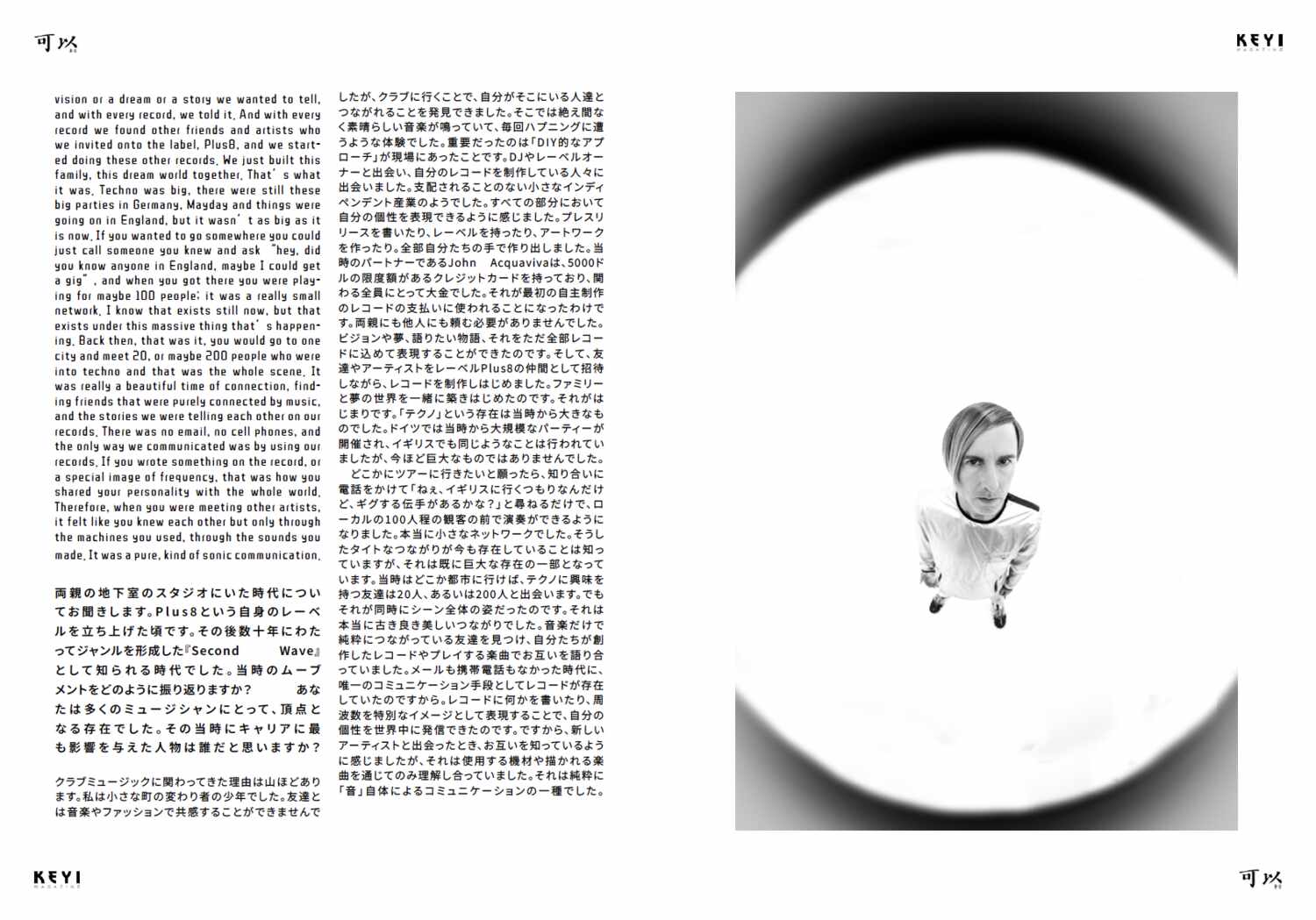
There are a whole bunch of reasons why I got involved in club music. I was a weird kid in my little city. I didn’t feel connected to the music and fashion of my other friends, and going to other clubs I found something I was a part of. So that was going on, and there was also this incredible music happening, but what was important for me was that there was this real DIY approach. I was meeting DJs and label owners who were creating their records. It was like a little industry, it was tiny and independent. It felt like in every part of the equation you could put your personality in it. You wrote your press releases, the labels, and the artwork. We did it all ourselves. My partner at the time John Acquaviva had a credit card with a $5000 limit which was a lot of money to anyone, and that was how we could pay for our first record. We didn’t have to ask anyone, we didn’t have to ask our parents. We just had a vision or a dream or a story we wanted to tell, and with every record, we told it. And with every record we found other friends and artists who we invited onto the label, Plus8, and we started doing these other records. We just built this family, this dream world together. That’s what it was. Techno was big, there were still these big parties in Germany, Mayday and things were going on in England, but it wasn’t as big as it is now. If you wanted to go somewhere you could just call someone you knew and ask “hey, did you know anyone in England, maybe I could get a gig”, and when you got there you were playing for maybe 100 people; it was a really small network. I know that exists still now, but that exists under this massive thing that’s happening. Back then, that was it, you would go to one city and meet 20, or maybe 200 people who were into techno and that was the whole scene. It was really a beautiful time of connection, finding friends that were purely connected by music, and the stories we were telling each other on our records. There was no email, no cell phones, and the only way we communicated was by using our records. If you wrote something on the record, or a special image of frequency, that was how you shared your personality with the whole world. Therefore, when you were meeting other artists, it felt like you knew each other but only through the machines you used, through the sounds you made. It was a pure, kind of sonic communication.

両親の地下室のスタジオにいた時代についてお聞きします。Plus8という自身のレーベルを立ち上げた頃です。その後数十年にわたってジャンルを形成した『Second Wave』として知られる時代でした。当時のムーブメントをどのように振り返りますか? あなたは多くのミュージシャンにとって、頂点となる存在でした。その当時にキャリアに最も影響を与えた人物は誰だと思いますか?
クラブミュージックに関わってきた理由は山ほどあります。私は小さな町の変わり者の少年でした。友達とは音楽やファッションで共感することができませんでしたが、クラブに行くことで、自分がそこにいる人達とつながれることを発見できました。そこでは絶え間なく素晴らしい音楽が鳴っていて、毎回ハプニングに遭うような体験でした。重要だったのは「DIY的なアプローチ」が現場にあったことです。DJやレーベルオーナーと出会い、自分のレコードを制作している人々に出会いました。支配されることのない小さなインディペンデント産業のようでした。すべての部分において自分の個性を表現できるように感じました。プレスリリースを書いたり、レーベルを持ったり、アートワークを作ったり。全部自分たちの手で作り出しました。当時のパートナーであるJohn Acquavivaは、5000ドルの限度額があるクレジットカードを持っており、関わる全員にとって大金でした。それが最初の自主制作のレコードの支払いに使われることになったわけです。両親にも他人にも頼む必要がありませんでした。ビジョンや夢、語りたい物語、それをただ全部レコードに込めて表現することができたのです。そして、友達やアーティストをレーベルPlus8の仲間として招待しながら、レコードを制作しはじめました。ファミリーと夢の世界を一緒に築きはじめたのです。それがはじまりです。「テクノ」という存在は当時から大きなものでした。ドイツでは当時から大規模なパーティーが開催され、イギリスでも同じようなことは行われていましたが、今ほど巨大なものではありませんでした。

どこかにツアーに行きたいと願ったら、知り合いに電話をかけて「ねぇ、イギリスに行くつもりなんだけど、ギグする伝手があるかな?」と尋ねるだけで、ローカルの100人程の観客の前で演奏ができるようになりました。本当に小さなネットワークでした。そうしたタイトなつながりが今も存在していることは知っていますが、それは既に巨大な存在の一部となっています。当時はどこか都市に行けば、テクノに興味を持つ友達は20人、あるいは200人と出会います。でもそれが同時にシーン全体の姿だったのです。それは本当に古き良き美しいつながりでした。音楽だけで純粋につながっている友達を見つけ、自分たちが創作したレコードやプレイする楽曲でお互いを語り合っていました。メールも携帯電話もなかった時代に、唯一のコミュニケーション手段としてレコードが存在していたのですから。レコードに何かを書いたり、周波数を特別なイメージとして表現することで、自分の個性を世界中に発信できたのです。ですから、新しいアーティストと出会ったとき、お互いを知っているように感じましたが、それは使用する機材や描かれる楽曲を通じてのみ理解し合っていました。それは純粋に「音」自体によるコミュニケーションの一種でした。
What were your thoughts once you heard that even your idols were coming for your events back then, specifically your warehouse parties in Detroit, how did those parties inspire you and your sound?
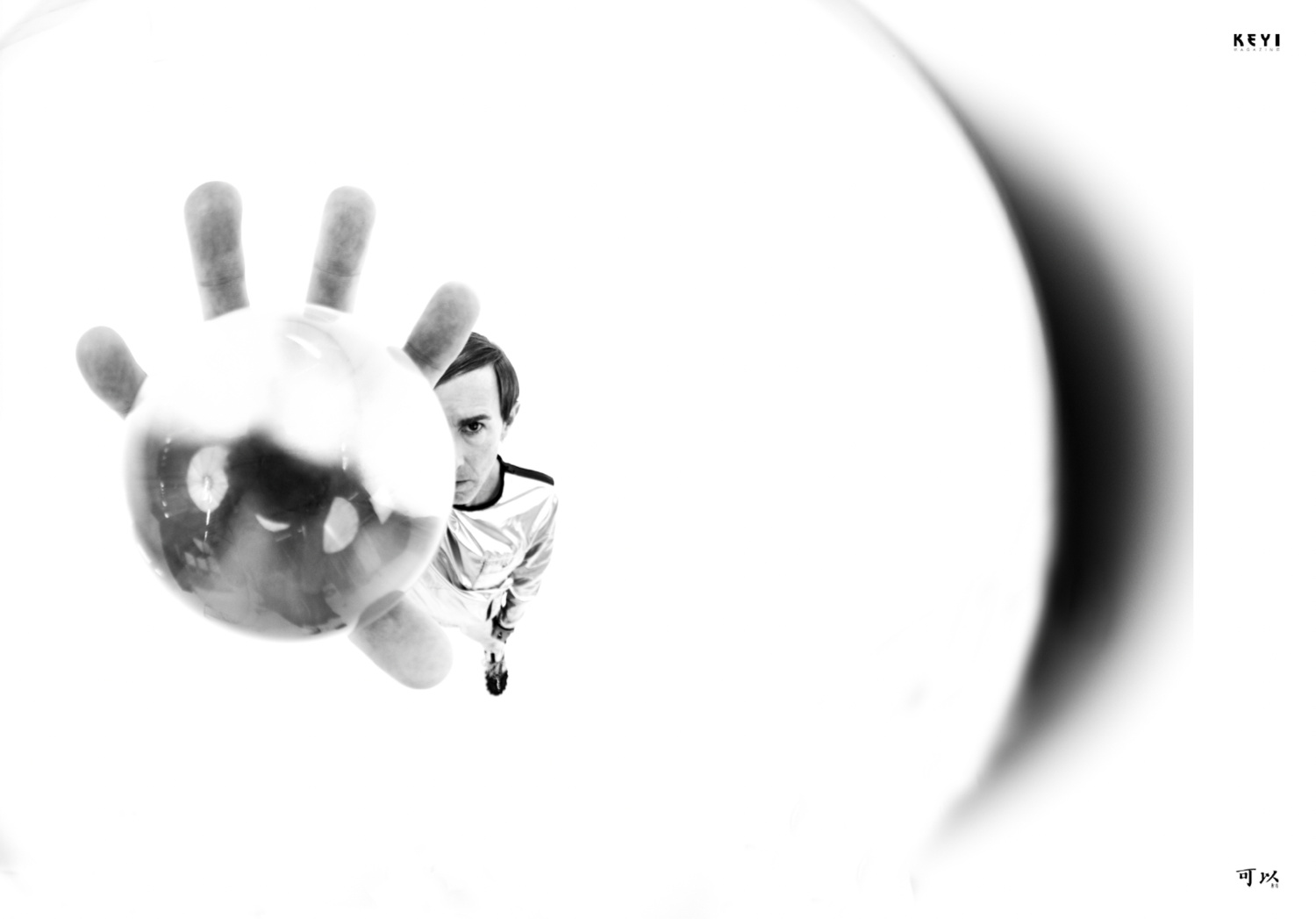
When we started doing the warehouse parties in Detroit, so many people were traveling from everywhere. We were doing these black box parties with loads of strobes and extended sets. That’s even where the sound of Plastikman, one of my early aliases, came from. It was rhythmic, it was trippy, and that feeling came from those parties. Thinking about that DIY idea from earlier, if you wanted to create something, you did it yourself. You went to the studio where you made music, then you made a record, then if no one wanted to release your music you started a record label, then to play those records you hosted parties. When you started putting all of those things together, you made a community, a sound, and then in the end you created a following.
当時あなたがアイドル視していた人でさえも、イベントに参加してくれることを知ったとき、どんな思いがありましたか? 特にデトロイトでのウェアハウスパーティーは自身のサウンドにどのような影響を与えたと感じますか?
デトロイトでウェアハウスパーティーを始めたとき、本当に多くの人が世界中からやって来ました。私たちはストロボライトと拡張セットを備えたブラックボックスのパーティーを行っていました。それこそが初期の別名であるPlastikmanのサウンドが誕生した背景でもありました。リズミカルでトリップ感があるサウンドはそうしたパーティーのフィーリングから直接影響を受けたのです。さっきも話したようにDIYマインドにのっとって、何かを創りたいなら、自分たちで全部やる。音楽スタジオに行き、レコードを作る。誰もあなたの音楽をリリースしたがらないなら、自分でレコードレーベルを始め、そのレコードをプレイするためにパーティーを開催する。これらの要素を組み合わせると、コミュニティとサウンドができ、最終的にはフォロワーを作り出すことができるのです。

How would you describe the change between Plus8 and M-NUS labels? What are the core values of both projects ?
From 1990 until 1997, I was a part of Plus8 with my partner John Acquaviva. In 1997 we were still working at Plus8 but we also had a house label, a distribution company and were helping run about 20 other labels. We had this whole organization that we built from the ground up, it had really become this really big business. Around this time, it really felt like for me, and for John, that it was really hard to find time to be creative. We had so many other business commitments and other people working for us, we knew we needed to make a change. We decided to close Plus8. It was important to get back to being more creative in the studio. That was when I started the new label M-NUS. M-NUS was more about a label that was only for my own work, it was about working on my own sound. For me, there was always this yin and yang, this ebb and flow between creativity and business. This is my life, I have to think about what inspires me creatively, but also what puts food on the table. Sometimes I feel like Rich the businessman, and other times. I am Rich the artist. When I’m really lucky, I find a middle ground. Because I love both sides. It is a very difficult, fun, challenging way to live your life, this was what I was navigating with Plus8 and M-NUS.

Plus8とM-NUSのレーベル間の変化をどう説明しますか? 両プロジェクトの核となる価値は何ですか?
1990年から1997年までかけて、パートナーのJohn AcquavivaとともにPlus8に所属していました。1997年にはPlus8での仕事を続けていましたが、ハウスレーベルとディストリビューション会社も持っており、その他20のレーベルの運営を手伝っていました。組織を地道に築いているつもりでしたが、いつの間にか巨大なビジネスになっていましたね。この頃、Johnと私はクリエイティブな時間を見つけるのが本当に難しく感じていたのです。
多くのビジネス関係者が働いているなかで、変化を迫られていました。Plus8のクローズを決断したのです。スタジオでのクリエイティブな活動に戻ることが重要でした。自分の作品とサウンドを制作するためだけに、新しくM-NUSというレーベルを始めました。私にとって、いつもクリエイティブとビジネスの間で陰と陽、潮の満ち引きにも似た引力の往来があったのです。これが私の人生。創造的に刺激を与えてくれるものが何かを常に考える必要がある一方で、食べていく必要もあるのですから。
時々、私はリッチ(自身の名前の“Rich“ieにかけて)なビジネスマンのように感じ、ある時はアーティストの“Rich“ie。ラッキーな時には、その中間地点の自分でいることができます。どっちの側面も好きな自分にとって、この人生を生きるのは非常に難しく、楽しく、挑戦的です。これこそがPlus8とM-NUSにおける航路でした。
After you launched M-NUS, you released the Decks, EFX & 909 mix album shortly after the opening, which contains current legends of the genre including Jeff Mills, Surgeon, Ben Sims or EBM group Nitzer Ebb. What was your community like back then? What was it like working with so many other legendary artists?
What was special and important about M-NUS was that there was a real crew, a real gang that was really living, shitting and sleeping together. We were traveling to New York, partying together, and everybody was making music. It was a great gang of friends that were really on a mission. Everyone had their sounds, but we were all friends. I am sure there was competition, but everyone was really in it together.

The decks, effects & 909 was an important release for me as it was trying to capture the “Hawtin” style I was trying to perfect, a style that reached beyond what most people considered regular DJing. Using extra equipment like a Roland TR909 for additional drums, maybe an SH101 for little melodic hooks and then Hawtin-style delay effects on top. This was what the release was trying to capture, what can we do more of, how far can we go when we go beyond just two turntables?! That was the beginning of my style which I continue to develop up and until this day, always welcoming new tech into the booth with me. However, I must say that this type of DJing was not common then in Europe and around the world, BUT in Detroit, i heard of Juan Atkins, Derrick May & Jeff Mills all using different pieces of tech in their performances, so I just accepted this as the norm, anyway, wasn’t Techno all about the future, experimenting and breaking traditions? At least that’s what that nerdy kid inside of me thought!

M-NUSを立ち上げた直後に『Decks, EFX & 909』というミックスアルバムをリリースしました。このアルバムにはJeff Mills, SurgeonやBen Sims、 EBM group Nitzer Ebbなど、このジャンルにおける伝説的なアーティストが含まれています。当時のコミュニティはどのようなものでしたか? レジェンド達との共同作業はどのような経験でしたか?
M-NUSが特別だった理由。それは本当に寝食を共にして、遊んで、音楽を作っていたからですね。ニューヨークに旅行したり、一緒にパーティーしたり、みんながそういう風にして音楽を作っていました。音楽という使命に燃えた素晴らしい同志達。それぞれが自身の音像を追求する一方で、シンプルな仲間同士。もちろんそこには競争があったと思います。ただただ、みんなが一丸となっていました。
『Decks, EFX & 909』は、重要なリリースアルバムで、完成されつつあった自分なりのスタイルを捉えようと挑戦したものです。ほとんどの人が通常のDJプレイとして想像しうるものを超越したスタイルでした。追加機材としてドラムにはRoland TR909を使ってみたり、メロディックフックにはSH101を使ったり。それからHawtinスタイルの特徴としてディレイエフェクトを上に重ねました。
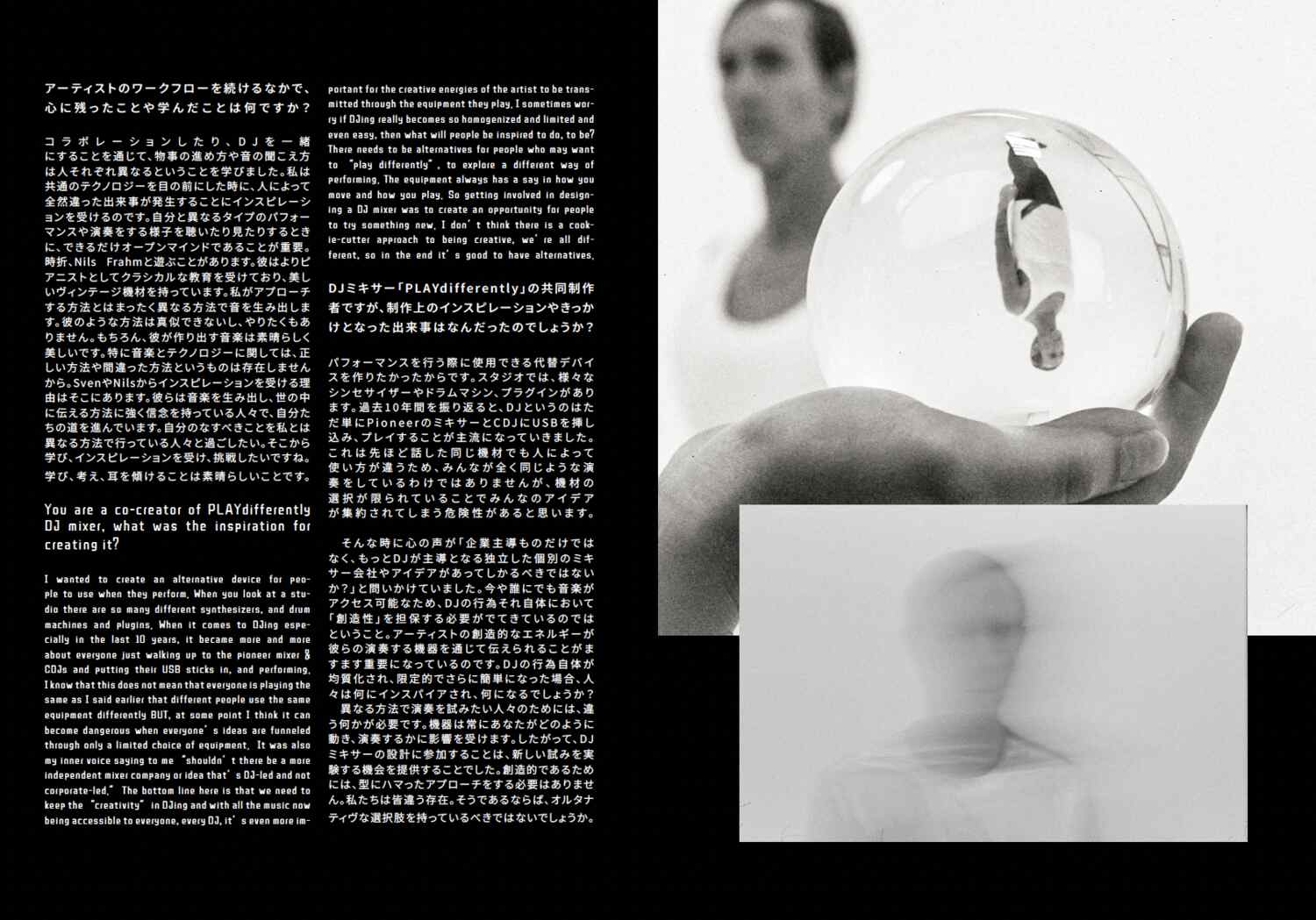
このリリースで攻略したかったのは、「2つのターンテーブという縛りを超えてどこまでいけるのか?」ということでした。これこそが自身のスタイルの始まりで、今日までブースで日々新しい機材を迎えて技術を更新できるように心がけています。この手のDJプレイは当時、ヨーロッパをはじめ世界では一般的ではありませんでした。だが、しかし! デトロイトでは、Juan Atkins, Derrick May & Jeff Millsなどがそれぞれ異なるテクノロジーをパフォーマンスで使用していると聞き付けました。なのでそれを当たり前のこととして、受け入れました。それにしても、そもそもテクノとは革新的で、実験的で、伝統を打ち破ることではなかったのでしょうか? 少なくとも私の中に眠る「内向的でギークな少年」はそう確信していたのです!
New York and Berlin? How would you compare them now and two or a decade ago? What are your thoughts on current changes in the music scene if it comes to the roots of it ?
I was in New York around 2002, and 2003 so it is really hard to make a comparison between the two. Manhattan was kind of empty back then, and Brooklyn was still pretty raw. There were cool warehouse parties. There was a real scene, but tiny! I was only there for one year. However, one thing that I do remember is all of us wanted to come to Europe. There wasn’t as much of a scene in America at that point, there was so much more going on, more labels, more gigs in Europe. People wanted to be closer to what was happening. Right now, North America has this incredible new undercover scene growing, it feels more vibrant than ever before. But 20 years ago, it was difficult to find as many people who were interested in techno music. Europe was always more accepting of club culture, there was just more going on in Berlin and Europe. It was also a need to make money, we needed to find more gigs.
ニューヨークとベルリン、両方の都市に住まれた経験がありますが、今と10年前を比較すると、どのような違いがありますか? 音楽シーン全体の変遷と自身のルーツについての考えを教えていただけますか?
私は2002〜2003年ごろの1年間だけニューヨークにいたので、両者を比較するのは非常に難しいです。当時のマンハッタンは閑散としていて、ブルックリンもまだかなり荒れていました。クールなウェアハウスパーティーがありましたし、シーンも存在しましたが、非常に小さかった。ただ、一つ覚えていることは、そこにいた音楽関係の全員がヨーロッパに行きたいと願っていたということ。その当時のアメリカにはシーンがほとんどなく、一方のヨーロッパではたくさんのことが巻き起こっていました。数多のレーベルやギグがあり、その渦に近づきたいと願ってました。現在、北アメリカには新たなアンダーグラウンドシーンが急成長しており、以前よりも活気があるように感じます。しかし、20年前にテクノ音楽に興味を持つ人々を多く見つけることは難しかったです。ヨーロッパは常にクラブ文化を受け入れる傾向があり、ベルリンとヨーロッパでは多くのことが行われていました。お金を稼ぐためにもギグの機会を見つける必要があったんです。
How would you classify your releases and your aliases during your music career? Speaking from Cybertronik, Plastikman, F.U.S.E. or Richie Hawtin itself ?
My first real solo experiments were under the name F.U.S.E. A lot of those were heavily influenced by the Detroit sound and the Chicago acid sound, they were real raw, intense sounds. I wanted to make people feel like they were being pushed around, moved by my records. I wanted something that sucked people in. The reason I make music is for people to get hypnotized into this sonic experience and be lost for the duration. Take them away from their regular lives, just live within the frequencies for some time. With Plastikman I definitely incorporated more visuals. In early Plastikman shows there was always this question of how do we bring visuals into this. I focused on playing with these two senses and bringing them together in a beautiful way. I wanted to bring people together in this cerebral tunnel I was trying to create. That’s why quite a lot of the Plastikman projects experiment with both audio and visuals.
キャリアを通じてリリースしたCybertronik、Plastikman、F.U.S.E.を含む、別名義と自身名義のリリースとの違いをどのように分類しますか?
最初期はF.U.S.E.という名義で試してみることにしました。それらの多くはデトロイトとシカゴアシッドのサウンドに強く影響を受けた生々しく、強烈なサウンドでした。聴き手がレコードによって駆り立てられ、突き動かされるようにしたかったのです。強く引き込まれてしまうもの。音楽を作る理由は、リスナーが音の体験を通じて催眠状態になり、一定の期間、我を失ってほしいから。彼らを日常生活から遠ざけ、一時的に音の波の中で生きているだけの状態にさせたい。
Plastikmanでは、視覚的な要素をさらに取り込みました。初期の演奏では、常に「どのように視覚を取り込ませるか」が課題でした。視覚と聴覚を強調し、美しい方法で組み合わせることに焦点を当てました。作り出す脳内のトンネルの中に、聴き手を引きずりこみたかったのです。そのため、Plastikmanプロジェクトの多くは、音響と視覚の両方で実験しています。

You are a good friend of Sven Vath and you both played a lot together, how did you both meet up? Do you still influence each other after years ?
Sven was one of the first people who invited us to play in Germany. Sometimes you meet someone and you know instantly that you’re on the same wavelength. And Sven and I were on the same wavelength from the very beginning. At first, he was pretty crazy, and I was still pretty nerdy but as the years went on we found a perfect balance between our two personalities. We played a lot together, even recording a mix CD together. At his core Sven loves what he’s doing, and believes in how much great positive energy and power you can create and give to people through music and on the dance floor. I think this is where we find our shared beliefs and our friendship. For Sven, this is his whole being. For Germany, Sven has always been a strong leading light in believing in club culture. Germany was always open-minded when it came to clubs, but in the 90s some people disagreed. You need people with vision who are believing in themselves and what they stand for and Sven has been there since the beginning commuting to our scene.
Sven Vathと親しい友達で、数多くのイベントで共演しましたが、どのように出会ったのですか? 関係性が長く続くなかで、今もなお互いに影響を与えあっていますか?
Svenは私をドイツで演奏するよう招待してくれた最初の一人でした。誰かとはじめて出会った時にお互いの波長が合っていることを感じることがたまにありますよね。Svenと私はまさにそう。最初から同じ波長を感じました。当時彼はかなりクレイジーで、私はかなりオタクでしたが。年月が経つにつれて、私たちはお互いの個性の完璧なバランスを見つけました。数多くの共演をし、ミックスCDを一緒に制作したこともあります。
Svenの根底には音楽とダンスフロアを通じて人々にどれだけの素晴らしいポジティブなエネルギーを創り出し、与える力があることを信じる強さがあります。そして自分のなすべき活動を愛しています。そこにこそ、共通の信念と友情を見つけることができるのでしょう。Svenの音楽に対する在り方こそが、彼の全人生。ドイツにとって、クラブカルチャーを信じる強力な指導者として、Svenは常に存在してきました。ドイツはクラブに対して常にオープンマインドでしたが、90年代には一部の人々が異論を唱えている時期がありました。そうした困難な時期にこそ、明確なビジョンを持ち、自分自身と自分たちの信念を表明する人が必要でした。Svenこそが私たちのシーンにはじめから通じてきた存在だった。
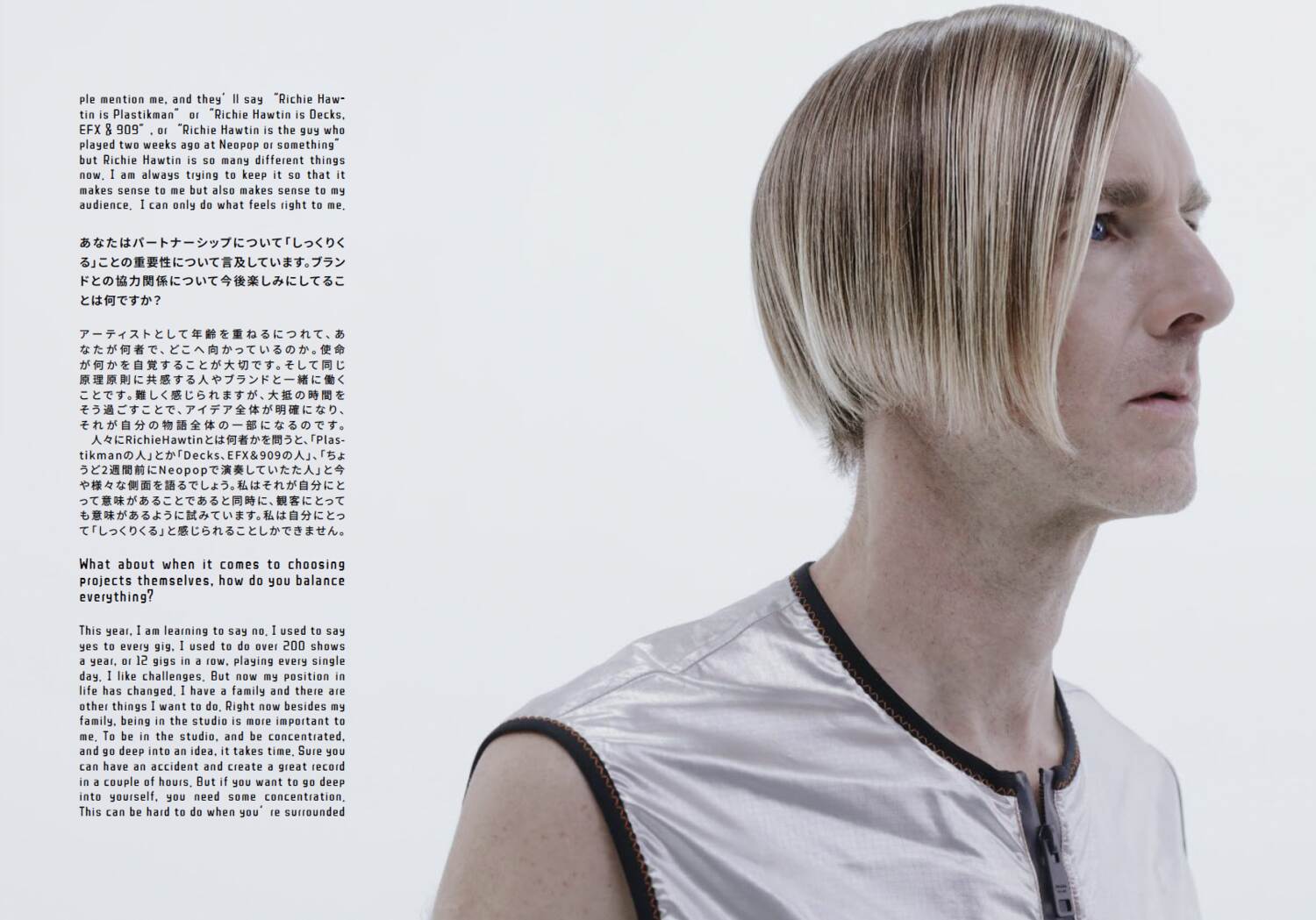
Which workflow of the artist stayed in your mind and you learned from them the most?
What I’ve learned through listening, and collaborating. And DJing with people is that everyone does things differently, everybody hears things differently. It’s inspiring to see how a human stands in front of this technology and something completely different happens than when another human stands in front of the same technology. It is important to be as open-minded as possible when listening and watching how other people perform or play. Sometimes I hang out with Nils Frahm who is more of a pianist and classically trained and has all this beautiful vintage equipment. He does things in a completely different way than I would approach it. I couldn’t or wouldn’t do it the way he does but of course, what he makes is absolutely outstanding and beautiful. Especially with music and tech, there is no right or wrong way to be doing this. That’s why I am inspired by Sven, and inspired by Nils. I am inspired by people who are really strong in their belief in the way they are going to create and distribute music. They are really on their own path, those are the kinds of people I want to hang out with. I want to hang out with people who are doing their own thing, and doing it completely differently than I am and learn from that, be inspired by that, be challenged by it. Learning, thinking and listening is amazing.
アーティストのワークフローを続けるなかで、心に残ったことや学んだことは何ですか?
コラボレーションしたり、DJを一緒にすることを通じて、物事の進め方や音の聞こえ方は人それぞれ異なるということを学びました。私は共通のテクノロジーを目の前にした時に、人によって全然違った出来事が発生することにインスピレーションを受けるのです。自分と異なるタイプのパフォーマンスや演奏をする様子を聴いたり見たりするときに、できるだけオープンマインドであることが重要。時折、Nils Frahmと遊ぶことがあります。彼はよりピアニストとしてクラシカルな教育を受けており、美しいヴィンテージ機材を持っています。私がアプローチする方法とはまったく異なる方法で音を生み出します。彼のような方法は真似できないし、やりたくもありません。もちろん、彼が作り出す音楽は素晴らしく美しいです。特に音楽とテクノロジーに関しては、正しい方法や間違った方法というものは存在しませんから。SvenやNilsからインスピレーションを受ける理由はそこにあります。彼らは音楽を生み出し、世の中に伝える方法に強く信念を持っている人々で、自分たちの道を進んでいます。自分のなすべきことを私とは異なる方法で行っている人々と過ごしたい。そこから学び、インスピレーションを受け、挑戦したいですね。学び、考え、耳を傾けることは素晴らしいことです。
You are a co-creator of PLAYdifferently DJ mixer, what was the inspiration for creating it?
I wanted to create an alternative device for people to use when they perform. When you look at a studio there are so many different synthesizers, and drum machines and plugins. When it comes to DJing especially in the last 10 years, it became more and more about everyone just walking up to the pioneer mixer & CDJs and putting their USB sticks in, and performing.

I know that this does not mean that everyone is playing the same as I said earlier that different people use the same equipment differently BUT, at some point I think it can become dangerous when everyone’s ideas are funneled through only a limited choice of equipment. It was also my inner voice saying to me “shouldn’t there be a more independent mixer company or idea that’s DJ-led and not corporate-led.” The bottom line here is that we need to keep the “creativity” in DJing and with all the music now being accessible to everyone, every DJ, it’s even more important for the creative energies of the artist to be transmitted through the equipment they play. I sometimes worry if DJing really becomes so homogenized and limited and even easy, then what will people be inspired to do, to be?

There needs to be alternatives for people who may want to “play differently”, to explore a different way of performing. The equipment always has a say in how you move and how you play. So getting involved in designing a DJ mixer was to create an opportunity for people to try something new. I don’t think there is a cookie-cutter approach to being creative, we’re all different, so in the end it’s good to have alternatives.
DJミキサー「PLAYdifferently」の共同制作者ですが、制作上のインスピレーションやきっかけとなった出来事はなんだったのでしょうか?
パフォーマンスを行う際に使用できる代替デバイスを作りたかったからです。スタジオでは、様々なシンセサイザーやドラムマシン、プラグインがあります。過去10年間を振り返ると、DJというのはただ単にPioneerのミキサーとCDJにUSBを挿し込み、プレイすることが主流になっていきました。
これは先ほど話した同じ機材でも人によって使い方が違うため、みんなが全く同じような演奏をしているわけではありませんが、機材の選択が限られていることでみんなのアイデアが集約されてしまう危険性があると思います。
そんな時に心の声が「企業主導ものだけではなく、もっとDJが主導となる独立した個別のミキサー会社やアイデアがあってしかるべきではないか?」と問いかけていました。今や誰にでも音楽がアクセス可能なため、DJの行為それ自体において「創造性」を担保する必要がでてきているのではということ。アーティストの創造的なエネルギーが彼らの演奏する機器を通じて伝えられることがますます重要になっているのです。DJの行為自体が均質化され、限定的でさらに簡単になった場合、人々は何にインスパイアされ、何になるでしょうか?
異なる方法で演奏を試みたい人々のためには、違う何かが必要です。機器は常にあなたがどのように動き、演奏するかに影響を受けます。したがって、DJミキサーの設計に参加することは、新しい試みを実験する機会を提供することでした。創造的であるためには、型にハマったアプローチをする必要はありません。私たちは皆違う存在。そうであるならば、オルタナティヴな選択肢を持っているべきではないでしょうか。

We used full looks of Prada in our editorial, and also did a soundtrack for their fashion shows but not only. What is your story with a brand?
In the mid-90s, I was trying to find an image.I was searching for clothes that I felt comfortable in, and that also projected this idea of Plastikman and this minimalistic sound I was working on. That was when I first started delving into fashion. I was really interested in designers like Jil Sander, Helmut Lang and Prada. At that moment Jil Sander was actually designed by Raf Simons. Those were some of my early experiments going from an early kid in just a T-shirt to something more refined or funky. Fast forward 20 years later, Raf Simons has then gone on to become the designer with Prada. They approached me to create music for their shows during the pandemic. So, my thinking was.. I love the brand Prada, I love the idea of the brand because it’s an independent brand, it’s still a family business. And aesthetically, Prada is absolutely beautiful. For me It’s about minimalism, it’s about details, it’s about silhouettes. And I always felt like that look connects to the sounds and the aesthetics that I have tried to create in my Plastikman albums. I wasn’t necessarily trying to make Plastikman albums for Prada, it’s just that I believe we are both already working on a similar aesthetic. Me, sonically and Prada visually. It makes sense. So when they came to me to collaborate, it just felt right. And I really admire Raf, he’s a great artist and he liked the music I was doing, I was already wearing the clothes.You couldn’t ask for a better situation. When it came to our editorial, we could have tried lots of different designers, but I am incredibly respectful of my creative relationship with Prada, but also I feel it’s really representative of me, of who I am, and the music style I am producing.
今号のKEYIの撮影ではすべてPradaの衣装で臨まれました。ご自身はこれまでにPRADAのコレクションのサウンドトラックも制作されましたが、ブランドとあなたのストーリーを教えてください。
90年代中盤、私は自分のスタイルを見つけようと模索していました。自分が快適に着れて、かつPlastikmanとそのミニマリスティックなサウンドのアイデアを投影するような洋服を探していました。はじめは私はJil Sander、Helmut Lang、Pradaなどのデザイナーに興味を持っていました。その時、Raf SimonsがJil Sanderのデザインをしていました。Tシャツだけの青年から、より洗練された大人やファンキーなスタイルに移行しようと試みているところでした。

20年の時が過ぎて、Raf SimonsがPradaのデザイナーになりました。パンデミックの間、彼らのショーの音楽を制作するように私にアプローチしました。Pradaというブランドのアイデアも大好きです。それは独立されたものでありながら、ファミリービジネスを行なっています。そして、審美眼的にも美しい。私にとってPradaとはミニマリズムであり、ディテールであり、シルエットこそがすべてです。その在り方はPlastikmanのアルバムで創り出そうとしたサウンドや美学とつながっていると感じています。必ずしもPradaのためにPlastikmanアルバムを作る必要性に駆られていたわけではないのですが、すでに双方が類似の美学に取り組んでいると信じることができました。音像は私、視覚はPrada。それを打ち出すことは筋の通ったことに思えました。コラボレーションの依頼を受けた際に、「やるべきだ」と感じました。Rafを本当に尊敬しているから。彼は素晴らしいアーティストで、私がやっている音楽が彼に気に入られていました。私は既に彼の服を着ていました。これ以上の状況は考えられませんよ。
今号でエディトリアルに取り組む際、さまざまなデザイナーズブランドを試してみることができましたが、私はPradaとの創造的な関係に対する敬意を非常に感じています。同時に、それは自身のキャラクターを非常によく表しており、どのようなスタイルで音楽を制作しているかを示していると感じられたから。
You mention the importance of this partnership ‘feeling right’ for you. How have you found collaborating with brands, what do you look for in this relationship?
What’s important as an artist as you grow older is that you try and remember who you are, where you’re going, and what your mission is. This means working with people or brands who connect with those same principles. It can be difficult, but if you do that most of the time then you really start to define a whole aesthetic idea, and then that becomes a part of the whole narrative of what you’re doing. You hear people mention me, and they’ll say “Richie Hawtin is Plastikman” or “Richie Hawtin is Decks, EFX & 909”, or “Richie Hawtin is the guy who played two weeks ago at Neopop or something” but Richie Hawtin is so many different things now. I am always trying to keep it so that it makes sense to me but also makes sense to my audience. I can only do what feels right to me.
あなたはパートナーシップについて「しっくりくる」ことの重要性について言及しています。ブランドとの協力関係について今後楽しみにしてることは何ですか?
アーティストとして年齢を重ねるにつれて、あなたが何者で、どこへ向かっているのか。使命が何かを自覚することが大切です。そして同じ原理原則に共感する人やブランドと一緒に働くことです。難しく感じられますが、大抵の時間をそう過ごすことで、アイデア全体が明確になり、それが自分の物語全体の一部になるのです。
人々にRichie Hawtinとは何者かを問うと、「Plastikmanの人」とか「Decks、EFX&909の人」、「ちょうど2週間前にNeopopで演奏していたた人」と今や様々な側面を語るでしょう。私はそれが自分にとって意味があることであると同時に、観客にとっても意味があるように試みています。私は自分にとって「しっくりくる」と感じられることしかできません。
What about when it comes to choosing projects themselves, how do you balance everything?
This year, I am learning to say no. I used to say yes to every gig, I used to do over 200 shows a year, or 12 gigs in a row, playing every single day. I like challenges. But now my position in life has changed. I have a family and there are other things I want to do. Right now besides my family, being in the studio is more important to me. To be in the studio, and be concentrated, and go deep into an idea, it takes time. Sure you can have an accident and create a great record in a couple of hours. But if you want to go deep into yourself, you need some concentration. This can be hard to do when you’re surrounded by social media, or you’re constantly on tour. The only way to try and explore these new ideas is to say no and to some extent isolate yourself from the noisy environment we all live in.
プロジェクトそのものを取捨選択するときは、どのように全体のバランスを整えるのでしょうか?
今年「NO」と言うことを学びました。以前はすべてのギグに「YES」と言い、年間で200を超えるショーを行ったり、12日連続でGIGをしていたりしました。挑戦することが大好きなんです。しかし、今となっては人生の立場は大きく変わりました。私には家族がいて、やりたいことが他にもあります。現在は家族の時間を除けば、スタジオでの時間が重要。スタジオにいて、集中し、アイデアに深く入り込むには時間がかかります。確かに、偶発的に数時間で素晴らしいレコードを作成できることもあります。しかし、自分自身に深く入り込みたいのであれば、集中が必要。これは、ソーシャルメディアに囲まれたり、ツアーをコンスタントにしていると難しい。新しいアイデアを探求する唯一の方法は「NO」と言うこと。そして騒々しい生活環境から自分自身を孤立させることが不可欠なのです。
So you’ve just mentioned touring and being distracted, What works for your mind and body while you’re on the road?
I was always really strong and resilient being on tour. I always had a really strong discipline of waking up and getting to the next gig, or attending my meetings, even when I was partying or going crazy I was still very disciplined. You have to find a way to have that mindset and be healthy, in between being unhealthy. So, sports, swimming, nearly every year I would take January and February off, no parties, no gigs, to rejuvenate my internal clock, my energy, my humanity, my humility, you know, everything. And that helped. Being on tour constantly isn’t healthy, you need to take a break. At times you need to walk away from what you love, to then come back to it.
ツアー中は気が散りやすいとのことでしたが、旅中に心と身体に効果的なことは何ですか?
過酷なツアー中も健康そのもので、忙しくても回復させるだけの体力を持っていました。次のギグがあると規律を持って早く起きたり、会議に出席したり、パーティーをしているときでさえも非常に規則正しい生活を送る。ツアー中ではそのような心構えを維持して、不健康な状態の間に健康でいる方法を見つけなければなりません。
だからこそ毎年1月と2月はほとんど休みを取り、水泳などのスポーツに打ち込むほか、パーティーやギグをせずに体内時計を整えたり、エネルギーを充電したり、人間性や謙虚さを回復させたりするために、全神経を使っていました。これこそが助けになりました。常にツアーに出続けることは健康に良くないので、休憩を取る必要があります。時折、愛する仕事から一定期間距離を取り、それから再び戻ってくる必要があるのです。

I know you are very interested in technology. Have you ever thought of inventing some sort of equipment/program to support the music industry if it comes to schedule / tour breakdowns?
At one point in the late 90s, I was going to start a website called MyBookingAgent.com. That was going to be helping everyone connect, agents, clubs, promoters etc. But apart from that no not really. The technological part of my interest has always been developing technology that helps the creative part of DJing. Whether it’s the MODEL 1 mixer, or the Final scratch, I was also working with this company that made touch controllers. For me, cancellation issues can be difficult, but I never had a huge issue with that. If you’re focused, and disciplined, and mostly organized you will find a way.
テクノロジーに非常に興味をお持ちですが、音楽業界、特にスケジュールやツアーの問題に関して支援するための機器やプログラムの発明を検討したことはありますか?
90年代末に「MyBookingAgent.com」というウェブサイトを立ち上げる予定でした。それはエージェントやクラブそれからプロモーターなど、みんながつながるのを助けるためのでした。しかし、それ以降は特にありません。興味のある技術の部分は、DJの創造的な部分を支援する技術を開発することでした。MODEL 1 mixerやFinal scratchのようなものもそう。タッチコントローラを製造する会社とも仕事をしましたね。パネルのキャンセルの問題は難しいことがありますが、それに大きな問題を抱えたことはありません。集中し、規律正しく、整頓されていれば、解決策を見つけられるからです。
You are the creator of the ENTER. SAKE brand and SAKE 36 bar here in Berlin, it seems like you are very connected with Japanese culture. How did that evolve over the years?
I went to Japan in 1994 for the first time. I was drawn to the culture of Japan, it has this really beautiful special balance between this high-tech future, and past customs and traditions. It always fascinated me how those two elements existed together. When I visited Tokyo for the first time, I just felt at home there. It was the aesthetics, how it looked, and how people acted, at times it felt like taking a step into the future. Japan was always somewhere I wanted to go to, and during those trips I met so many incredible Japanese friends, I was introduced to Japanese Sake. I loved the taste of sake and how it made me feel. It was one of those things that grabbed me and I had to follow where it took me. Over the years I studied more about the industry, also became a sake sommelier and have even been awarded the title of “sake samurai” by the Japanese Brewers Association for the work I did with my ENTER.Sake project. Recently we opened our SAKE 36 shop & bar in Berlin, just to help spread the knowledge and the taste and the culture. I don’t see much of a difference between playing a great record for somebody, or putting a delicious cup of sake in front of them. Introducing someone to something new is exciting. If I can do anything in life, travelling the world, having experiences, and then taking those experiences and sharing them with other people in a way that they can also have their own beautiful experience. That is what life is all about.
あなたはENTER. SAKEブランドの創始者であり、ベルリンに「SAKE 36」という日本酒バーを持っています。日本文化と非常につながりがあるように思えます。これはどのように発展してきたのですか?
1994年に初めて日本を訪れた際に、日本文化に強く惹かれました。日本はハイテクノロジーと過去の習慣や伝統との間に特別な美しいバランスがある国です。これらの2つの要素がどのように共存されるのかに魅了されてきました。初めて東京を訪れたとき、私はまるでホームかのように感じました。人々の立ち振る舞いをみて、未来への一歩を踏み出した感覚さえありました。それからというもの日本は常に訪れたい場所であり、旅の中で多くの素晴らしい日本の友達に出会い、日本酒に触れました。
日本酒を飲む際に訪れる感覚が大好きでした。ぎゅっと掴まれたその感覚がどこに私を連れて行くのかを追いかける必要があるほどに。年月をかけて、業界について深く学び、また日本酒ソムリエにもなり、ENTER.Sakeプロジェクトでの取り組みに対して日本酒協会から「酒侍」の称号を授与されました。
最近、ベルリンに「SAKE 36」というショップとバーをオープンしたのも日本酒の知識や味、文化を広めるためです。素晴らしい曲を誰かのためにかけることと、美味しい日本酒のカップをその人の前に置くことにあまり違いを感じません。誰かに新しいものを紹介することはエキサイティングなこと。人生で何でもしてよいのであれば、世界を旅して、経験を積んで、それらの経験を他の人と共有し、彼らも美しい経験をする方法を提供することがしたい。それこそが人生の醍醐味のすべて。
What does the future look like for Richie Hawtin?
This is the question everybody asks. I never really know what to tell them. I have a new platform that is not really a label, more of a group of like-minded artists called ‘From Our Minds’. It’s definitely focused more on a more repetitive minimalistic sound, surrounding a pureness of rhythm and frequency. I’m also working on new Plastikman material. There’s an interactive DJ game experiment that I’ve been working on that connects game technology and interactive environments with my DJ shows. Its goal is to connect people who may not want to go to clubs, but may enjoy electronic music. I’ve been working with my team to create a gaming experience that connects you to the way I play. So yeah that’s another project I’m working on. In my brain right now, I look out at the current environment of DJs and music and techno. I find it inspiring the amount of young people coming out and performing techno for the first time or experiencing techno, and that’s amazing. But because I have a 30-year perspective sometimes I question how new and fresh and exciting everything is because quite a lot of the current themes are based on things that have already happened. So how do we continue to make sure that our scene is forward-thinking and futuristic, if we’re not starting to repeat the past. DJing can be elevated to a really high artistic performance, but I don’t necessarily think that a lot of DJs out there right now are really pushing the envelope as much as it could be. Playing one record after another and beat matching, these are things we’ve been doing for a long time. They work, but can we do more? Can we take people further? I’m not saying I have the answers to that. Is it about looking at performance differently, creating more of a show, creating more synchronization with lights and visuals? It could be any of these things. I tend to feel right now that most DJs are going from one plane to another playing the same songs, and are kind of going in a circle. That type of circle will not sustain a career or the creative vibrancy of our scene. We need to push the creativity a little bit more. And how we can continue to make our culture not only entertaining but also innovative.
Richie Hawtinの今後や、未来についてどのような視点を持っていますか?
これは皆に聞かれる質問です。正直、何と答えるべきか未だによく分かりません。私は新しいプラットフォームを持ちましたが、それは実際にはレーベルではなく、多くの共感を持つ「From Our Minds」というアーティストグループ。より反復的でミニマリスティックなサウンド、リズムと周波数の純粋な喜びに焦点を当てています。そして新しいPlastikmanの素材から楽曲制作にも取り組んでいます。
自身のギグでインタラクティブなDJ環境を提供する、実験的なDJゲームの制作も進行中です。クラブには行きたくない。でもエレクトロニックミュージックを楽しみたい人々をターゲットに、チームと協力して、プレイするDJにあなたを接続するゲーム体験を作成しています。今取り組んでいるプロジェクトです。
多くの若い人々が初めてテクノを演奏したりテクノを体験することは驚くほど素晴らしいことだと感じています。しかし私は30年単位の視点を持っているため、時折「すべてが本当に新鮮でエキサイティングであるか」についての疑問を抱きます。なぜなら、現在のテーマの多くはすでに過去で起きたことに基づいているからです。
それでは、シーンが前向きで未来志向であることを確認し続ける方法は何でしょうか。過去と同じことを繰り返さないためには何が必要か。DJは高い芸術的なパフォーマンスに昇華できますが、今はほとんどのDJがそれに挑戦しているわけではないように感じています。一枚のレコードをもう一枚のレコードに続けて再生し、ビートマッチングさせる。これらは長い間行っていることです。それ以外に何かできないのでしょうか? 音楽を聴く人々をもっと驚かせたい。それに対する答えを私自身持ちあわせいません。もしかしたら、パフォーマンスを異なる視点から見ること。ショーをクリエイティヴにすること。ライトとビジュアルとの同期を作成すること。そのいずれかが正解なのかもしれません。
現在、ほとんどのDJが同じ曲を演奏し、その輪が一周回りつつあると感じています。その手の流れのなかではキャリアを向上させたり、創造的な活気を維持することができません。創造性をもう少し、押し進める必要があります。どうすればこの文化を面白く、かつイノベイティヴに続けることできるのでしょう?
So do you think people need a new genre?
I don’t think so, I think there is still a lot of life left in Techno. The problem is, techno and house are mainstream. When it becomes mainstream, it’s easy to go on autopilot and give people what they want. A lot of people are giving people what they want. But at the end the mainstream moves on. People lose interest and move to what is new and hot, without even really understanding what they were just into!. Everybody can be a DJ, anyone can get up and play a couple of hits that they know are going to work with the crowd. That doesn’t sound exciting to me. We have to be very careful of letting our whole culture become too watered down, too demystified.
つまり、新しいジャンルが必要だということでしょうか?
そうは思いません。テクノにはまだ多くの寿命が残されています。問題は、テクノとハウスがメインストリームになっていることです。メインストリームになると、自動操縦で進めることが簡単で、人々に求められるものを提供しやすくなります。すると多くのDJが人々に求められるものを提供しています。しかし、最終的にはメインストリームの流行は移り変わります。人々は興味を失い、新しくてイケてるものに興味が移ります。自分たちがどんなものに夢中になっていたのかさえも理解せずに! 今や誰もがDJになれます。誰もがクラウドと一緒に動作することを知っているヒット曲を演奏できます。それではエキサイティングには感じられません。テクノを愛する私たちは、文化全体があまりにも希釈されすぎないように、神秘性を失わないように非常に注意を払わなければなりません。
Many electronic music producers are now incorporating AI and machine learning into their music production. Have you explored or experimented with AI-based tools and algorithms in your music-making, and if so, how do you see it shaping the future of electronic music?
I find it very interesting that AI is interested in itself. It has some kind of ego problem! I’ve been experimenting along with a friend with some AI machine learning on a whole back catalog of Plastikman. Analyzing some of my old DJ sets to create new sounds and samples. I find some interesting things that come up in that response with AI, but I find at this point it needs a lot of human curation to find the good stuff. That’s what interests me, this collaboration with AI. I’m not so excited with these AI-driven songs. Where the AI just spits something out. I don’t think the world needs a hundred AI versions of Plastikman, The world will probably get them, but I think there are enough people out there who are still very much interested in the physical interaction between humans and machines and not just an algorithm that spits out stuff with a few simple keystrokes. Art is a beautiful, often frustrating entanglement of us and the technology that we’ve developed, it’s inside that struggle where we find magic. Honestly, I think the world would be much happier with five new real Plastikman songs rather than 1000 AI versions. I still believe at this point it’s always about this interaction, which is something I have been exploring throughout my career. What is enough tech and what is enough Rich? I look at AI in the same way, it is something to be used in the process, but it is not the process.
現在、多くの電子音楽プロデューサーは現在、音楽制作にAIと機械学習を取り入れています。音楽制作でAIベースのツールやアルゴリズムを実験したことがありますか? もしあれば、電子音楽の未来をどのように形成されると考えていますか?
AIが自己に興味を持っていることは非常に興味深い事実です。そして何らかのエゴの問題を抱えているように見受けられますね! 以前友人と一緒に、Plastikmanのバックカタログ全体にAIと機械学習を実験しました。AIに解析させて新しいサウンドサンプルを作成させました。そのやり取りにおいて、いくつかの興味深い要素が現れることがありますが、今現在の時点では優れた要素を見つけるには、多くの人間の手入れが必要だと感じています。
AIが単に吐き出した100単位のPlastikmanの楽曲を世界は必要としないでしょう。単純なキー入力で何かを吐き出すアルゴリズムよりも、多くの人が機械と人間との物理的な相互作用に興味を抱いている人が、まだまだいます。アートとは人間と人間が開発し、発展させたテクノロジーとのフラストレーションの溜まる絡み合いです。魔法はその闘いの中にこそ、見つけられるのです。正直に言うと、1000のAIバージョンよりも本物のPlastikmanの5つの楽曲の方を世界はずっと喜んでくれるように思います。常にこの相互作用が大切であり、それこそがキャリア全体を通じて探求してきたもの。どれだけの技術があれば十分で、どれだけのお金が必要か。AIについても同じようにその視線を注いでいます。AIはプロセスの一部として使用すべきものであって、プロセスそのものには成りえません。

If you could get any superpowers what would it be?
Time travel.
もし超能力を持てるなら、どんな力を望みますか?
タイムトラベル。
3 wishes for the gin?
More time! More time, and more time! Time frames everything for us, it’s the only thing we really can’t control.
3つの願いは何ですか?
もっと時間をください。さらに! たくさん! 時間はすべての生き物を枠組みの中に納めます。時間とは私たちが絶対にコントロールできない唯一のものなのです。
Follow Richie Hawtin Here
Interview : Grzegorz Bacinski
Photos : KEYI STUDIO ( Grzegorz Bacinski & Izabella Chrobok )
Make Up : Carolina Lazo
Assistant : Wiktoria Rychlewski
3D Artist : NAO WAO
more music features here
Get our print with Richie Hawtin 350page + book + vinyl