Have you ever attended a fashion show in the digital realm? Me neither, until recently.
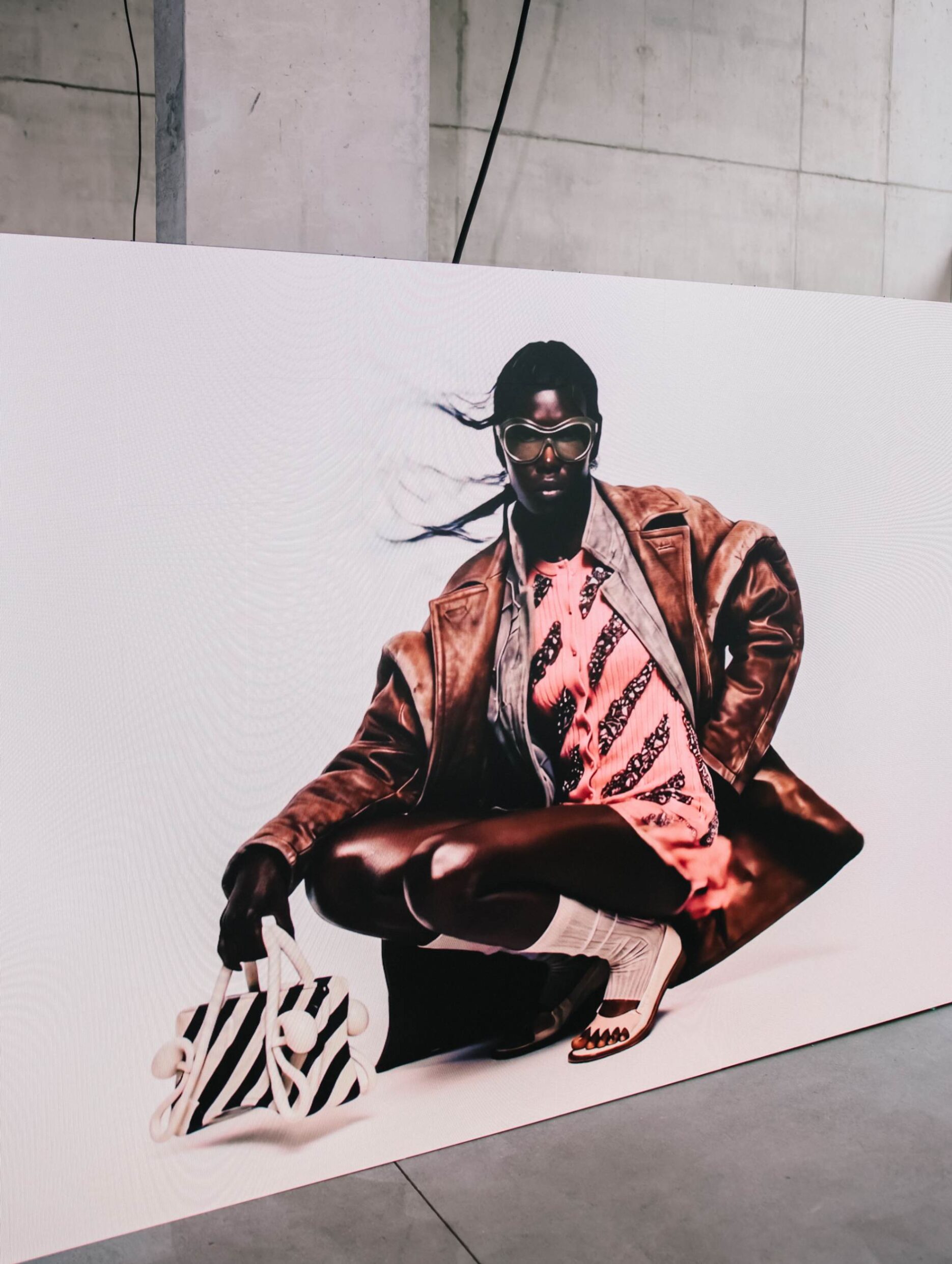
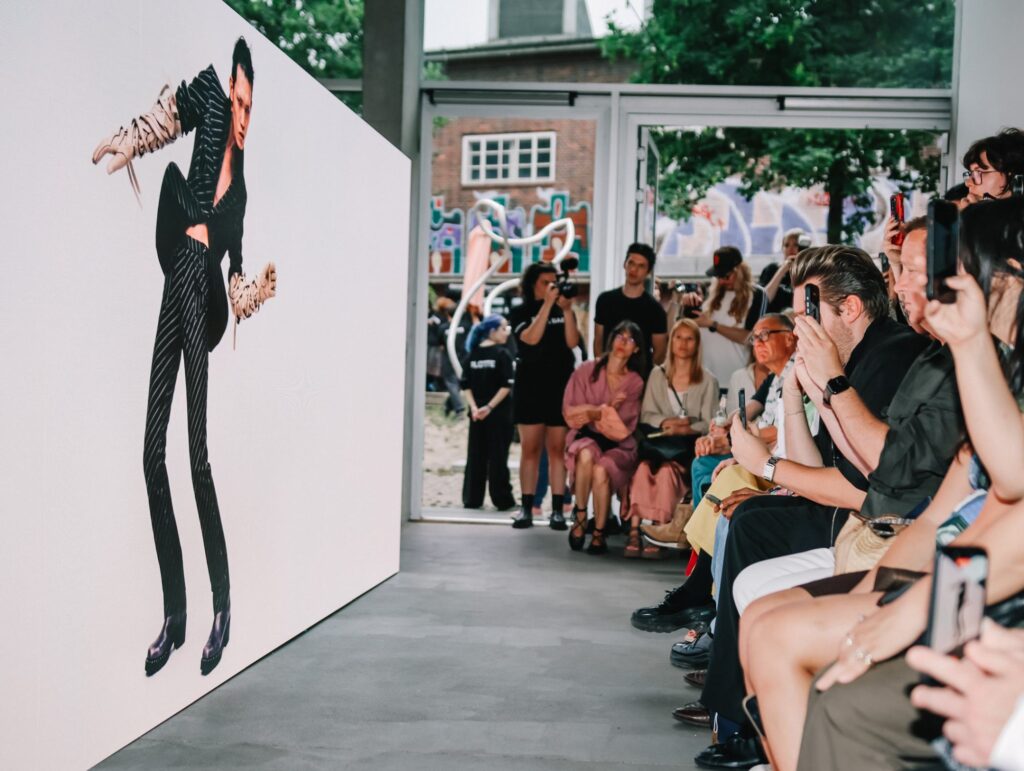
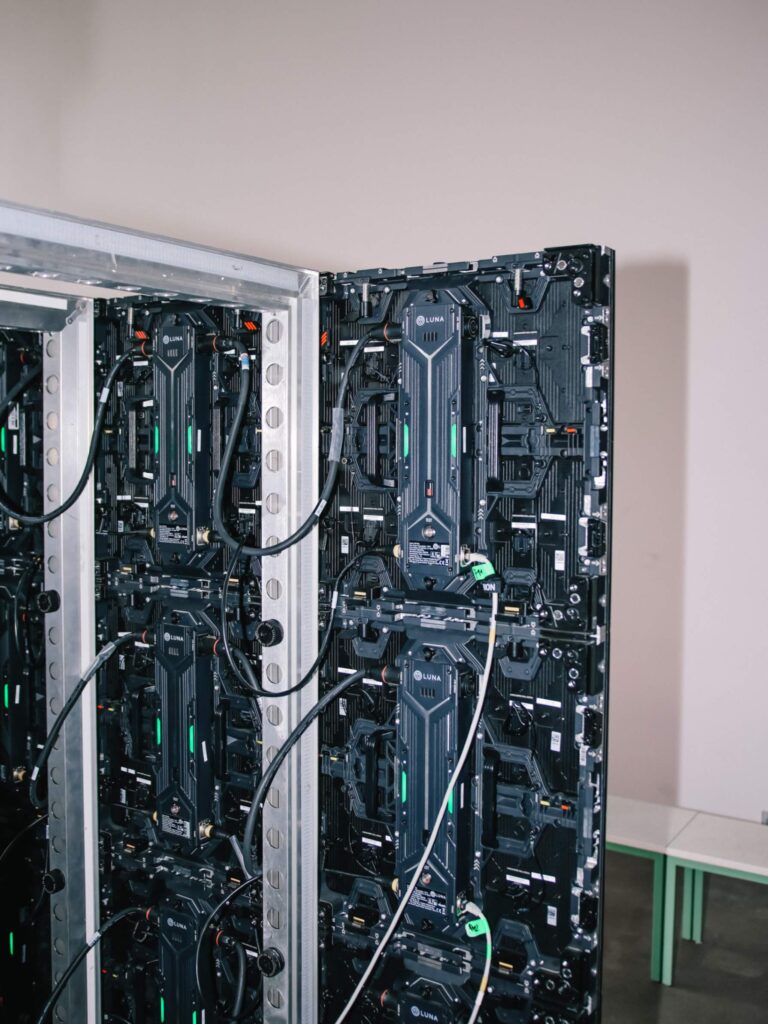
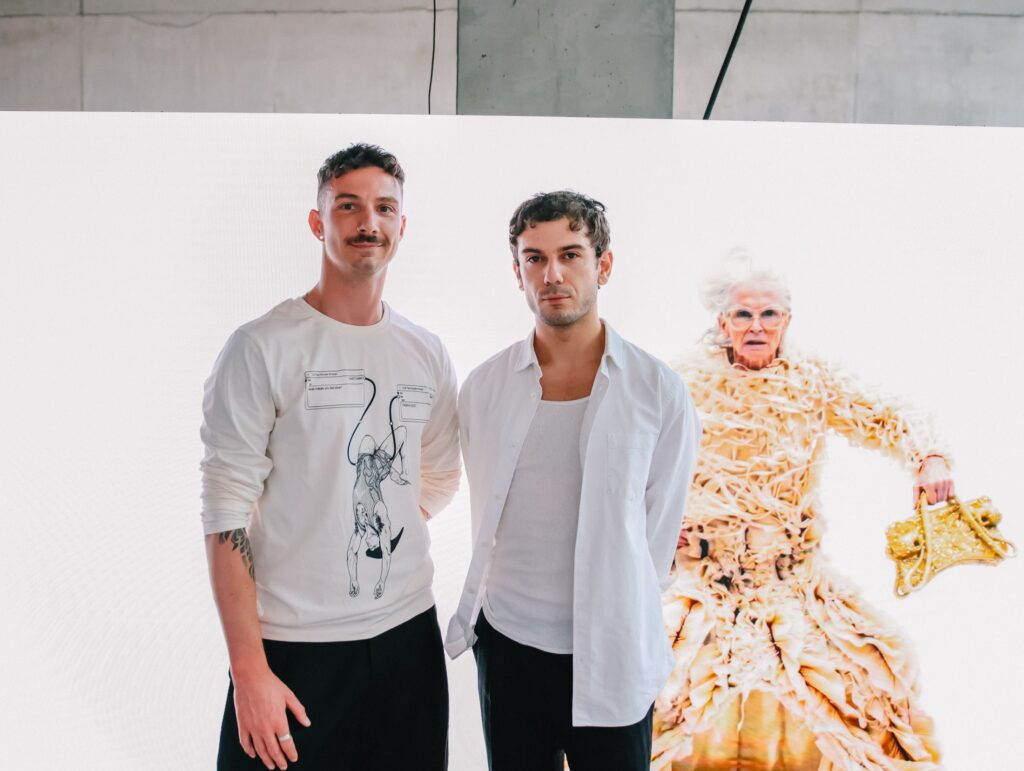
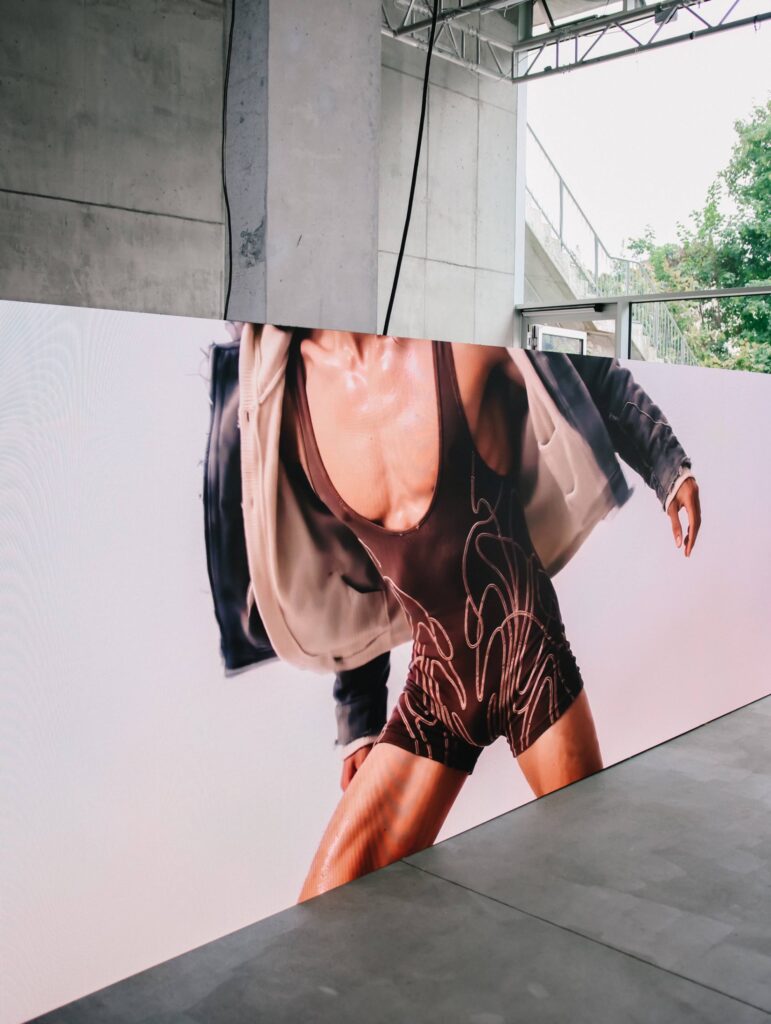
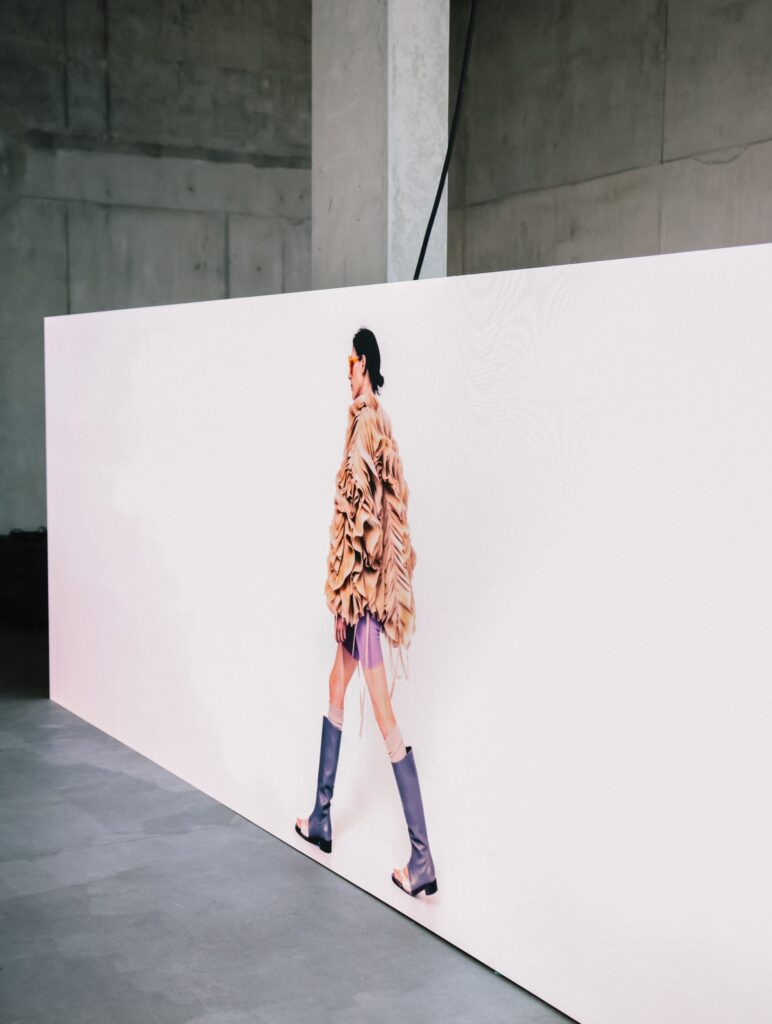
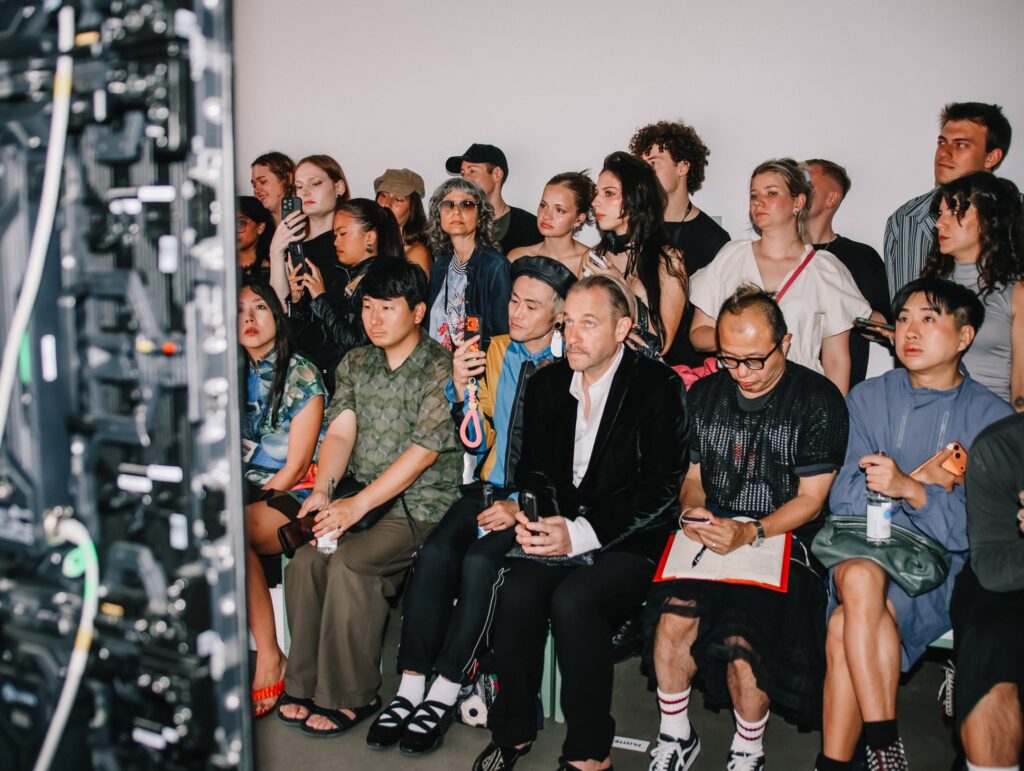
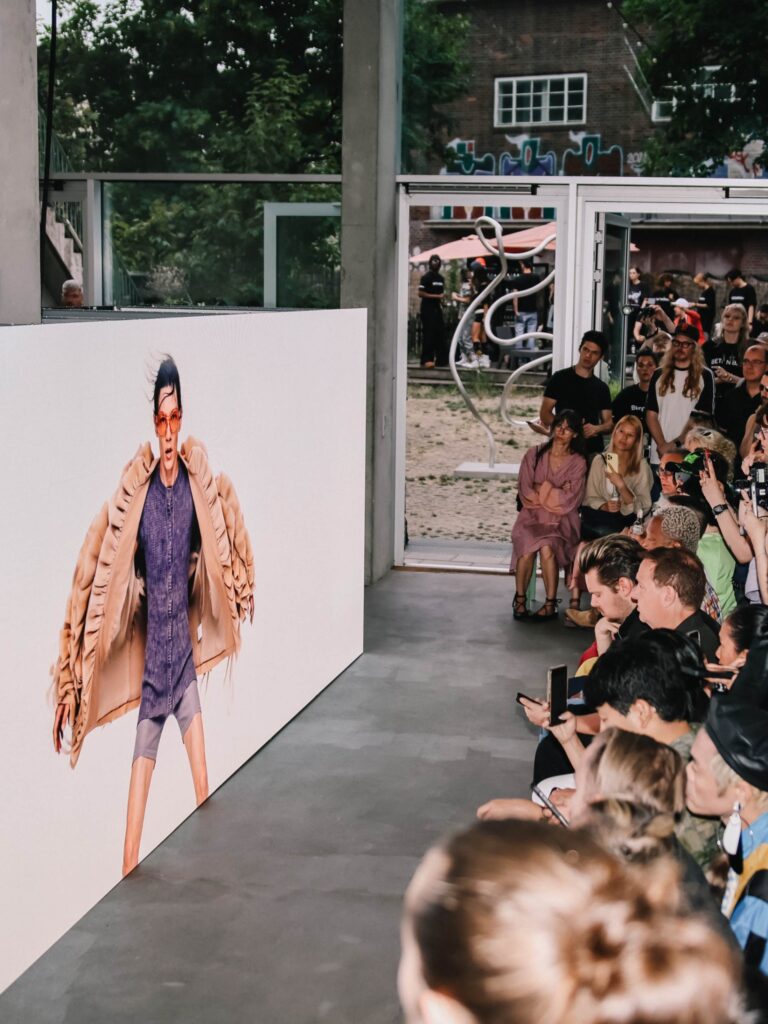
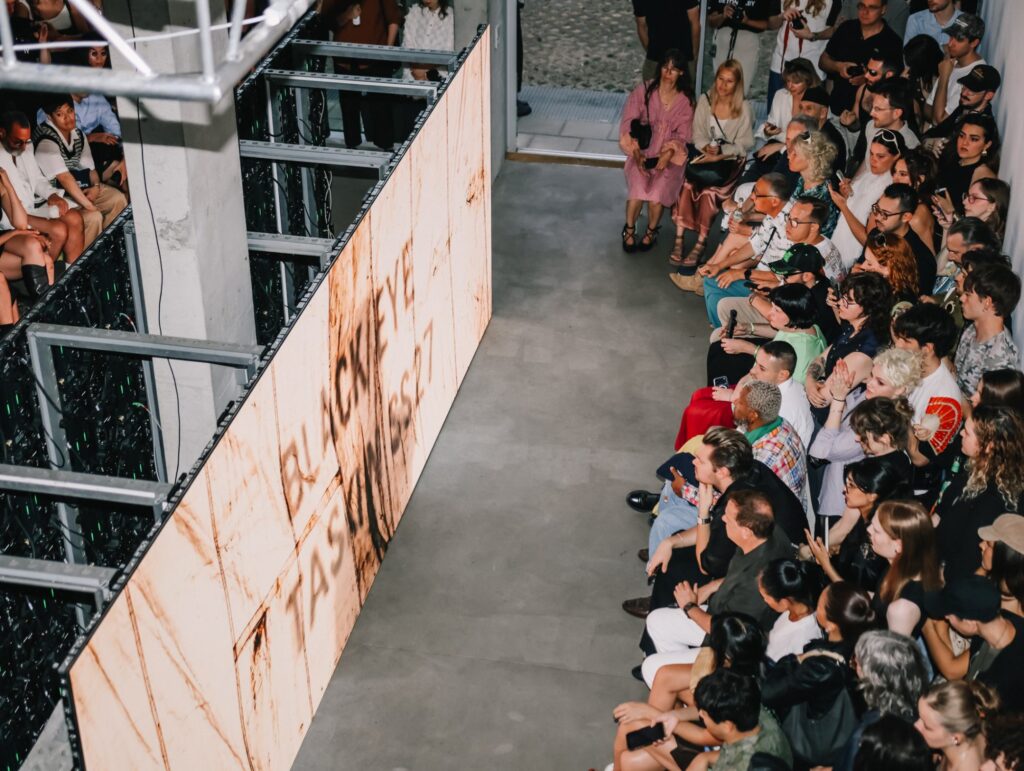
Nobody seemed to know quite what to expect from Taskin Goec’s SS27 debut at Berlin Fashion Week. Presented by PLATTE, the show took place at Lobe Block in Berlin. Instead of a runway, two enormous LED screens faced rows of spectators. Instead of models, computer-generated figures appeared in a world of violent winds and gritty, extraterrestrial landscapes.
Yet despite its digital construction, the show felt anything but sterile. As Taskin emphasises, this was no “tech demo”.
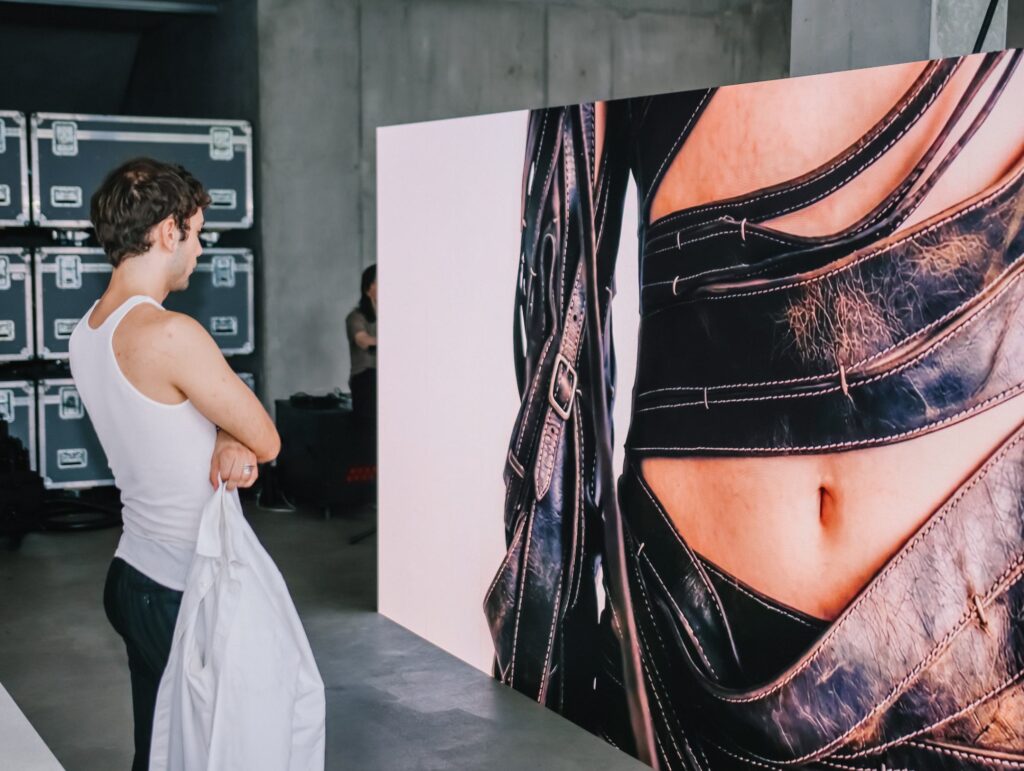
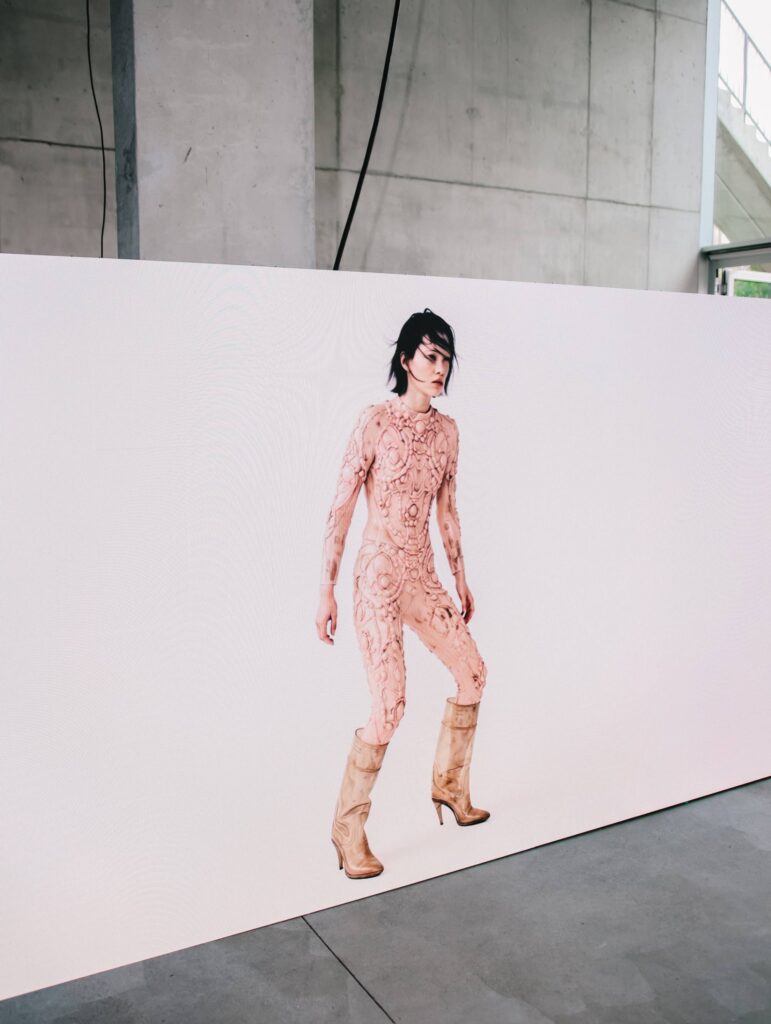
Taskin’s universe is sweaty, dirty and visceral. His AI-generated models have greasy hair, weathered skin and distressed garments. On screen, they push against relentless gusts of wind.
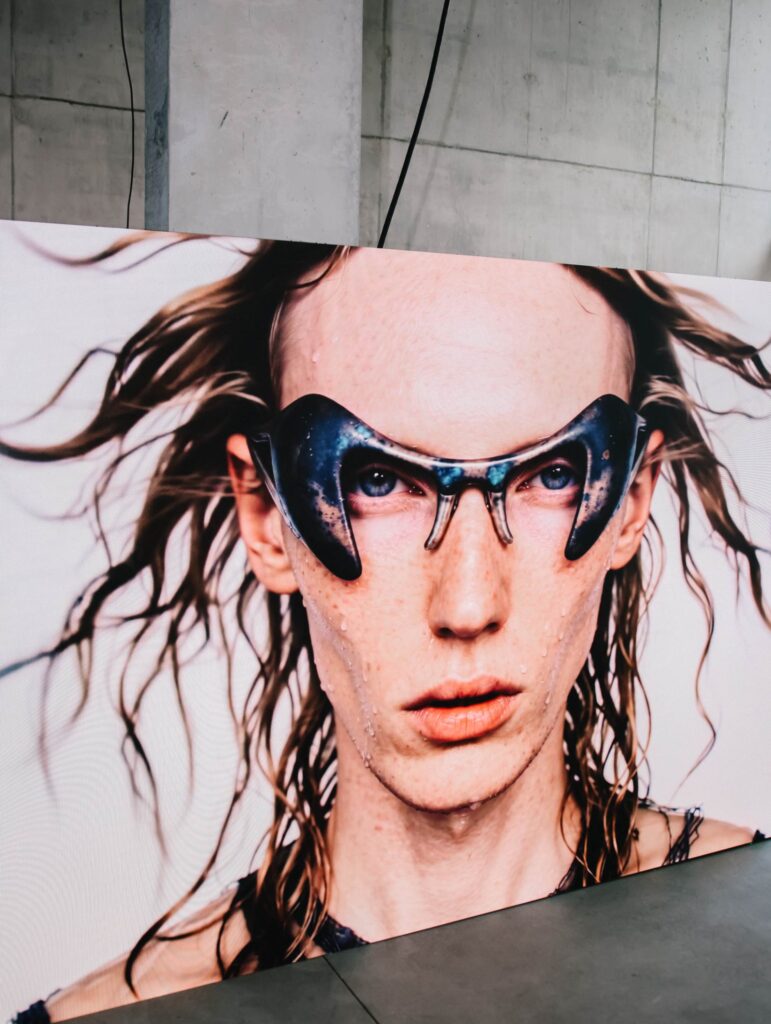
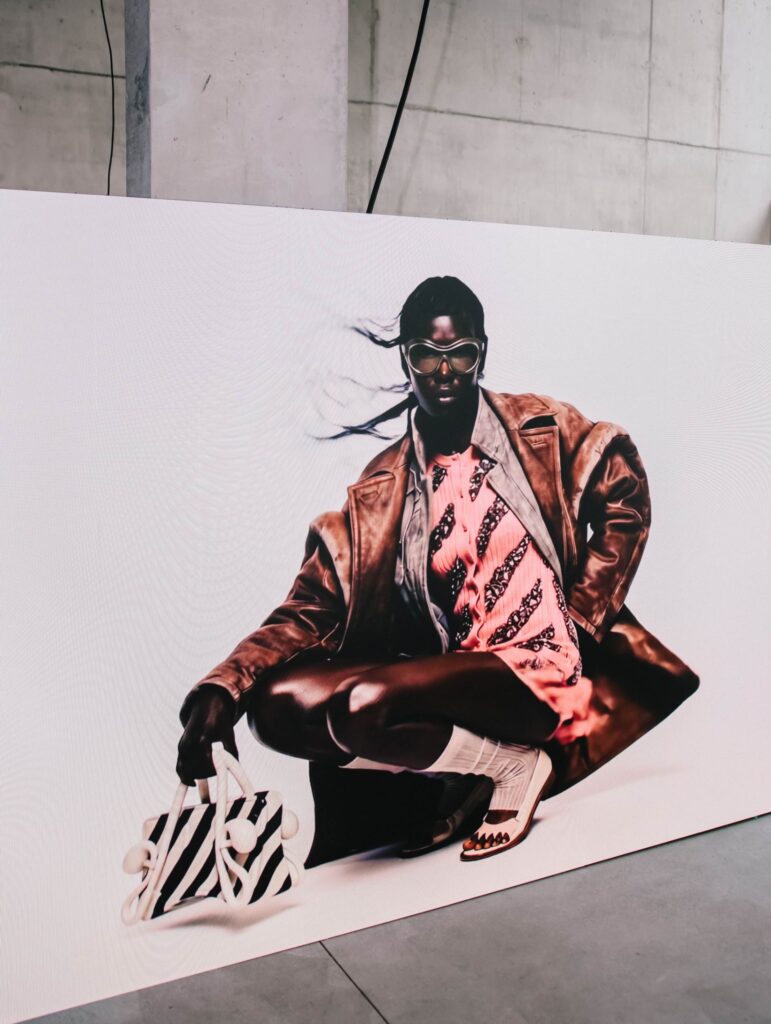
The outfits also appear amazingly textured, especially considering they technically exist in two dimensions. Hard, structural pieces dominate the collection. Gloves and dresses are constructed from leather-like straps. Meanwhile, plastic heeled boots and shoes appear almost moulded directly onto the feet.
The result is intensely rugged and utilitarian. Think patched-together futuristic armour or an alien shell.
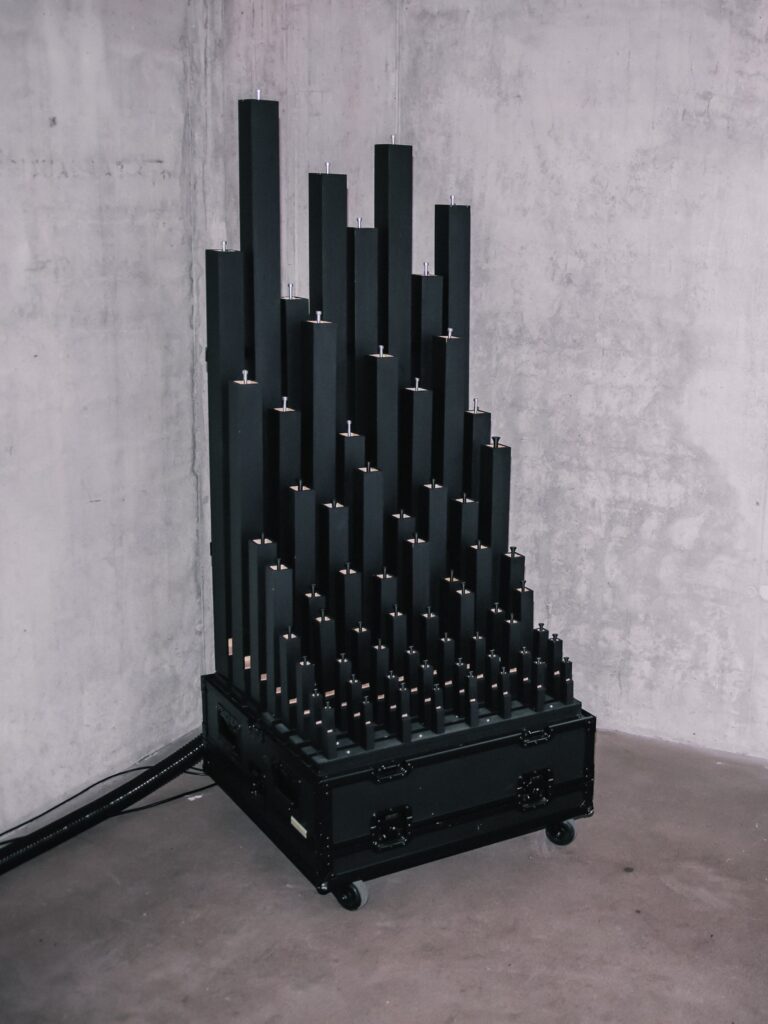
Throughout the presentation, dissonant wind-organ music adds to the unease. Its primal simplicity reinforces the post-apocalyptic atmosphere.
The show was undoubtedly striking. The audience remained absorbed by the designs and larger-than-life digital “models.” However, the experience also raised an inevitable question:
is this the future of fashion?
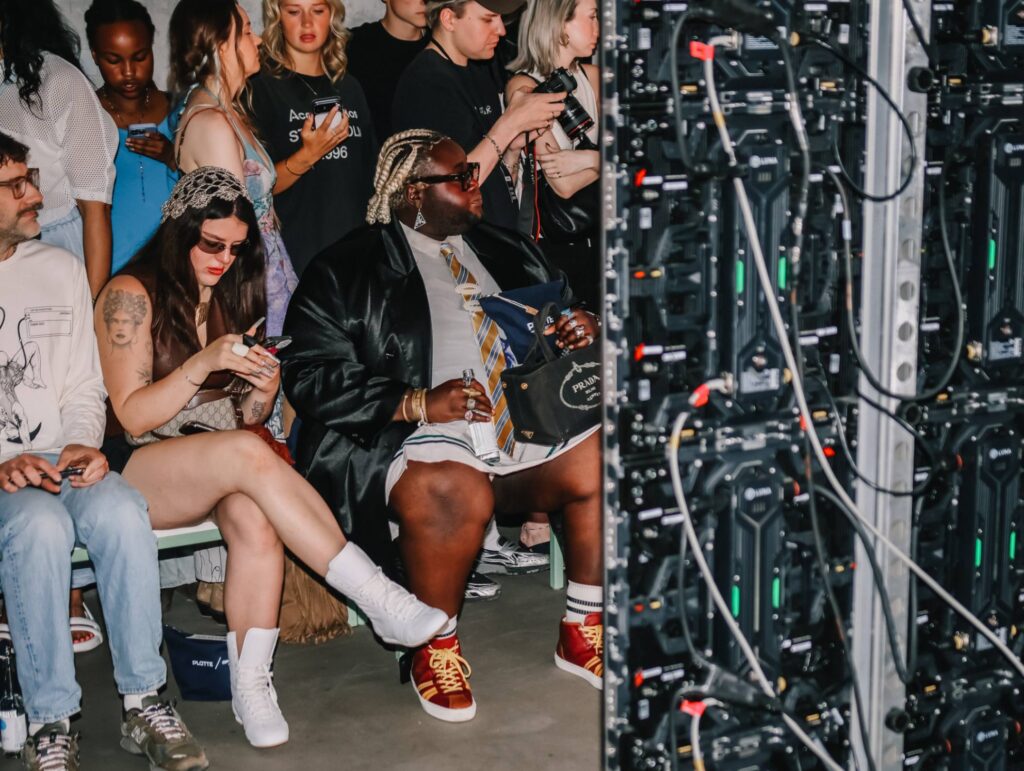
A fully computer-generated runway removes many of the logistical demands of a traditional show. There are no castings, fittings or backstage crews to coordinate. Yet it also asks us to consider what might be lost.
Is the absence of a physical model necessarily a shortcoming? Or is it simply a different way of experiencing fashion?
Although the presentation was created using AI, Taskin explains that the ideas, vision and creativity behind it remain fundamentally human. At the same time, there is an undeniable ambivalence around replacing fashion’s tactile elements with screens and algorithms.
That ambiguity is reflected in Taskin’s work. Rather than presenting AI as inherently good or evil, he approaches technology as a tool. It offers immense creative potential, but it also comes with complex implications.
I caught up with Taskin after the show to discuss the contradictions, complications and possibilities of an increasingly digital world.
Inside the “Technological Swamp”
AS: Your work feels sweaty, dirty and carnal, but at the same time it’s incredibly futuristic. In the past, you’ve described it as a “technological swamp.” Why did you choose that phrase, and what does it mean to you?
TG: I called it a technological swamp for a long time because, for me, my work is about world-building. A swamp is something that’s not fully discovered. It has a certain mysticism to it.
It’s muddy and murky, and you have to find or work your way through it.
Nothing is ever perfect or completely finished. Everything is just a snapshot of the current moment. You have to move through that imperfection in order to push technology forward. Otherwise, you’re simply reusing what’s already there.
That’s why the swamp became such a fitting metaphor. It works both aesthetically and for the actual technological process behind the work.
Where Fashion Meets Technology
AS: It’s been an interesting past few weeks in the technology-meets-fashion space. Particularly, we’ve seen Kylie Jenner’s new Meta smart glasses collab entering the conversation recently. How do you see the future of fashion and technology continuing to collide?
TG: I don’t know enough about those specific glasses to comment on them. However, what I deeply believe is that fashion and technology are both markers of the present. They’re both snapshots of today.
The purpose of fashion is to affirm that we live in the present — not yesterday and not tomorrow. That’s why I often say fashion makes us feel alive.
Technology works in much the same way. It’s constantly changing and evolving. Because of that, it’s also a marker of our time. That’s why I think fashion and technology naturally belong together.
Giving Digital Models a Life of Their Own
AS: What is your relationship like with your AI “models”? Do you have favourites, or is that a bit like choosing a favourite child?
TG: There are definitely some characters that I return to again and again. You almost develop a relationship with them and become attached to them.
Sometimes I even give them names. Others are still in the process of becoming. They’re constantly evolving, although often very subtly.
I think the moment they receive a name is the moment they’re really born.
AS: I noticed each character walks so differently. One had a slight hunch, while others stood much more upright. What’s the process of building in that individuality? Are they based or modelled on real people?
TG: They’re not based on real people, but they all have distinct personalities and backstories.
For example, one character is exceptionally tall. Therefore, she’s developed this slight hunch over time. I love those kinds of individual details because they make the characters feel alive.
Finding Optimism in an Unfinished Technology
AS: A lot of younger, Gen-Z people seem quite concerned or pessimistic about the future, especially when it comes to AI. Your work, though, has a distinct optimism and nuance to it. Where does that optimism come from?
TG: I’m actually quite ambivalent. Looking at the world today, with all the crises and the different ways AI is being used, I’m definitely not a blind techno-optimist.
However, I do think you need optimism if you want to shape the future. The only way to influence an unfinished technology is to actively engage with it. That’s where my optimism comes from.
There’s also a genuine sense of wonder. The fact that we have this technology today is incredible.
It’s human-made technology. Yes, it’s artificial intelligence, but ultimately it’s something people created. I find that endlessly fascinating.
Taskin Goec’s BLACKEYE leaves us somewhere inside that technological swamp. It exists between fascination and uncertainty, physicality and simulation, optimism and unease.
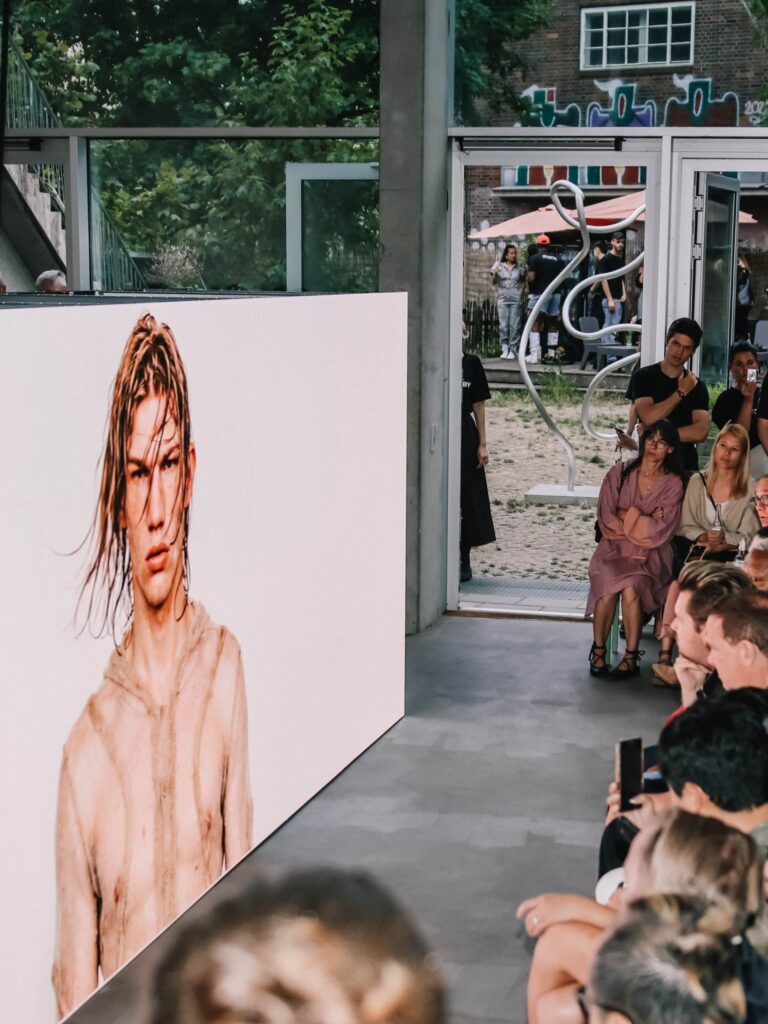
Rather than offering a clear answer about what AI means for the future of fashion, the presentation makes space for contradiction. In Taskin’s world, technology does not replace human imagination. Instead, it becomes another tool to build, experiment and question what fashion can become.
Words by Angelica Santini
Images by Frank Schröder / iHeartBerlin Photography
Check more fashion related articles here.
Our next event : Säule, Berghain – 27.08.2026
Tickets available : click here …