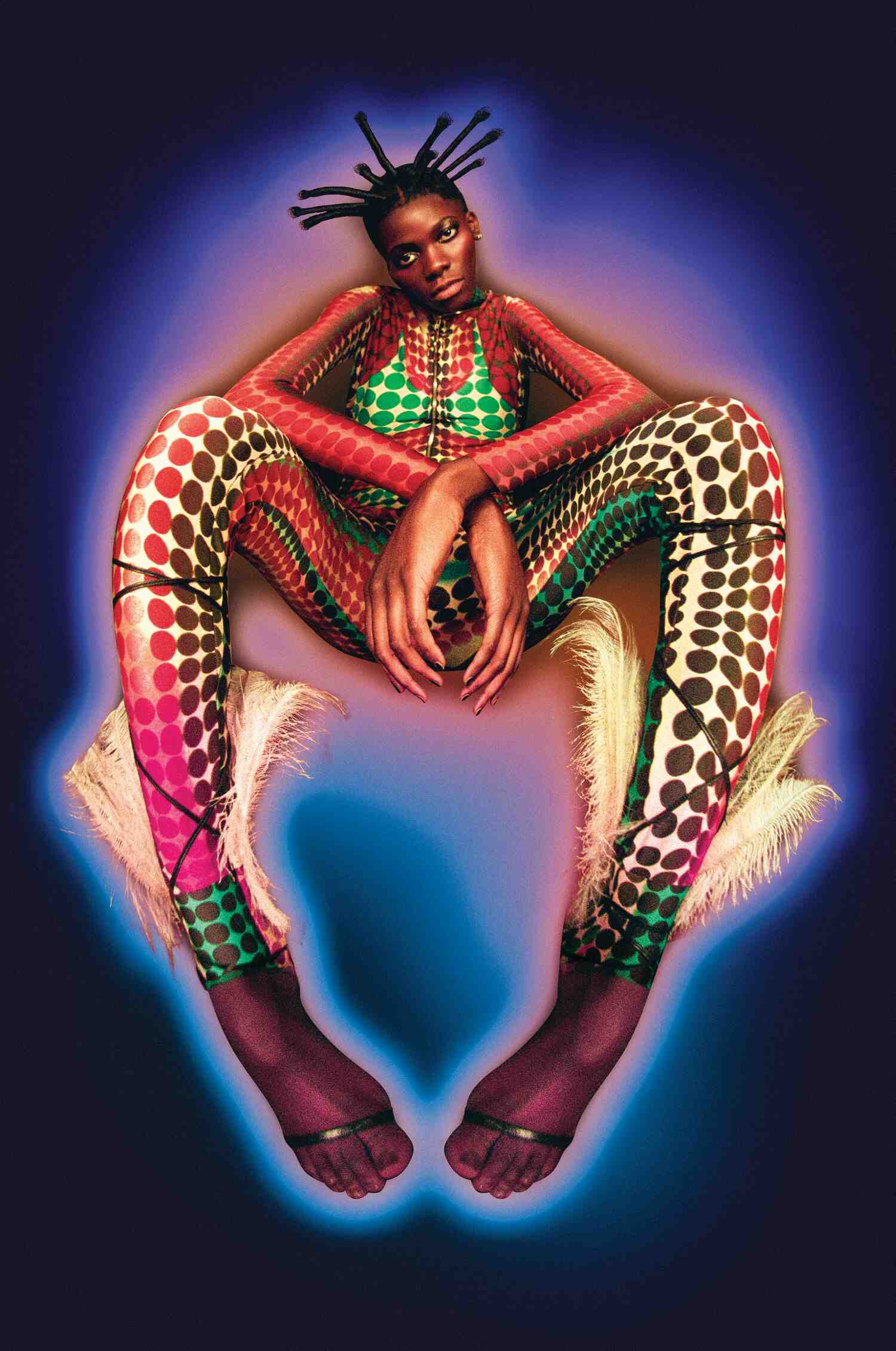
Exclusive interview with multidisciplinary artist Servulo Mendez, who reflects on beauty before algorithms, his globe-trotting creative journey, and the underground artists who helped turn Berlin from an overlooked city into the cultural epicenter it is today.
French multidisciplinary artist Servulo Mendez began his creative journey at the age of 14, discovering the transformative power of makeup. Driven by a deep passion for music and a natural sense of creativity, he has used makeup to craft compelling characters and capture their stories.

Photo: June Tamo Collin
Servulo Mendez’s breakthrough as a makeup artist came in Barcelona, where he flourished in the dynamic, supportive creative scene of the ’90s, working on high-profile campaigns and editorials. Seeking to preserve his artistic integrity, he eventually moved to Berlin, drawn by the city’s raw, non-commercial energy. Committed to authenticity, Servulo prioritizes real, unpolished creative work over commercialized or overly refined projects, focusing on expressing genuine stories and emotions rather than conforming to trends or external expectations.
Can you introduce yourself? Who is Servulo Mendez?
I’m a makeup artist who loves collaboration as well as directing my own projects, with a strong commitment to my craft. Music plays a huge role in inspiring my work, and I’m also a performer. I’m self-taught, an autodidact. I didn’t go to school, I just started to work at 18.
Makeup is something I decided to pursue early in life. I discovered the power of transformation and the ability to create characters through makeup, and that became the foundation of my work.
Makeup is more than fashion. Makeup, to me, is a universe.
Where did your story begin? How did you become a professional makeup artist?
My journey with cosmetics started when I was about 14. That’s when I first realized the power of makeup. It was never really about transforming myself, it was more about transforming others. I wanted to paint on people, and I began experimenting with my friends. From the very start, it was clear to me that I wanted to use makeup to create characters and capture them in photographs. The idea that I could preserve my work in the form of an image fascinated me.
I would use a friend as a model, take their picture, and then look at that photo. From there, I could imagine new ideas and continue evolving. Makeup, of course, isn’t permanent, it fades away. By documenting it in a photo or on film, I could keep it and learn from the experience. I’d take pictures with my little camera, develop the film at the drugstore, and then pull the prints out from the corner of the shop. I’d cut them up and create my own editorials. Without even realizing it, I was building my portfolio.
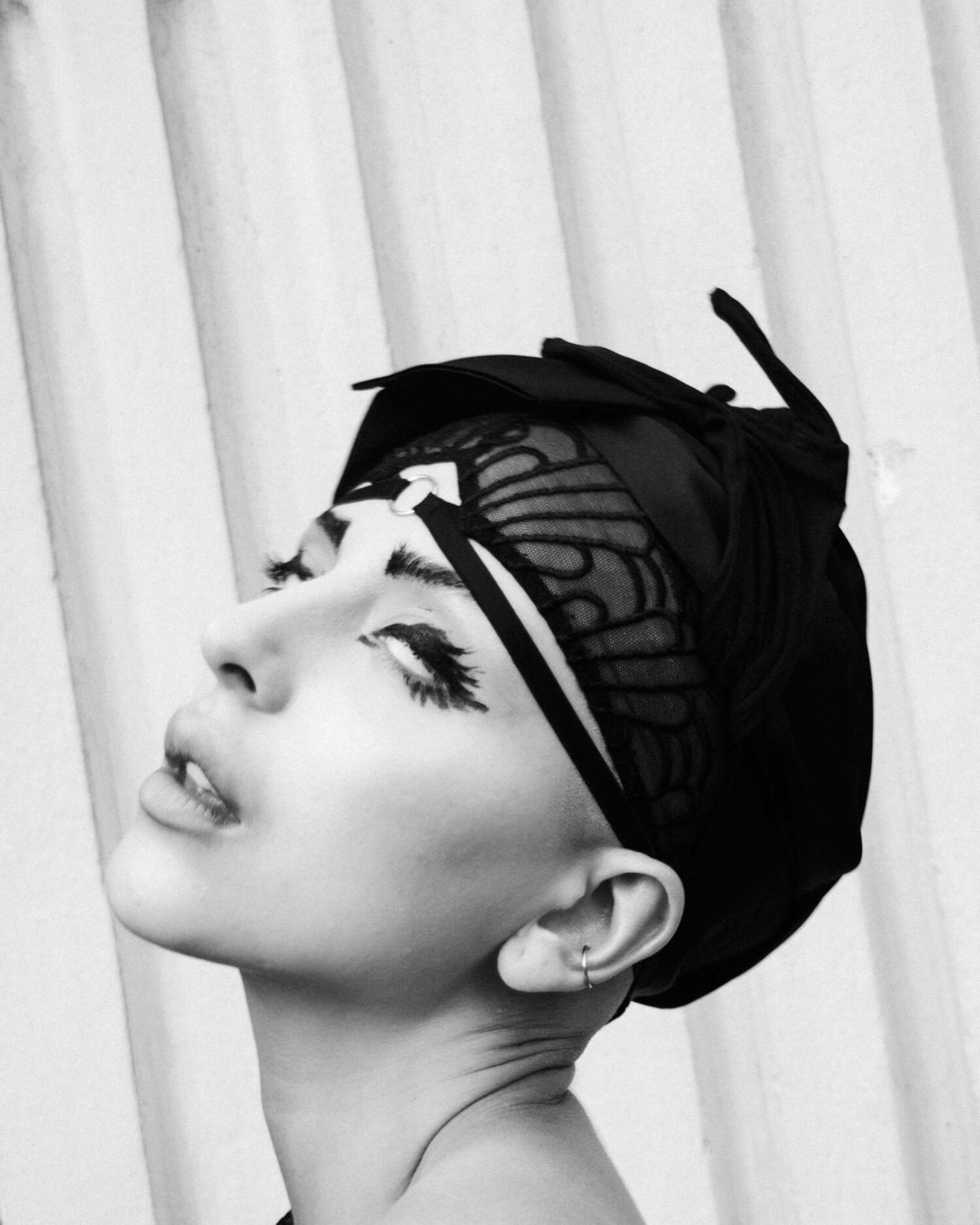
Photo: June Tamo Collin
When I turned 18, I started getting more serious about my future. All my friends insisted I had to go to university. At the time, there was only one school in France, Christian Chauveau, founded by the creators of Make Up For Ever. It was incredibly expensive, and my parents couldn’t afford the tuition. I tried applying for grants from the university, but it never worked out. I kept going back, asking repeatedly if they could help me, but they couldn’t. I became so frustrated. One day, after leaving their office for the umpteenth time, I thought, “Forget it, they don’t want to support me.” So, I pulled myself together and went back to my hometown in Brittany.
There I gathered my courage and used the only wealth I owned: creativity. I was constantly surrounded by creative people, and my friends, who actually went to art school, inspired me to create a portfolio of my own. I decided to put together a book just to prove I could create something beautiful. So, I began making looks with my friends once more. One friend would take the photos, and another would model for me. That’s how it all started.
I gathered my courage and used the only wealth I owned: creativity.
We would spend entire days and nights experimenting with different locations, characters, lighting… I didn’t need to learn in a classroom. No one could teach me what I already felt deep inside.
What or who were your inspirations at that time?
My main inspiration has always come from music. I grew up in the era of music videos, and they were my creative fuel. Of course, my creative friends inspired me as well.
I would eagerly wait for new music videos from all my favorite artists. Bands from the late ’80s and ’90s were making such beautiful, visually striking videos. It’s something that’s rare to see today, as most artists no longer invest in their music videos the way they used to. It was an incredible time for me. I’d have deep conversations with my friends about everything: “Did you see Kate Bush’s look?” “What about that dress and that hair?” Those were the kinds of discussions we had.
Fueled by all this inspiration, I created my first portfolio. I moved to Paris and stayed with a friend for a while. There, I landed my first job with a French label. The model I worked with was quite famous at the time. The campaign itself was a bit tacky, but the fact that the model was becoming well-known opened doors for me. Before that, most of my photos were of unknown faces.

Photo: Tatsiana Tribunalova
There were so many different aesthetics at play. One magazine I loved was DutcH Magazine from Amsterdam. I had the chance to work on a few issues, and it had such a unique, beautiful visual identity. I still keep the issues to this day.
Back then, there was no discussion other than Italian Vogue. Even French Vogue didn’t compare to it. Italian Vogue, i-D Magazine, DutcH Magazine, and The Face, those four magazines were the ultimate bibles of aesthetics. They represented everything I wanted to achieve. This was my creative vision.
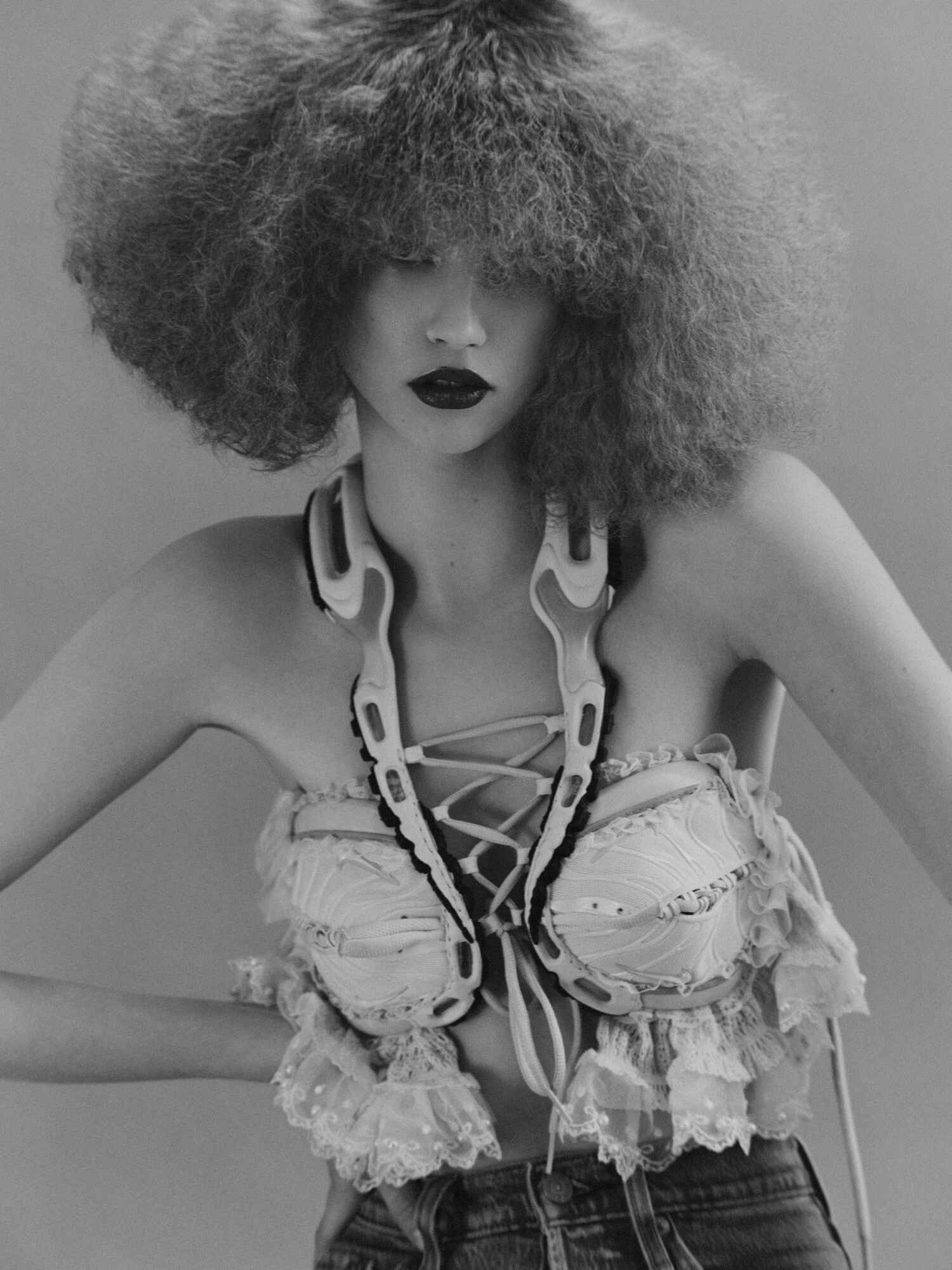
Photo: Rok Trzan
The editor-in-chief of Italian Vogue was incredibly open-minded. It was the boldest, most extravagant magazine at the time. It embraced gender fluidity and showcased imperfections in the most beautiful way. Some editorials were 40 pages long, taking up to three days to shoot. Imagine working with models like Amber Valletta or Karen Elson, and they’d have around 500 different ensembles. These were highly elaborated, detailed looks. If you look at them today, they feel so fresh, so now, and the quality of the images was absolutely sublime.
And they were doing it without all the support of modern technology! It was all analog.
After Paris, you moved to Barcelona and lived there for eight years. What made you leave Paris, the fashion capital of the world?
I reached a point where Paris wasn’t fulfilling me anymore. I was just starting out, and there were already established names dominating the scene, making it difficult to pass through them. I never took the traditional route of becoming someone’s assistant. Typically, a big makeup artist would go to certain schools, allow students to assist them, and eventually, those students would work with people from that group. But I never had that opportunity. Not because I didn’t want to, but because it was never offered to me.
Then, I met a photographer who asked if I wanted to come to Barcelona with him. At the time, people were talking about Barcelona, but fashion wasn’t really a major scene there. As a French person in fashion, being in Paris made sense. But Paris wasn’t treating me well anymore, and I reached a point where I thought, “Give me a break! I think I’m better off elsewhere.” I couldn’t speak a word of English and felt a bit limited, but I decided to take the chance and try something new. So, I went to Barcelona.
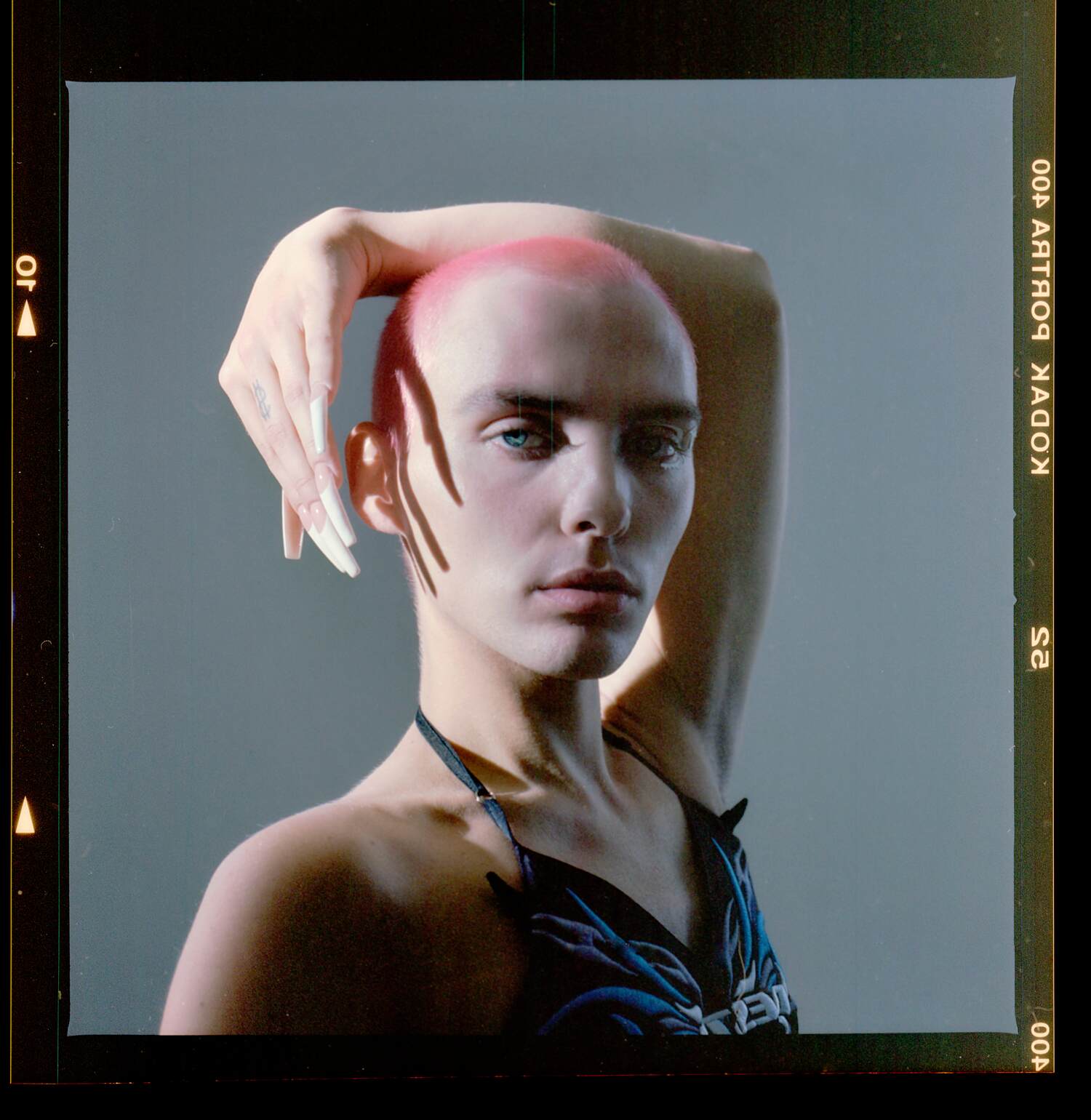
Photo: Fofo Altinell
We stayed in an incredibly cheap pension for a couple of months, and that’s when I fell in love with the city. I thought I’d never feel that way again. It was that feeling you get when you’re at a certain age, leave everything behind, and experience that spark for the first time. It’s like your first love.
Once I left, I never once thought about moving back to Paris. It was my little act of petty revenge on the city.
My French identity was part of my aesthetic vision and my passport, but nothing else.
What was it that you loved so much about Barcelona?
First of all, I believe Barcelona is one of the most beautiful cities in Europe. It’s absolutely stunning. The architecture was fascinating, and the weather was incredible, no doubt about it. But what really stood out to me was the people. They were so welcoming! Both the older and younger generations mixed so effortlessly. And the way they dressed, I noticed it immediately, even coming from Paris. In France, we tend to be a bit more reserved, but in Barcelona, there was this lively, extroverted energy. The street life, the atmosphere…it was all so captivating.
Then, of course, I started meeting people and connecting with model agencies. No one asked me about my age or anything like that. I was just a French guy from Paris. Wherever you’re from, you bring the reputation of your country with you. Back then, being from Paris was an advantage. It’s not the same anymore, but in the ’90s, the ‘French touch’ was like a secret weapon. I was able to experience the kind of appreciation I’d never felt in my own country. From the start, I felt empowered and immediately immersed in the scene. But my French identity was part of my aesthetic vision and my passport, nothing else. I picked up Spanish in just six months, and then it was all about work, work, work.
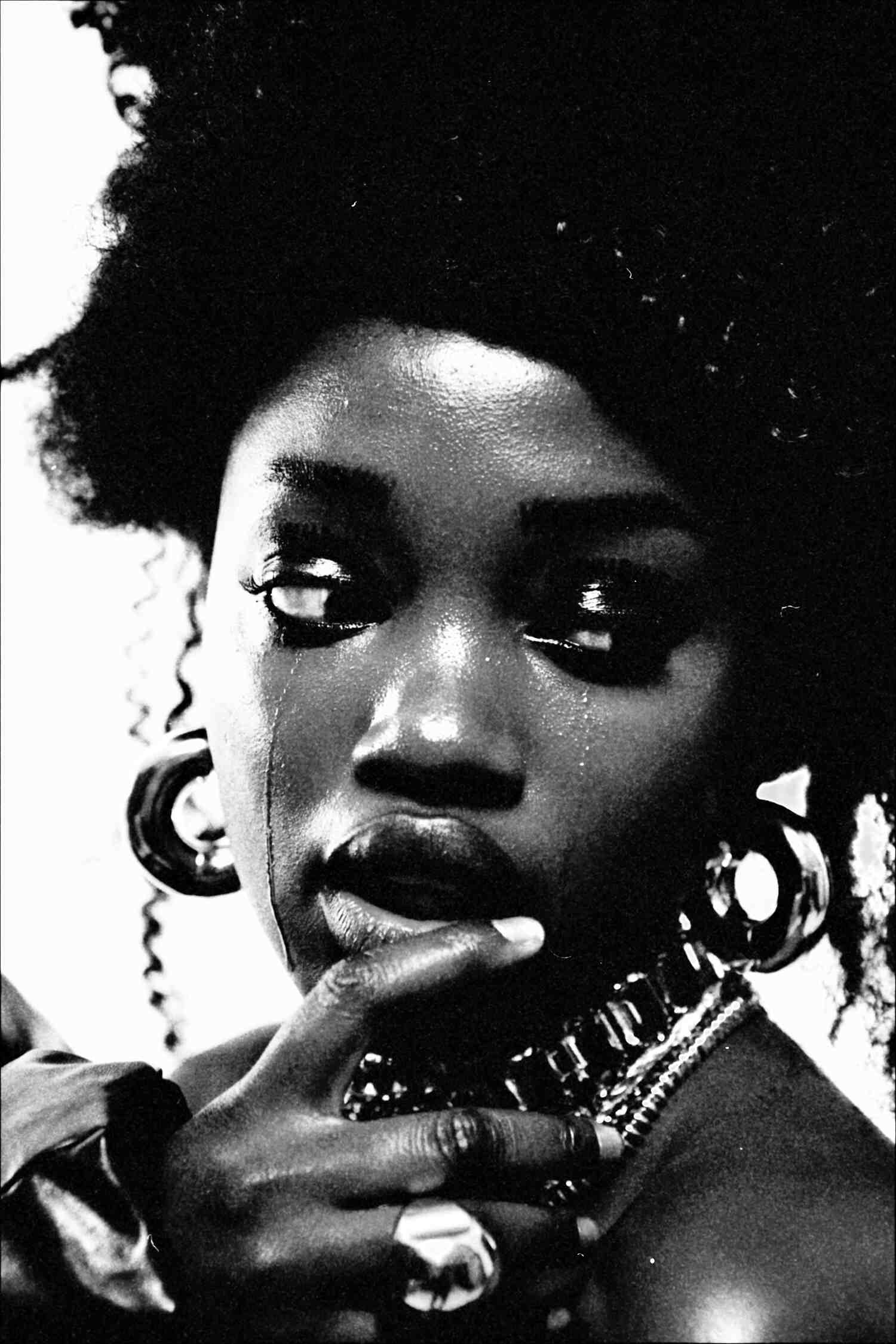
Photo: June Tamo Collin
Those were the years I traveled the most, because the ’90s were the golden era when the money was flowing. Some of my fees back then were higher than what I get today. I got to experience that golden age, where they’d fly you out for a two-day shoot with Marie Claire or Elle, then send you off to Indonesia for a few days. I started building strong connections with Vogue Spain, Elle Spain, and Marie Claire. I got my first agents and spent eight years working nonstop, living an incredible life in Barcelona.
I eventually reached a point in my career where my agent wanted me to become this high-profile makeup artist, focusing solely on celebrities, such as becoming Penelope Cruz’s go-to makeup artist. I was happy to build and publish a portfolio, and establish some reputation. But at the same time, something didn’t feel right. I wasn’t being true to myself. I’m an indie person.

Photo: Lotte Thor
I came from a time when editorial editors would use a magnifying glass to inspect my work. I don’t think about Photoshop. I focus on getting things as perfect as possible in the moment, because I come from an old-school background.
Back in those days, Photoshop was just starting to make its way into the industry, and there was a lot of manipulation going on with images. Everything was glossy. I found myself constantly clashing with the creative team. I came from a time when editorial editors would use a magnifying glass to inspect my work. I don’t think about Photoshop. I focus on getting things as perfect as possible in the moment, because I come from an old-school background. If the first, second, or third Polaroid didn’t look perfect, whether it was the skin being too shiny, the structure off, or uneven lashes, you’d get kicked out. People were incredibly hardcore back then.
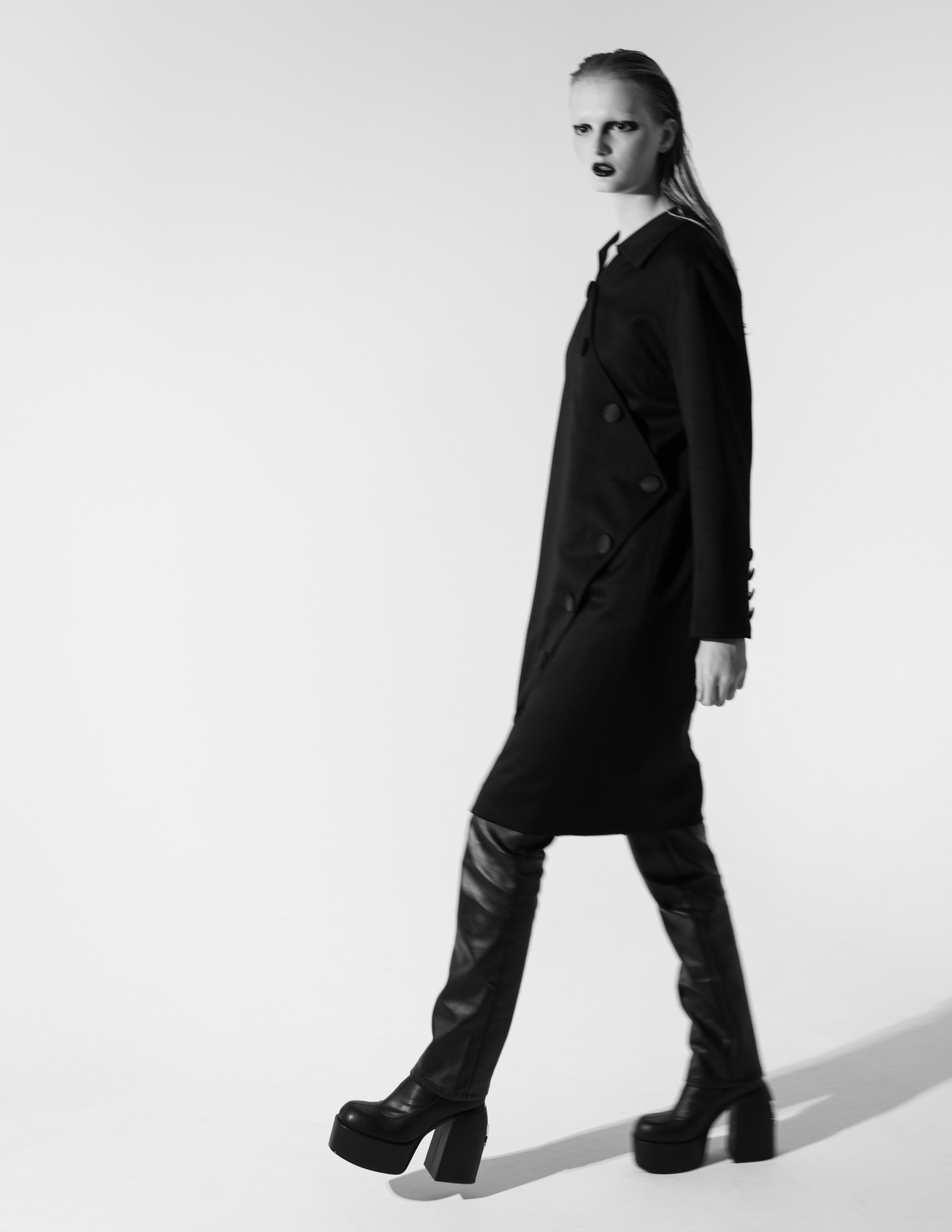
Photo: Lotte Thor
That’s wild. How did you bring your ideas to life without using Photoshop?
There were no filters back then. The only form of ‘Photoshop’ I had was a hands-on, manual process. We would actually paint directly on the photo, which was incredibly expensive. Only the biggest brands could afford that. It was wild. I believe that was the true artistry of the industry, and I don’t think people today fully understand it.
If a girl had a pimple or a scar, there was no easy fix. We’d simply cover it with a finger or move some hair to hide it. That was how we manipulated the image to make it look flawless. Through lighting, styling, makeup, and hair.
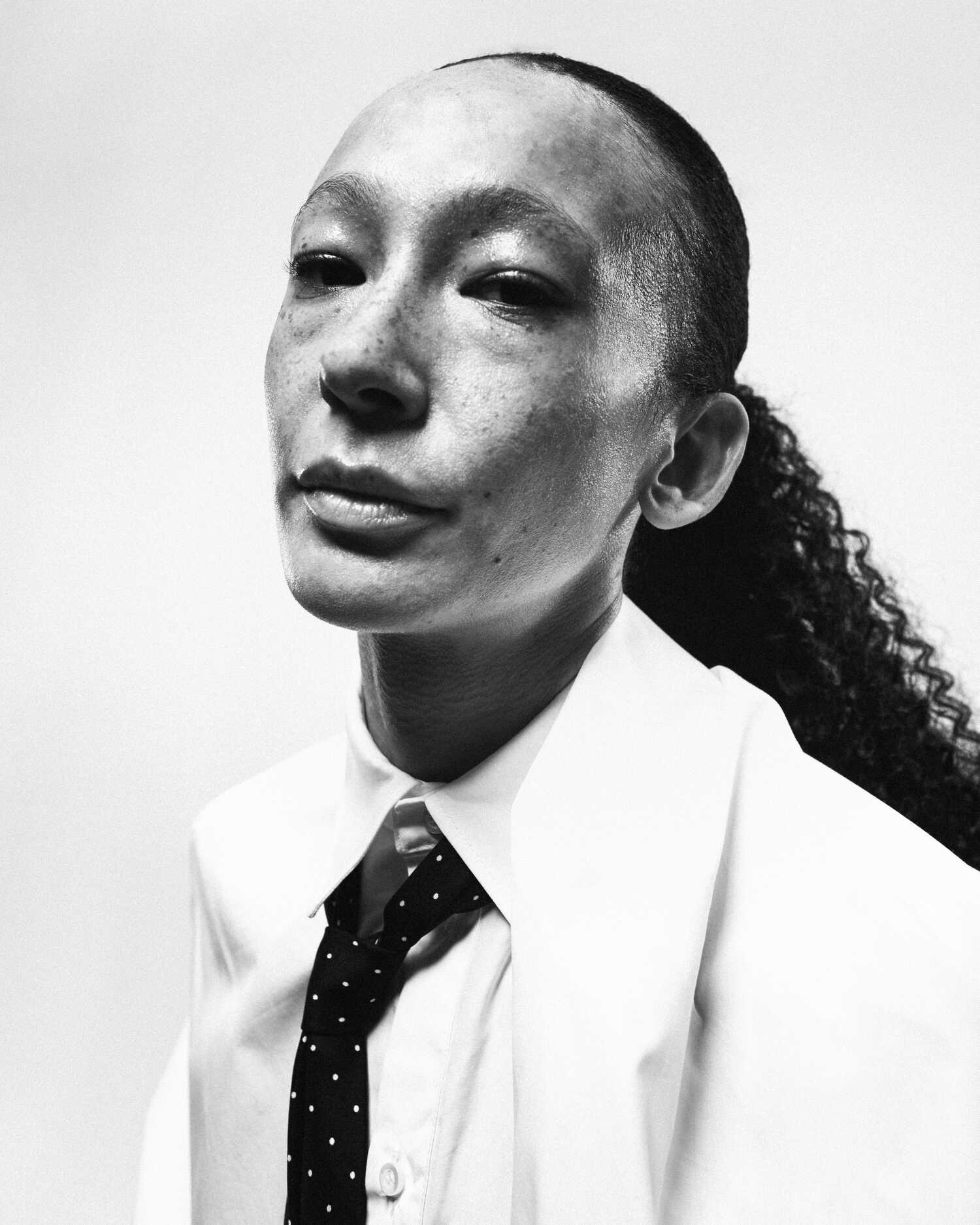
Photo: June Tamo Collin
Photoshop made its way into the industry in a big, problematic way. It brought the cyber vibe of the late ’90s and early 2000s to life. The Y2K era, with all the TCL and the signature aesthetics of the time. Jennifer Lopez’s glow was the epitome of that look. You can see it coming back now; tribal tattoos and either no eyebrows or razor-thin ones. Back then, Christina Aguilera and Gwen Stefani were the queens of it all.
I loved the eight years I spent in Spain, and I reached a certain level. But it was time for me to move on to something new. My agent wanted me to focus more on commercial projects, which meant I had less time for my own independent work. Some people I worked with had a strong love for New York, so I thought, why not give it a shot?
I spent a few years in New York, and it was a challenging period. I had this idealized, dream vision of New York. The one from the mid to late ’80s. But the New York of the early 2000s was very different. The terrorist attack on the Twin Towers, for instance, changed everything. The New York I experienced was super commercial, with everything starting to look the same. All the small independent magazines were vanishing, and up-and-coming designers were struggling because no one had the money to support them. I ended up burning through my savings while living there, creating some work with other creative individuals on the side.
And then it was time for you to move to Berlin. Why?
I met my first boyfriend, a German guy, when I visited Europe. I fell head over heels for him and ended up visiting him in Berlin. He was part of a circle of friends there, including Peaches, who’s one of the city’s veteran artists. Every Wednesday, she’d perform her first album and hold jam sessions. Suddenly, I found myself immersed in this incredible scene of hyper-talented people, something I hadn’t experienced anywhere else. Berlin was alive, and everything indie was concentrated there.
It was amazing. Huge, open spaces with a few people, no filters at the door and all this bullshit. You’d meet people and spontaneously collaborate on projects. It had that same feel as Barcelona, where everything felt organic. I never wanted to be the makeup artist with fancy brushes or glossy glam. I wanted to be part of the scene, behind the scenes, remaining a mysterious artist. In Berlin, I found my place.
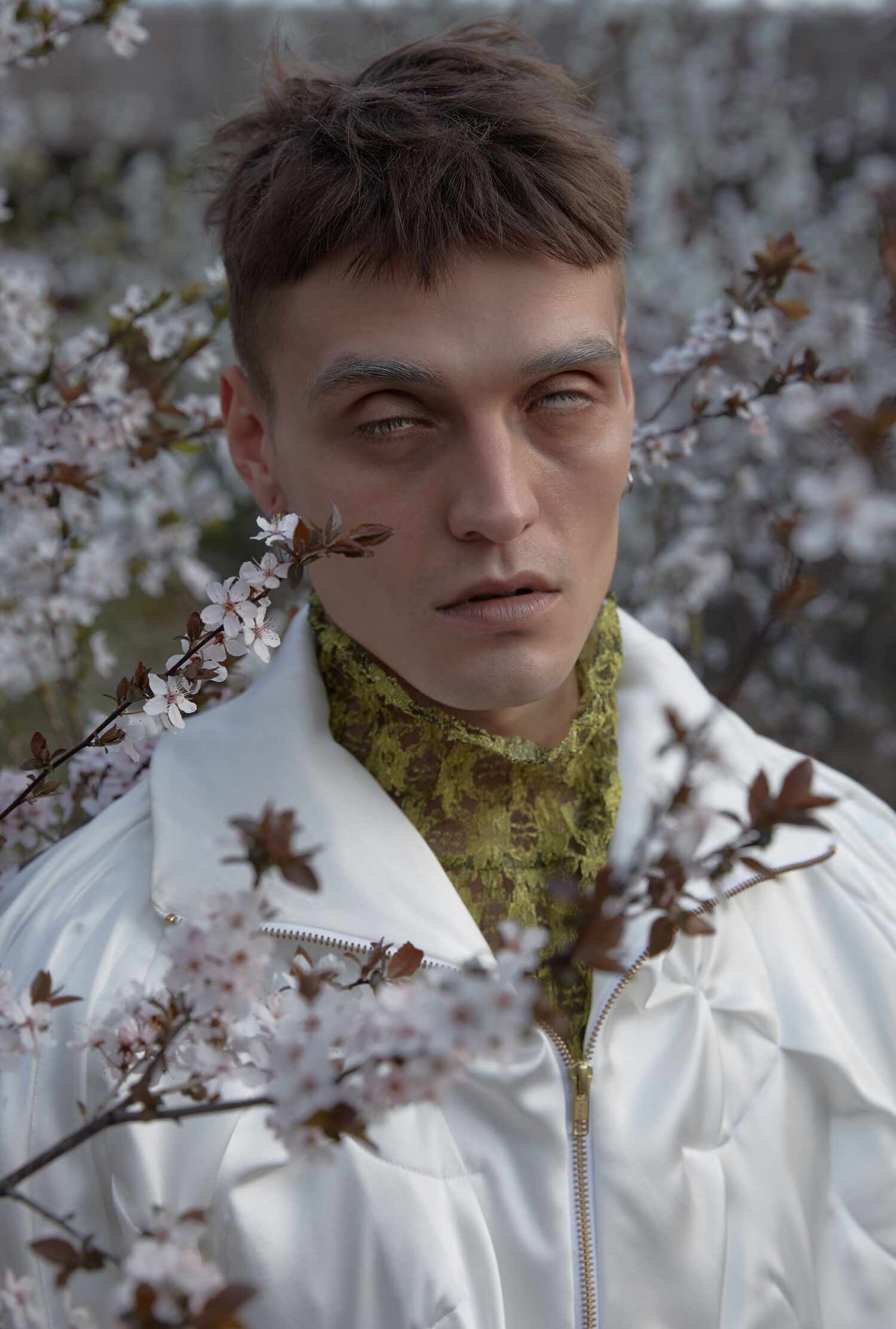
Photo: Fede Reyes
When I first moved to Berlin, there were no agents who could represent me with the portfolio I had. Can you believe that? I arrived, only to be told there was no work for me because I was “overskilled.” I told them it didn’t bother me. And if it meant simplifying my portfolio, then that’s what I’d do. I fell in love with the city instantly, of course! And on top of that, I had a love story unfolding, which made the whole experience even more intense.
Can you describe what life in Berlin was like for you and your work in the 2000s?
Back then, the party was part of daily life. It was just part of the experience, and it felt completely natural. You didn’t have to plan anything; it was always there, happening everywhere you went, every day. It was so spontaneous. One minute you’d be at one place, and the next, you’d be invited somewhere else. Some of these spots were legal, others not so much. That alternative lifestyle, and the secrets that came with it, it was attractive to me. I loved it. It felt real, authentic.
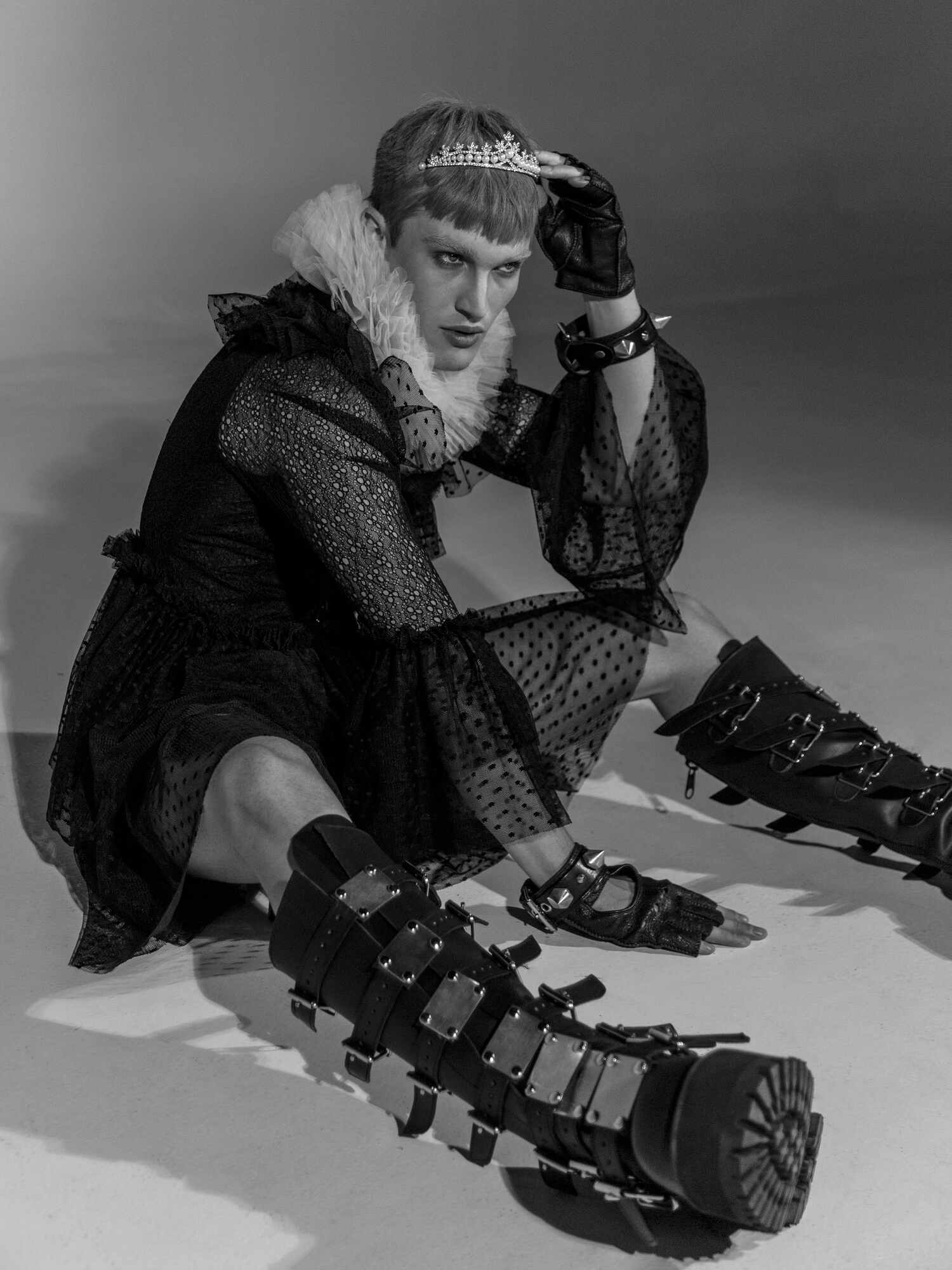
Photo: David Suarez
Creators came to Berlin for different reasons, but we all worked hard and built this city together, shaping it into what it is today. Back in 2001, no one was really talking about Berlin. There were just a few musicians; Peaches, Gonzalez, Feist, Mocky, Taylor Savvy, and a handful of others. It was like one big music experiment. There was the electroclash movement, a vibrant cultural wave that mixed old-school electronic beats with punk. It had such a powerful impact on me and definitely defined Berlin’s music scene. Then, of course, came minimal techno, deep house, and more. It was massive.
“Creators came to Berlin for different reasons, but we all worked hard and built this city together, shaping it into what it is today. Back in 2001, no one was really talking about Berlin. There were just a few musicians; Peaches, Gonzalez, Feist, Mocky, Taylor Savvy, and a handful of others. It was like one big music experiment.”
We fought for years to establish a Fashion Week in Berlin, to create all the things that didn’t exist yet. We wanted Berlin to be recognized as a respected city of creativity. We poured everything we had into it. I know so many people who dedicated all their energy to building spaces, stores, whatever it took. They worked tirelessly, surviving on instant noodles, just to create the Berlin everyone now loves. There was no money, no one pretending to be rich. It was all about proving that we could create something great. That raw energy is what I truly love about Berlin. It’s what made the city famous.
Across three decades and many cities, what projects shaped your journey the most?
I absolutely love working in print more than anything else. I love it more than life itself! I even like it more than doing makeup for the red carpet or working on big campaigns. This is what truly excites me. I enjoy collaborating with others, and the most thrilling part is publishing and creating stunning images with a variety of people. I also love exchanging knowledge and sharing experiences with other creatives.
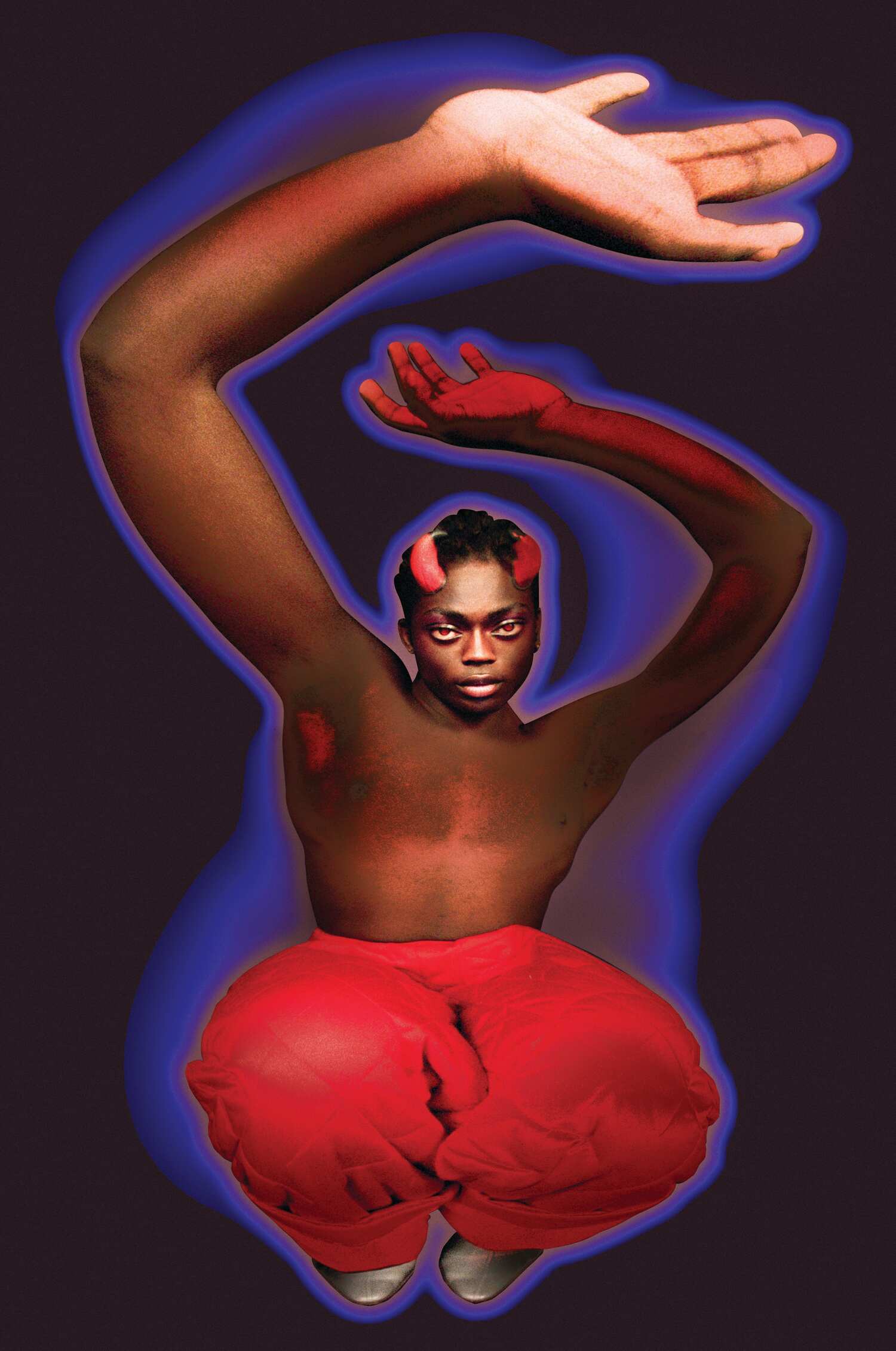
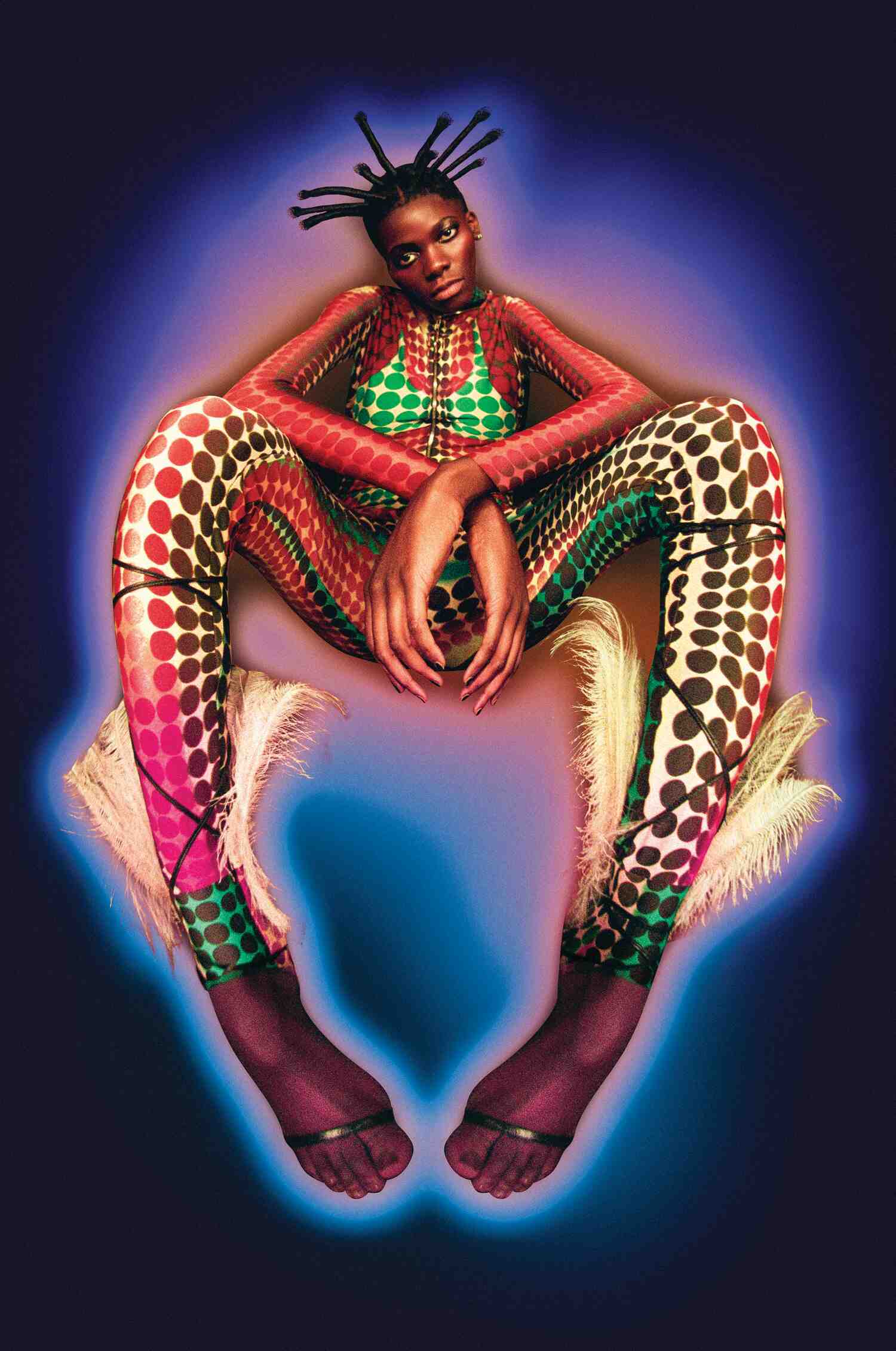
Photo: Daan Dam
That sounds like an incredible journey…and life. It’s inspiring to see how you’ve built your own path. I’ve got one last question for you, and it’s about the next generation of creative minds.
What encouragement would you give to these young people? What knowledge would you share with them?
First and foremost, they need to believe in what they’re doing. Don’t be afraid to mix things up and experiment. Go for it. Really go for it. Don’t hold yourself back, because that’ll only make you feel insecure as a creative. You don’t want to put up walls; you want open windows. Yes, your skills and knowledge will grow, and your vision might evolve too. But I still feel the same passion, the same excitement, and the same fire I had when I first started.

Photo: Francesco Cascavilla
The opportunities are right in front of you. Don’t be afraid to fail! One misstep won’t ruin your reputation. You won’t just create one piece of work, you’ll create thousands. And each of those works will contribute to shaping your personality, your reputation, and who you are as a creator. Don’t be afraid to experiment. It doesn’t matter whether you have money or not. Work with what you’ve got. Don’t let that hold you back.
Another thing I always tell people: spend more time with your creative friends. Before social media, that’s all we did, and we made things happen. Go for coffee, have dinners, and then create something spontaneously that same night. This is where the magic happens. Don’t let the beauty of the moment disappear, you will regret it.
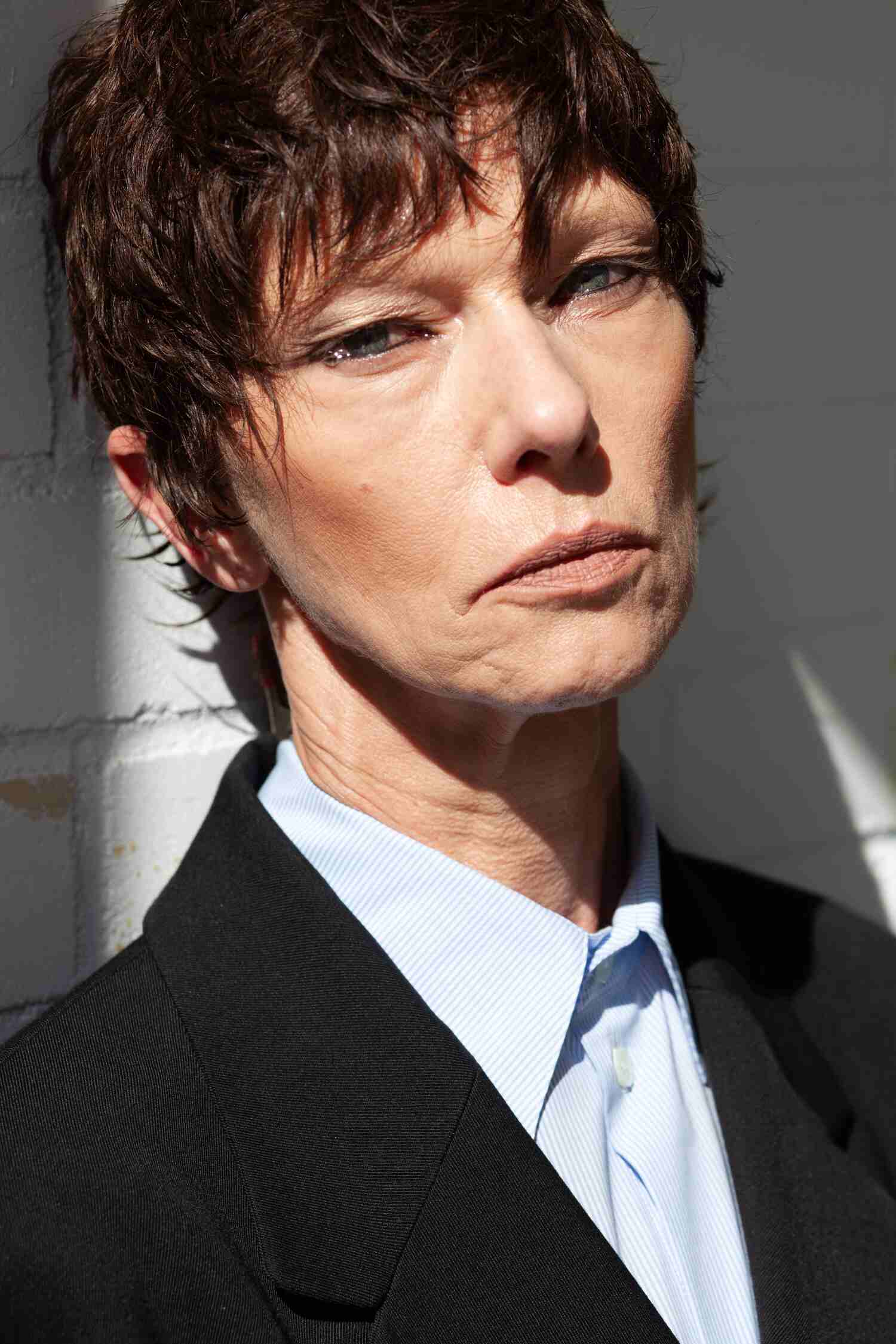
Photo: Kerstin Jacobsen
Use social media as a platform to showcase your work, not as a tool for comparison. Competition is toxic, we don’t need it. I have around 2,500 followers, but I don’t care. I post a picture now and then because I enjoy presenting my work in a certain way. But obsessing over followers or spending my day glued to my phone…that’s not for me. The younger generation, of course, has a different approach.
I’m not here to judge the next generation. There’s always a next step, always something new to explore. I don’t buy into the idea that they’re just all about Balenciaga, Balenciaga, Balenciaga. And I don’t believe they only see the world as dark and depressing. That’s just not true. There are so many young people who are deeply romantic, incredibly inspired by the history of fashion, cinema, and music.
I would say to the next generation of creatives that they should definitely meet up with their creative friends; get together, brainstorm, spend nights sharing ideas. That kind of energy is essential. These days, it seems like when people connect, they end up forming exclusive circles. I’ve always been anti-clique. To me, it’s important to defend singularity.
Don’t be afraid to be different. Express something unique and truly believe in who you are. Have the courage to stand out from the crowd. If you don’t fit into a clique, it just means it doesn’t click, and that’s okay. You don’t need a clique to be a successful creative. When someone lacks a strong sense of self, they tend to rely on a group. But real creativity comes from individuality, not blending in.
Photographers credits:
Daan Dam: Instagram website
June Tamo Collin: Instagram website
Matt Lambert: Instagram website
Lotte Thor: Instagram website
Fede Reyes: Instagram
Francesco cascavilla: Instagram website
Kerstin Jacobsen: Instagram website
Fofo Altinell: Instagram
Rok trzan: Instagram website
Tatsiana Tribunalova: Instagram website
David Suarez: Instagram
Interview by Kelly van Gemert
See more of Servulo’s work here. Follow him on social media here.
Check his work with us here for our cover with superstar Roisin Murphy!
Get our latest print 350page + book