
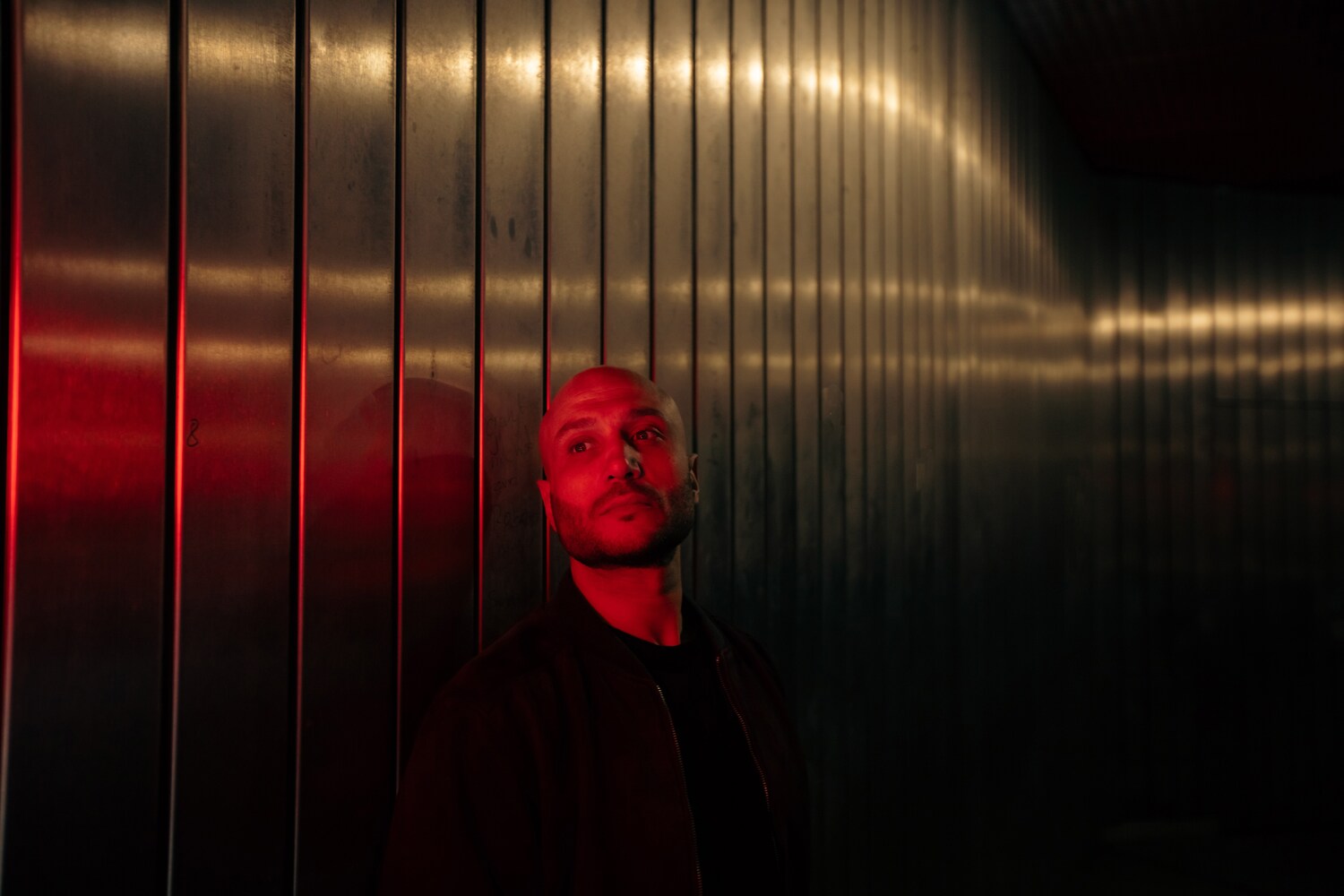
DAHRAXT is the boundary-pushing techno project of Italian-born, Berlin-based artist Alessandro Mannella. Deeply shaped by the city’s club culture, his sound is raw, hypnotic, and industrial—rooted in the tactile energy of vinyl. Known for his legendary long-form closings at Tresor, where he also founded the ENIGMA series, DAHRAXT has brought his ritualistic intensity to renowned stages including Berghain’s Säule, FOLD (London), RSO Berlin, Moog (Barcelona), Gare (Porto), and ADE. With a distinct fusion of technical mastery and immersive power, DAHRAXT crafts uncompromising sonic journeys that leave a lasting imprint.
We had the pleasure to host his vinyl performance at Säule, Berghain on one of our Keyi Magazine showcases and now we would like to dig deeper in his story and share it with you.
You’ve made Berlin your home after growing up in Italy – how has that shaped your musical identity?
Italy opened the first door for me. It’s where I discovered techno, where I bought my first vinyl, and where I played my first gig. It was the ignition point, the moment I understood that something inside me resonated with this music. Berlin, instead, became the space where everything took form. The city tests you constantly. It forces discipline, sharp listening, and a deeper relationship with sound systems and intensity. These two places still defines my work: the instinctive roots of Italy and the transformative pressure of Berlin.
What initially drew you to techno, and how did the DAHRAXT project come into being?
I was eleven when I found old Illiria tapes – rough, hypnotic recordings from Northern Italian club nights. They didn’t sound like music as I knew it; they sounded like a forgotten language. My cousin worked with that collective, so I grew up around DJs and producers before I really understood the scene. One of them had a tiny record shop hidden inside a Milan underground station, and that place shaped my early relationship with vinyl and physical sound. DAHRAXT came later, at a moment when I needed something that reflected the inner structures I was carrying. DAHRAXT is a guardian – a warrior at the threshold between the non and the visible world, defending perception from distortion, negativity, and noise. The music became a way to give this figure form: tension, repetition, battle, protection. I’m now expanding this mythology into a comic I’m drawing, exploring portals, fragments, and the world this guardian inhabits.
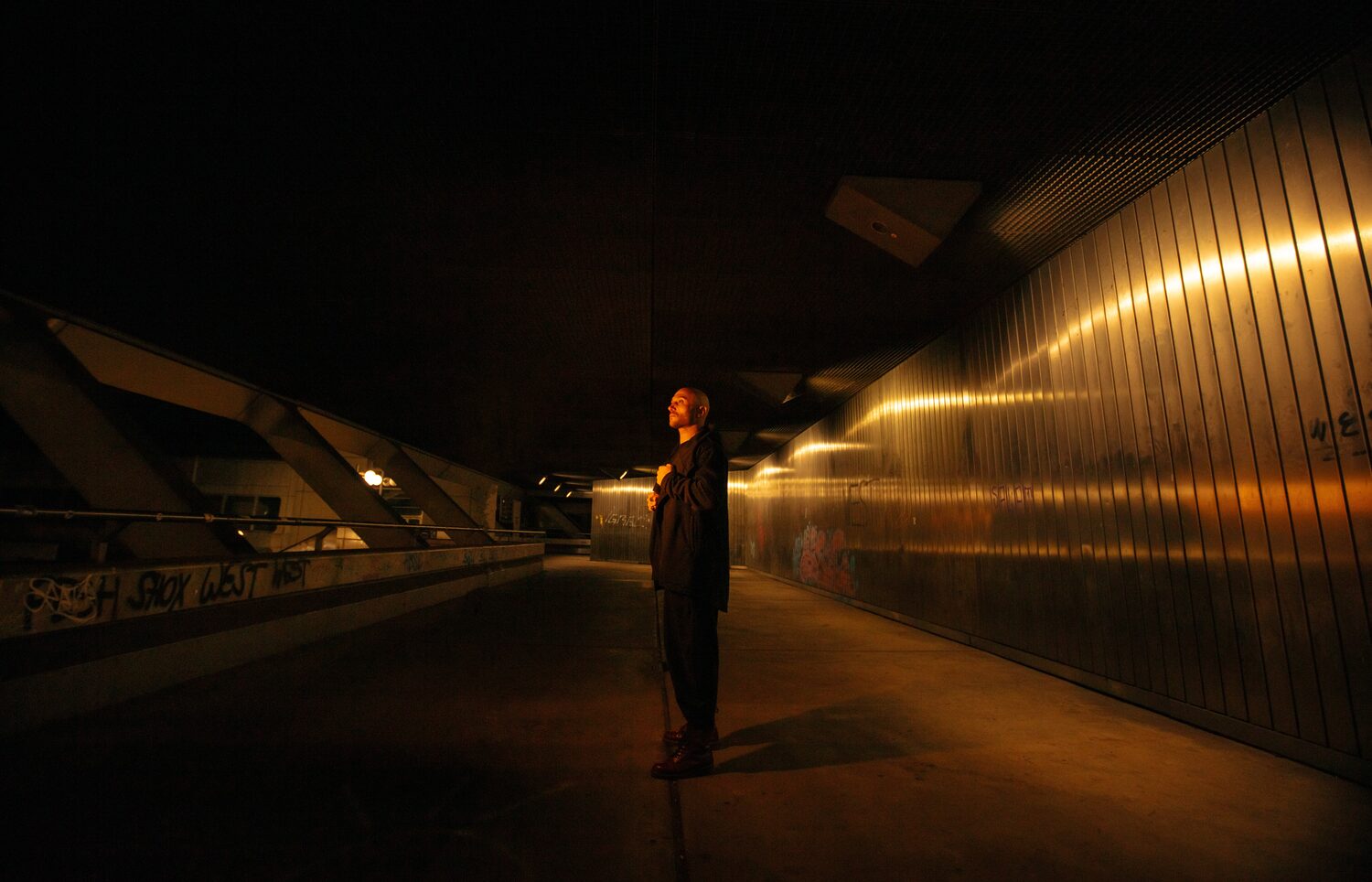
Your sets are described as hypnotic and immersive journeys. Can you walk us through your process of building a DJ set to create a proper trip?
I approach a set like architecture. I don’t think in tracks – I think in structures, density, transitions; how pressure moves across time. A hypnotic set requires patience, precision, and a sense of long arcs rather than quick peaks. My focus is on guiding perception: how grooves breathe, how layers interact, how the room shifts from one state to another. When people lose the sense of time, when they melt into the repetition, that’s when the journey is happening.
You’re known for your passion for records – what does playing vinyl bring to your sets that digital tools might not? Are any vinyl only releases worth mentioning as your favourites?
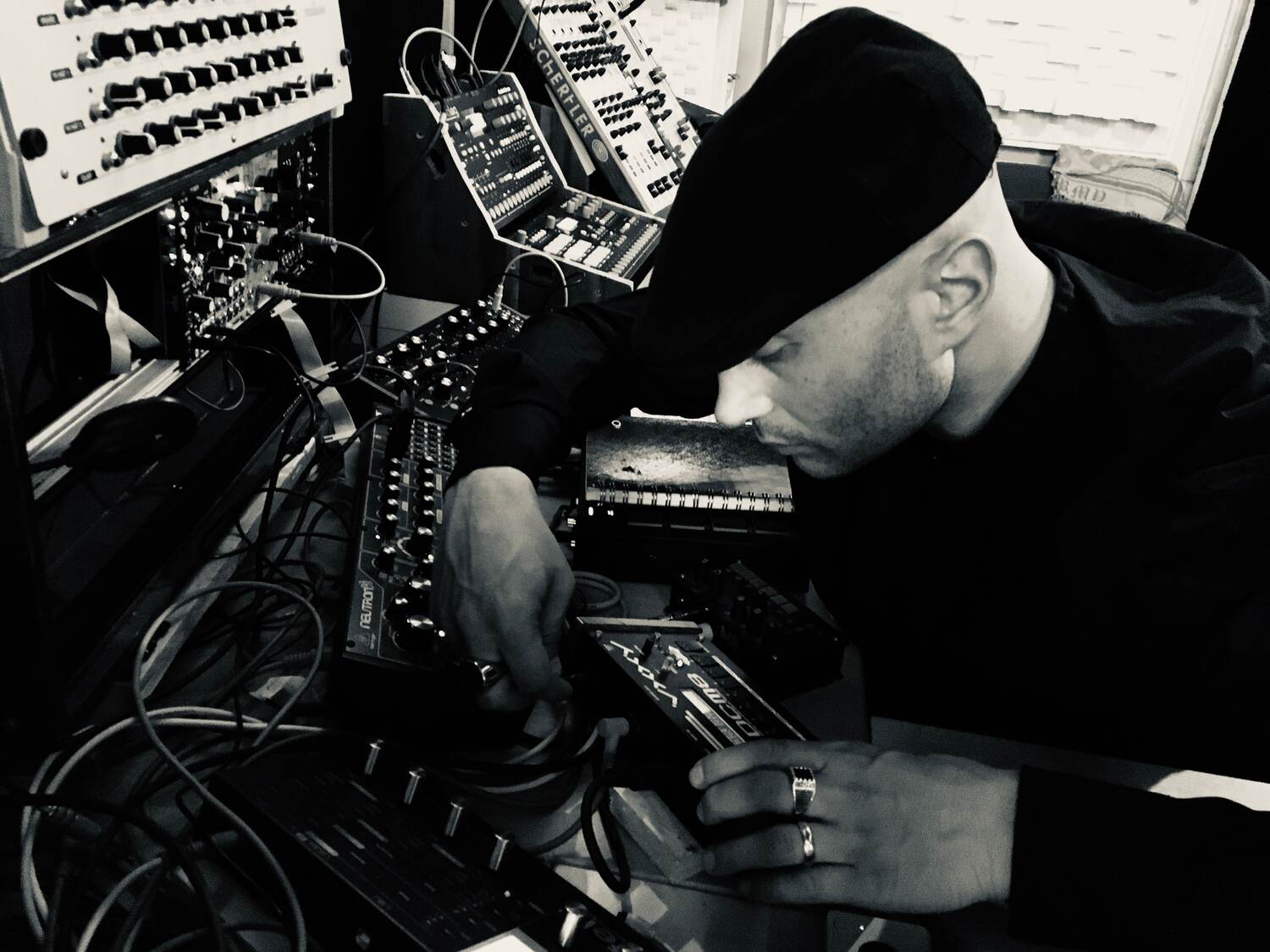
Vinyl forces you into presence. There’s no safety net – you commit with your hands, your ears, your nervous system. It changes the way you listen and react in the booth. But beyond the technique, each record carries memory. A smell from the shop where I found it, an image of the night I first heard it, a feeling from that period of my life. Playing vinyl means bringing those memories, those fragments, into the room. I don’t have a single favourite; I have many. Some early Mike Parker and Donato Dozzy pressings that live only in their Discogs echoes now – those records taught me how subtle a hypnotic structure can be when it’s crafted with intention.
Donato Dozzy – Destination Eskimo E.P.
Mike Parker & Donato Dozzy – Excavations E.P.
Mike Parker – Light And Dark Part Four
You’ve performed at iconic venues like FOLD, RSO, and Moog, and with artists like Ben Klock and Blawan. What have been some standout moments for you on the road?
Certain venues feel like temples — each with its own frequency. For me, it’s never about a trophy moment – it’s about what each venue teaches you. Tresor’s long closing sets taught me about endurance, about stretching tension to its absolute limit without losing the room. After 5h you literally lose yourself, ego disappears and from that moment I feel like I can really play for the eternity.
FOLD and RSO taught me how precision becomes physical architecture in a room. Moog reminded me of the sacred role of groove, even when you move inside darker territories. Sharing lineups with artists like Ben Klock or Blawan for me isn’t about proximity to names – it’s about the exchange of energies. Those nights sharpen you. They push you to articulate your voice more clearly, to step deeper into your own sound.
One of the most significant moments for me was a long back-to-back closing set with VSK At RSO during Ellen Allien’s party. It was an eight-hour journey that created a rare kind of connection – not just between us as DJs, but with the room and the people inside it. That night opened doors on a human level too and created connections with artists I had never met before, some of whom I deeply admire. It was an intense, grounding experience, something that stays with you and reshapes how you understand why you do this.
Another defining moment was a closing at FOLD, after Blawan. The energy in the room was explosive. What came out of me that night was a kind of raw force – almost anger – but fully transmuted into sound. That experience taught me a lot about how emotion can be transformed through frequencies, and how deeply that process can affect you over time.
Those moments weren’t about exposure or names. They were moments of alignment when sound, space, people, and inner state
ENIGMA, the event series you launched at Tresor, has generated a lot of buzz. What was the vision behind ENIGMA, and how do you curate its atmosphere and lineup?
ENIGMA was created to merge music, performance, and research into a unified ritual space. The core is ritualistic hypnotism with cinematic undertones, surrounded by experimental movement, spoken-word pieces, dadaism and visual interventions that shift the perception of a classic club night. Its atmosphere comes from pacing, tension, and the freedom for each artist to expand into their true form. The goal is to allow the room to dissolve into a single entity, a temporary organism composed of bodies, frequencies, and intentions, compelling a music journey for the whole night and not single moments.
As the founder of Jtseries and PicNic34, what kind of sonic or artistic ethos do you aim to promote through these labels?
At the moment, both labels are paused while I reflect on their future. I’m exploring ways to reshape them into a new format, possibly connected with the evolving ENIGMA collective. The core idea remains the same: supporting artists who build their own language, who move independently from algorithms and trend cycles, and who yearn for new forms rather than safe ones. In this moment of my life, it’s really important for me to refelct on transformation and transitions.
What does innovation mean to you as an artist in a genre that’s constantly evolving like techno?
For me, innovation has nothing to do with novelty. It’s about perception, and about having the courage to dismantle your own habits when they start feeling comfortable. If I’m not questioning my process, I’m repeating myself, and repetition without awareness is stagnation.
Technology is powerful, and it can take us far beyond what was possible years ago. But it also makes it very easy to cheat the work, to rely on presets, shortcuts, and ready-made solutions instead of confronting our limits. In most cases, the problem isn’t the tool, it’s the person using it.
I don’t see technology as an excuse or an enemy. I see it as a test. Machines can extend my vocabulary, but they will never build my identity for me. That only comes from friction, discipline, and deliberate effort. That’s why I constantly force myself out of my comfort zone, learning new systems, new tools, new ways of working, while refusing to let technology replace responsibility or intent.
What can we expect from DAHRAXT in the coming year – any new releases, collaborations, or projects in the pipeline?
Several releases are already locked for the coming year, and more projects will be revealed and announced soon. There’s an EP coming out on a label run by a Detroit legend that represents a very precise lineage of techno – which I’m deeply honoured to be part of – alongside a release on a well-established Greek imprint and selected appearances on various artist compilations. I’m keeping details minimal on purpose, but these releases reflect a focused evolution rather than a change in direction. At the same time, I’m developing a new project – Primal Rhapsody – which is a sonic and conceptual extension of DAHRAXT. It moves into a more lysergic and ritualistic space, while remaining grounded in hypnotic sonorities. This journey will first take shape in a meditative performance in May, conceived together with three dancers, where sound, movement, and
presence merge into a single body. It marks a transition point, both for Primal Rhapsody and for my own artistic evolution. Later in the year, this work will surface again through a very specific ENIGMA moment, in a space whose significance within the global techno landscape needs no explanation. For me, it represents an important milestone – a point on my path where years of work, discipline, and self-questioning converge into a single, exposed moment. Nothing here is rushed. I’m more interested in precision than accumulation, and in letting each step speak on its own terms. Everything is moving with intention rather than speed, focused on letting things land properly instead of filling space for the sake of visibility.
Finally, what advice would you give to emerging artists trying to find their own sound and place in the techno world?
Prepare to confront yourself. Avoid shortcuts – they cost more than they give. Don’t imitate, don’t rush to release, and don’t build your path around chasing attention. Spend time listening deeply, experimenting, breaking your habits, and rebuilding what survives. Stay connected to real people, to your local scene, to the rooms where music actually lives and breathes. That grounding matters more than any online reference point. Let discomfort refine you. Your sound emerges from the shadows you walk through, not from the applause you chase.
more music content here
34th issue of KEYI MAGAZINE with FREDDY K on the cover PURCHASE HERE