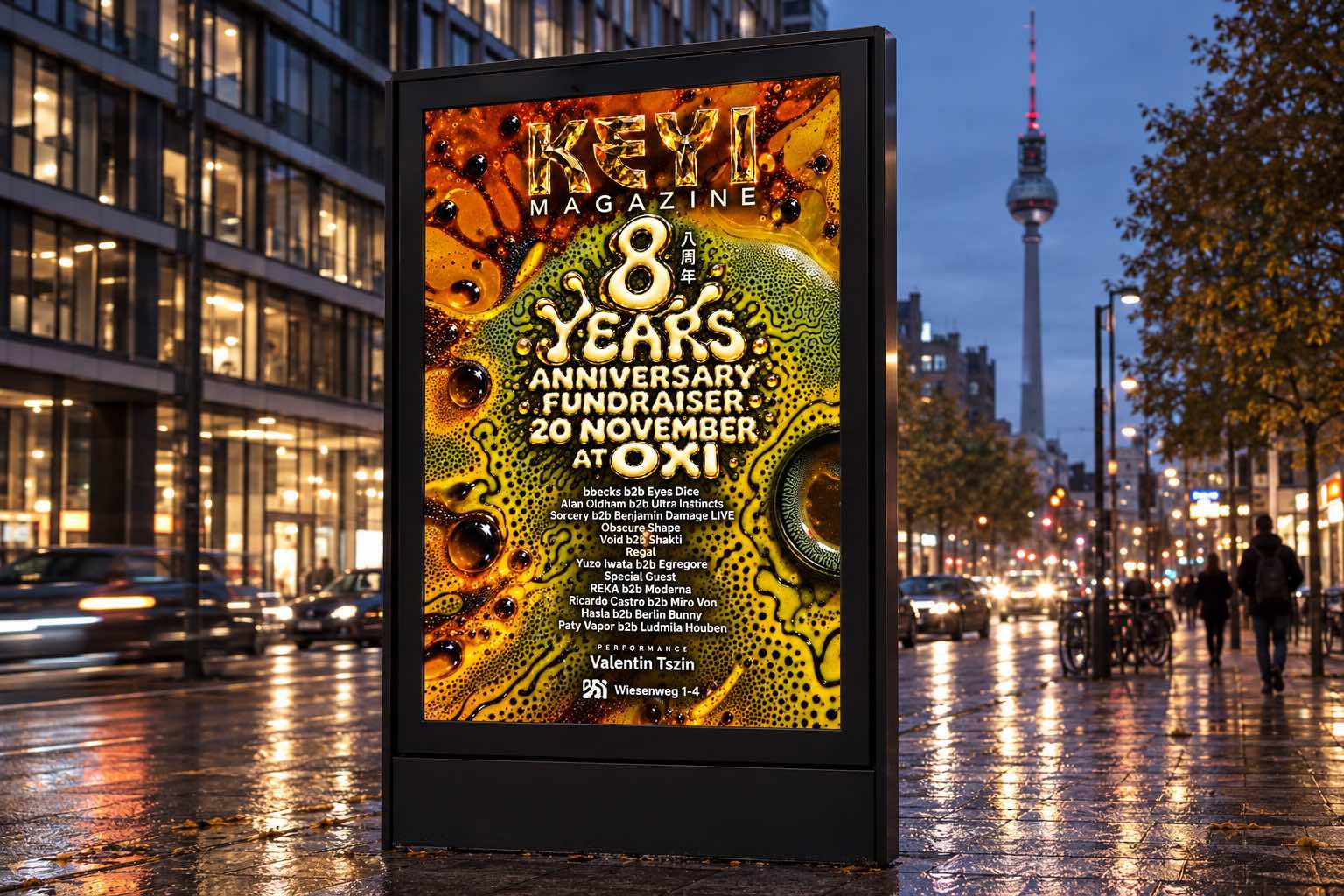


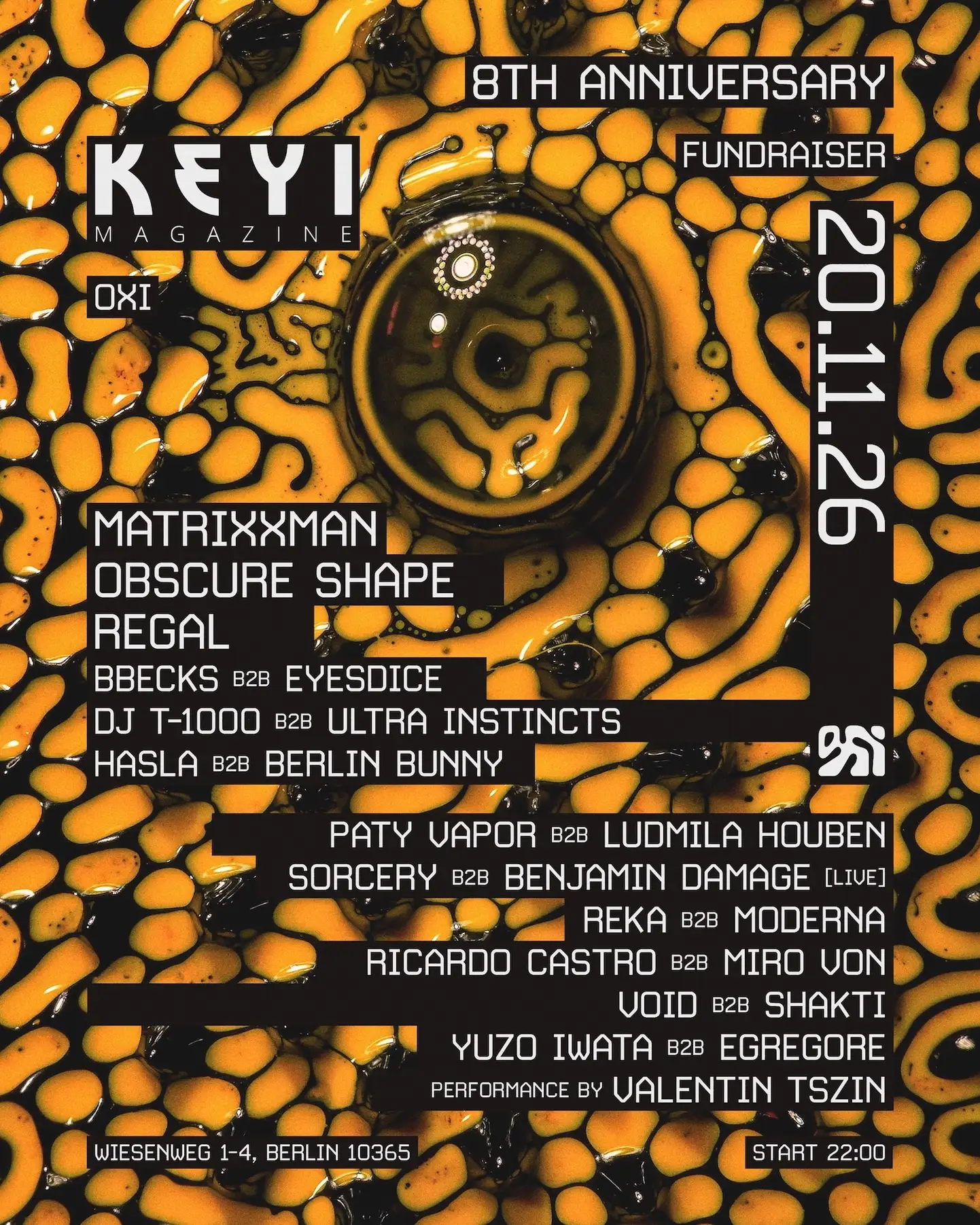
On 20 November, KEYI Magazine celebrates eight years at OXI with Regal joining us for the occasion. Ahead of the anniversary, we caught up with him to talk about the changes that have shaped his sound from Involve’s 303-driven intensity to the raw, groove-led direction of Backspin and the values that continue to guide him.

In a conversation about evolution, instinct and staying true to yourself, Regal reflects on navigating expectations behind the decks, reconnecting with his musical roots and why techno’s future depends on respecting the culture that built it.
KEYI celebrates eight years at OXI on 20 November, while you’ve spent over a decade shaping your sound. What have you had to let go of to keep evolving and what remains non-negotiable?
I’ve had to let go of certain ways of thinking and acting, just like work routines that were no longer productive or efficient for me. I’ve had to step away from parts of the industry that stopped being aligned with my values, my goals and the vision of the artist I wanted to be. What remains non-negotiable is exactly that: my core values that have accompanied me throughout my life, both as a person and as an artist. It definitely took some time to reach that point but I’ve realised that this was actual, honest growth, which shaped the person and the artist that I now am.

“I’ve had to step away from parts of the industry that stopped being aligned with my values, my goals and the vision of the artist I wanted to be. ”
From Involve’s 303-driven intensity to Backspin’s raw, hardgroove-inspired direction, your music has entered a new chapter. What were you missing on today’s dance floors that made you want to build Backspin?
Honestly, I wasn’t missing anything during that time. It was quite the opposite: there was too much of one sound. It was a sound that I certainly helped shaping with Involve Records, which reached its peak in the pre-pandemic era. But then it evolved and got really big, which led to a situation in which almost everyone drew from the same source, saturating the market. This saturation also happened in my head and in my ears, which was when I started missing the sound I actually came from. Those early years, when I played and produced music much closer to the sound I’m trying to push with Backspin Records, shaped me more than I thought. So in the end this saturation was the trigger that awakened something that had always been inside of me and that I had ignored for too long. That was the moment I started Backspin.
Your sets connect intimate club spaces with some of the world’s biggest festival stages. Can you recall a moment when a crowd challenged your instincts and changed your understanding of what makes a dance floor move?
Absolutely! This happened more than once, especially during my last phase of the Involve sound. I had already started a transformation process because I was changing my sound, but I was still playing for crowds that wanted something else. So on the one hand there was a possibility of them being unsatisfied with what I was giving (which might have been too groovy, minimalistic and slow) and on the other hand I was unsatisfied because I felt a tension. I had this dilemma in my head: playing something that would fit the expectations of the crowd or imposing a sound that I actually wanted to play. During that period I had to adapt a lot and build hybrid sets that would work for the crowd dancing in front of me without betraying myself, trying to stay true to my sound. This was definitely a big challenge for me.
“I had already started a transformation process because I was changing my sound, but I was still playing for crowds that wanted something else. So on the one hand there was a possibility of them being unsatisfied with what I was giving”
Anniversaries celebrate a shared history, but they also ask what comes next. As you join us at OXI, what do you hope techno culture protects over the next eight years and what does it urgently need to question?
I think we have to protect the roots and the origins of where this music and the movement behind it comes from. I don’t mean being tied to them, but understanding and respecting them as well as valuing everything that came before us and helped us to get where we are. On the other hand, I think we should pay more attention to the people joining this world without knowing the craft of deejaying. Playing or digging tracks today is extremely easy and can even be automatised, but that doesn’t make you a DJ. Oftentimes, nowadays it’s not a matter of skill or knowledge of the culture anymore, but how people present themselves on social media. And this is something that I find difficult. Techno shouldn’t be a product and shouldn’t be sold as such, it should be regarded as a culture and therefore respected as such.
Follow REGAL on IG
Come support KEYI, celebrate with the community, and join us on the dance floor for the anniversary.
Are you in Berlin 20.11 ? Read more about our recent event here