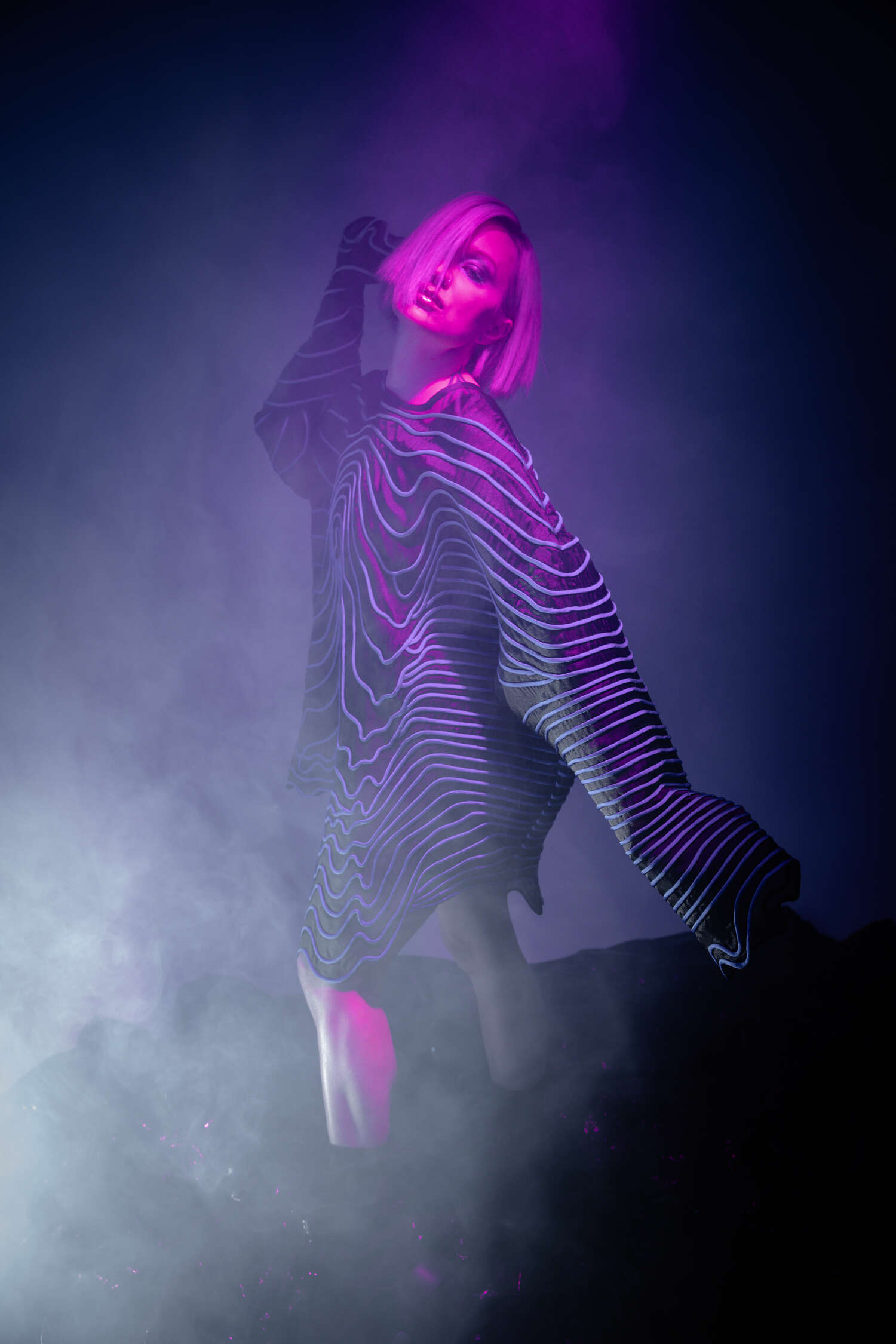
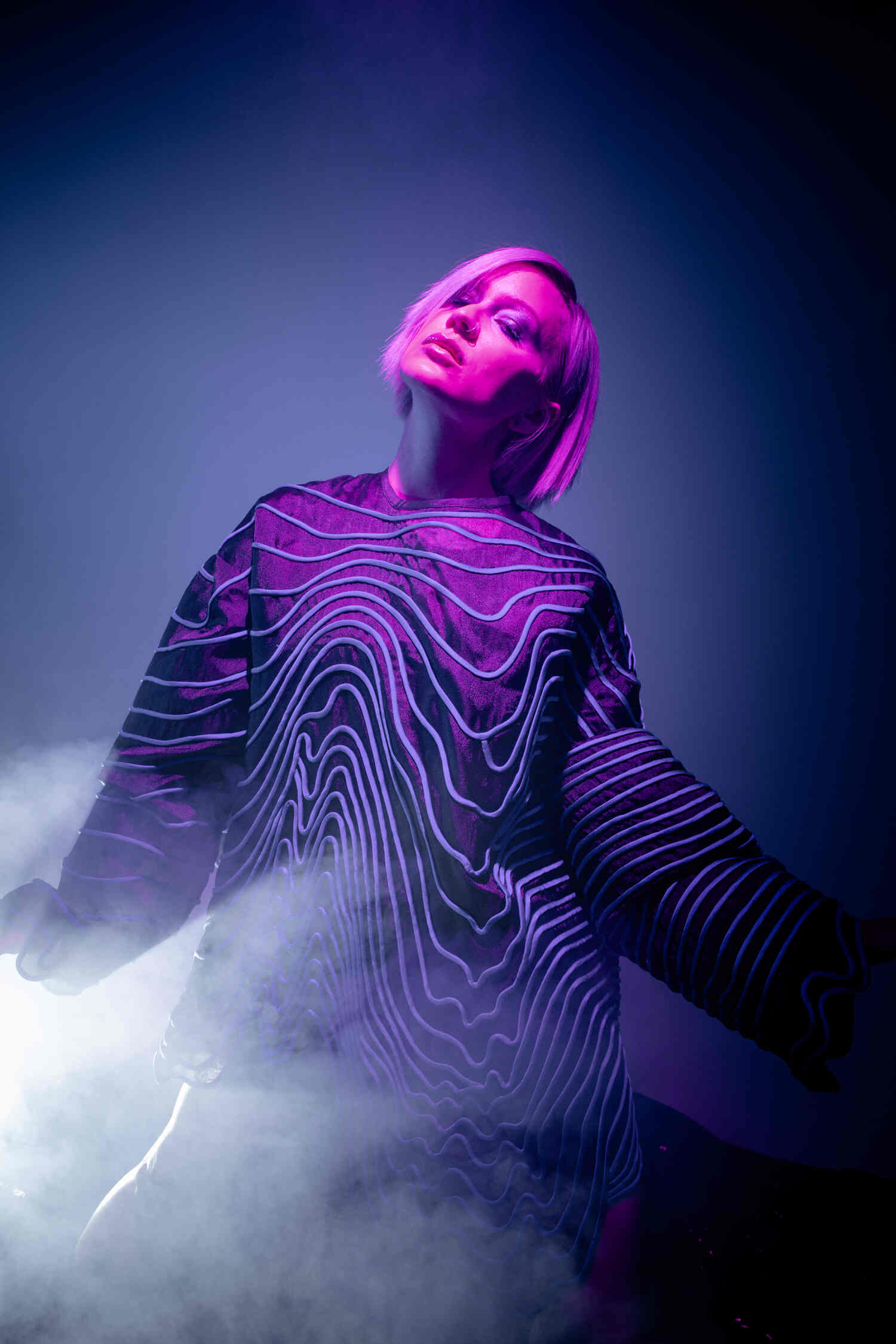
MAEDON is a Berlin-based techno artist whose sound blends hardware synths, drum machines, and modular equipment into dynamic live performances. Originally from Baltimore, and having spent formative years in Philadelphia and New York, she developed her craft through industrial and wave influences applied to hard techno. Her collaboration with Adam X as Maedon-X, the launch of her Rant & Rave label, and a residency at Tresor have established her presence in the international techno scene. Focused on expanding her sound and supporting female artists, MAEDON continues to push boundaries, turning her experiences and resilience into immersive techno music.



Instagram/Soundcloud
Hey dear, it’s so nice to have you in our KEYI world! Could you tell us who Maedon is?
I am a bit of an anomaly really. In order to tell you who I am I have to tell a bit of my background. I beat the odds of where I come from. I was extremely isolated during my childhood and young adult years, but music not only saved me, it guided me to where I am today. For the first 25 years of my life I didn’t listen to those around me telling me ‘you aren’t a musician.’ I look back and I laugh. My parents homeschooled me so “I wouldn’t be corrupted by the schoolsystem” they said; but really, it was because I was on the spectrum. My parents didn’t want to accept this so they kept me very sheltered and educated me in their way. I persevered. I always kept a tight hold of the 5 year old me that knew I had something special to share with the world. I added music as my second major in college and within about a year I proved to myself that I did have this talent. I played Schubert’s Impromptu Op 142 No 2 in A flat major on piano at my college, Loyola University in Baltimore Maryland.
After doing this I left home. I moved to Philadelphia and started to build my studio and learn synthesis. My musical background is very diverse. I grew up listening to new wave, rock, but industrial music really spoke to me, as it usually does with those who have to overcome great obstacles. The really funny thing is this; I started making techno like music before I even knew of the whole world of techno. Then I discovered EBM techno which was something I could relate to and feel. Fast forward to today, I am now making techno that is deeper. I overcome my obstacles and feel free to make sounds that come from a very positive place.
Your live sets are known for their raw intensity and physicality. What’s going through your body and mind when you’re deep in a performance?
When I am playing live, my mind is shut off. I let my body take full control. I am very intimate with my machines. I know them fully and muscle memory allows me to not have to think. I let the sounds lead. I play with tension. It’s a give and take between the machines and I and the dancers. It’s also the space, and how the sound fills and reflects off the energies in the room.
You’re deeply connected to your hardware—could you tell us about your story with your setup ?

The brain, the hub of my rig, is the Elektron RYTM mk2. I’ve been using this drum machine for ten years now. It’s been the vital piece of gear that glues my sets together. After all, it is the drum and techno is rhythm; it is beats to the core. A year ago I added a modular rig to my setup and stopped using the Octatrack and Digitone. When I first started playing live I used to go out with my DSI Mono Evolver keyboard, and Analog Keys, and an MS20 mini. I missed the hands on control of sounds with one knob (mostly) per function. So transitioning to modular has been very vital to making sounds that are far more authentic and organic. To this date I used to rely heavily on the RYTM handling all my drums. My kicks are now coming from my modular and this has really helped me achieve the full on techno rumble that I’ve been wanting to have.
Can you talk about a moment during a set where something went totally wrong—but ended up unlocking something new?
I”ve never actually had any disasters during a set. Because I only use hardware, I’ve never had any sync issues which is one of the main things that can go wrong minus gear breaking or malfunctioning. Over the last two years my sound has been transitioning from being very heavy and hard to much more pumping and less harsh. My first time going out with the modular my kicks didn’t punch through the way I wanted them to. So I experimented with my next sets while I was on tour in the USA. I bought an FMR RNC & RNLA. I used these for two gigs on the master insert and while the sets sounded good at the moment, it wasn’t what I was going for. Then I went to Perfect Circuit in Los Angeles and bought an OTO Boum. This was exactly what was needed. It gave my kicks the punch that I wanted without distorting the sound waves too much. It’s all about the sound waves and pushing the air in a cohesive way.
You’ve balanced the industrial sound and wave music as key influences. How do you connect those roots with your driving techno sound today?
I’ve really toned back my industrial influences. Industrial was not the only influential music from my past. It was the music that got me to push through to express the difficulties of the many obstacles I had to overcome. Before Industrial music was very prominent in my life, I loved Orbital, Underworld, Daft Punk, TFSOL, Moby, Plaid, Eno, Kraftwerk, Neu!, LCD Soundsystem, Animal Collective, Broadcast, Sigur Ros … the list goes on. Really, Industrial was like my energy drink in difficult times. Oh and Enya was a childhood favorite who I still love today. I connect my roots of making EBM techno and basslines. I’ve learned that an amazing hypnotic bassline is actually very similar to a strong EBM bassline. The key difference is timing. An EBM bassline sticks to the straight 4/4 cadence where a hypnotic bassline remains free in polyrhythms.
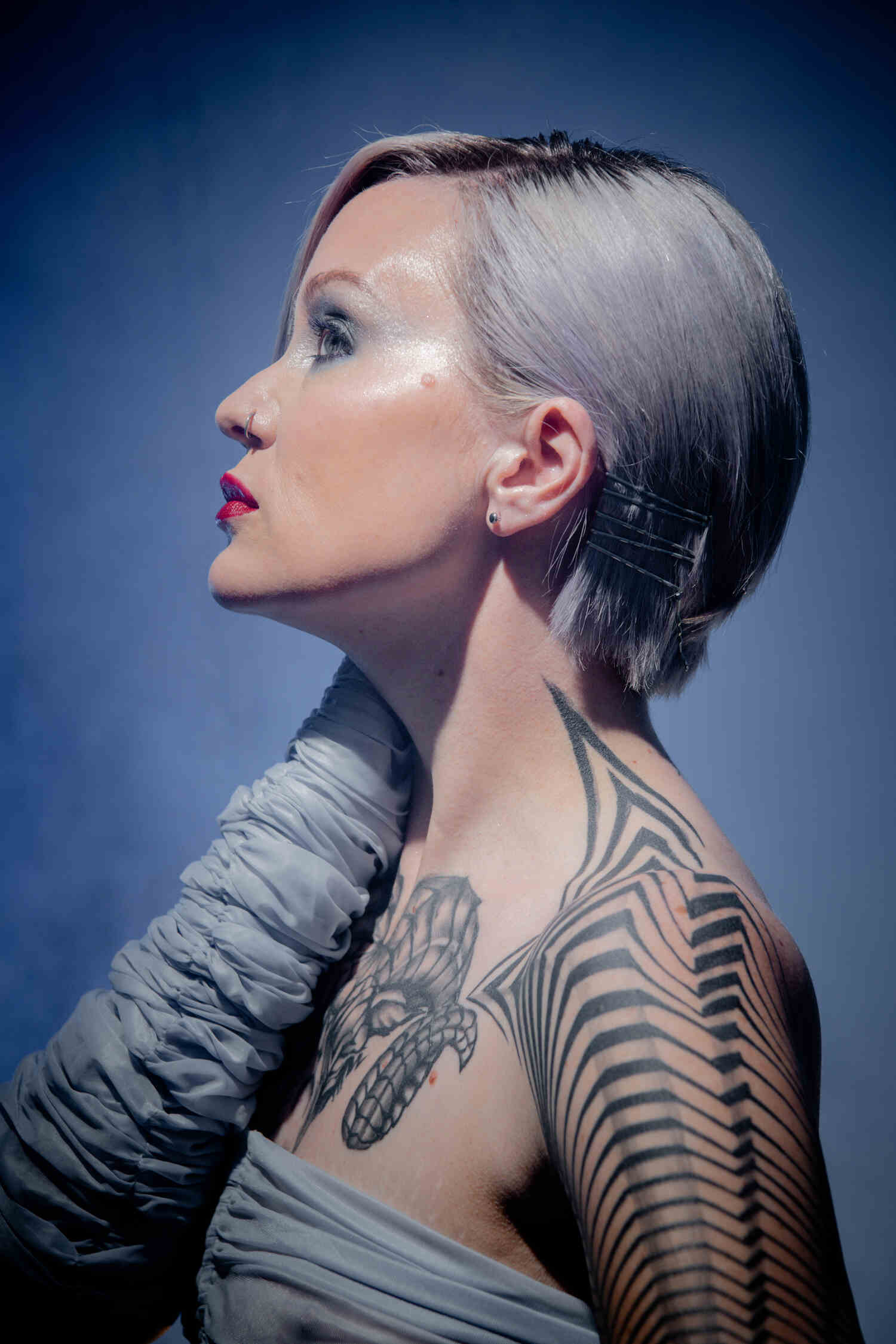
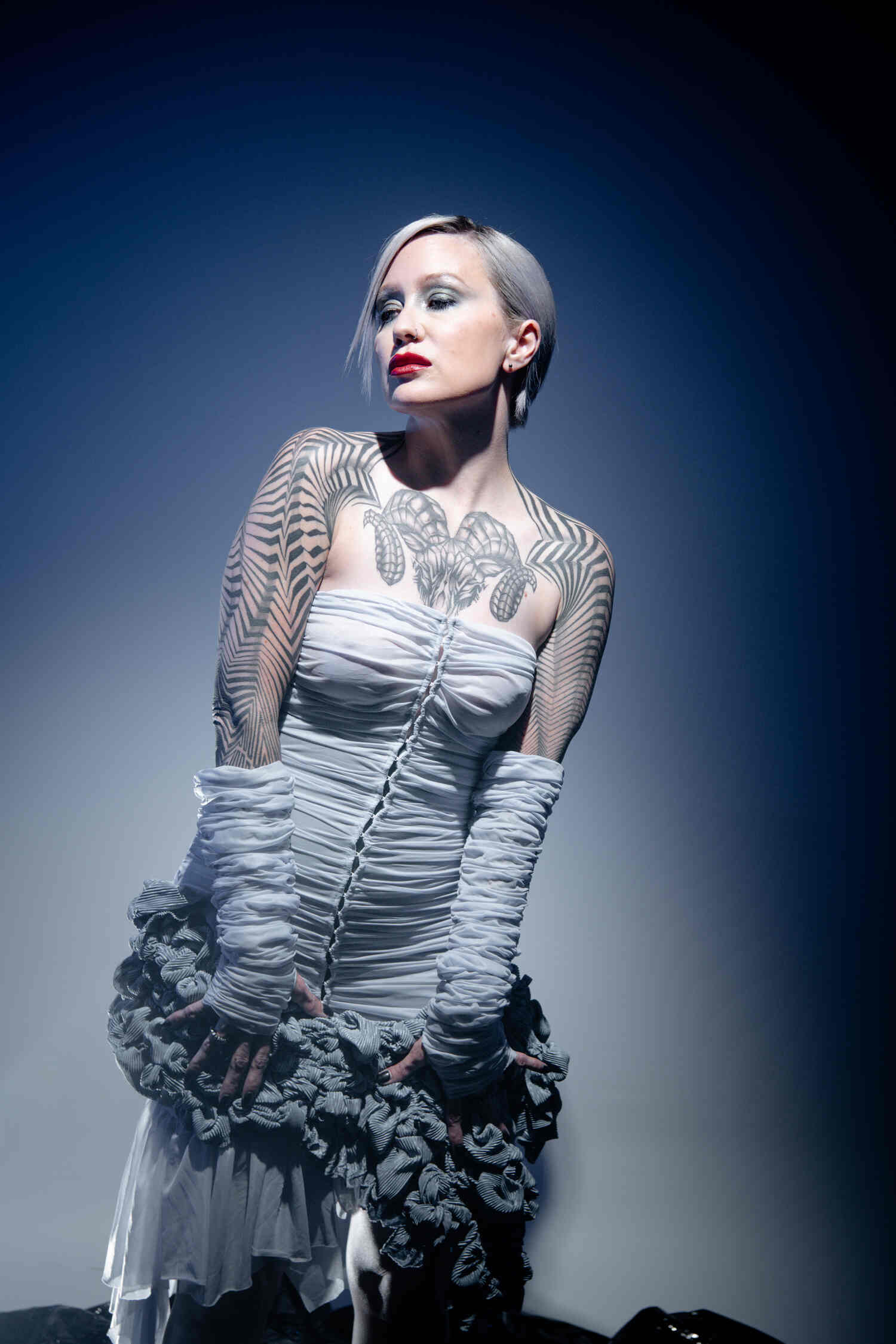
You moved to Berlin mid-pandemic—how did that shift your perspective, both artistically and personally?
I actually arrived in Berlin when the Pandemic started. I made the flight on the 14th of March. It was really odd and frightening. I found myself arriving at a place where I truly felt at home. Here, I could do the thing I was born to do, but there was this over looming fear that life as we knew it would not return. It was very dark, it was very claustrophobic. When I look back … my sounds reflected this. I went from having a studio with multiple machines and analog synths to making music in tiny boxes with headphones. In the fall of 2022 I got a studio space and this is when my sound started to evolve in a more free and natural way.
Do you think your sound would be different if you’d stayed in NYC?
If I had stayed in NYC my sound would have probably remained harder and more industrial. The music we make is a reflection on where we are at in our lives. Living as an artist and maintaining bills and the astronomical price of living is hard in NYC. There’s really not much time to work on music and make it in a city that costs so much to live.
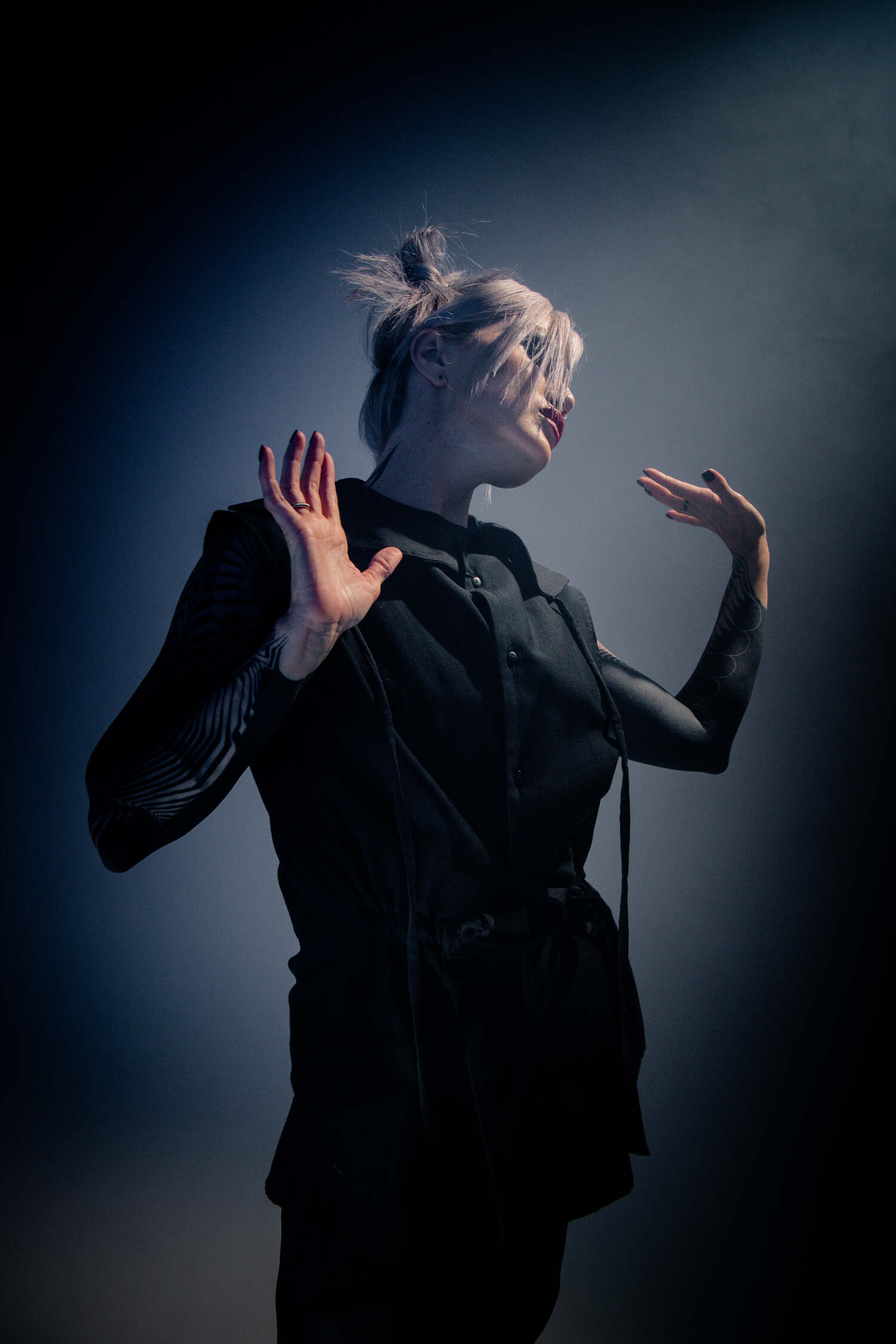
Rant & Rave is not just a label, but a mission. What does “forwarding female artists” look like to you in real terms?
It’s building a community and supporting one another. It’s about friendship and being a positive influence to each other. Together we are stronger, together we help each other grow, and together we have more fun. Being a female honestly is really fun … fashion .. makeup … hair. Together too we can also safely share and confide in all the not so fun things being a female in a male dominated world, a male dominated industry, where it’s mostly curated by men in spaces owned by men.
You’ve spoken about the challenges of working in a male-dominated subculture. How do you navigate that tension without letting it consume your creative focus?
I don’t really feel the need to express the challenges anymore because I’ve accepted how things are. Honestly, the hardest challenge currently is algorithms and being visible to those who curate. I keep my eye slightly focused on the lineups and what I see is a lot of the same. My main focus is being productive and doing what I do. The music is flowing and this is all that matters.
Do you feel techno is still a form of resistance? And if so, resistance to what?
Techno was born from resistance and the best techno is music that doesn’t conform. Techno resists conformity in societies that force it; from it’s structure and the sounds to the spaces where it is played.
Whats the future for MAEDON?
More growth
Follow MAEDON here
Photos KEYI Studio here
34th issue of KEYI MAGAZINE with JEFF MILLS on the cover