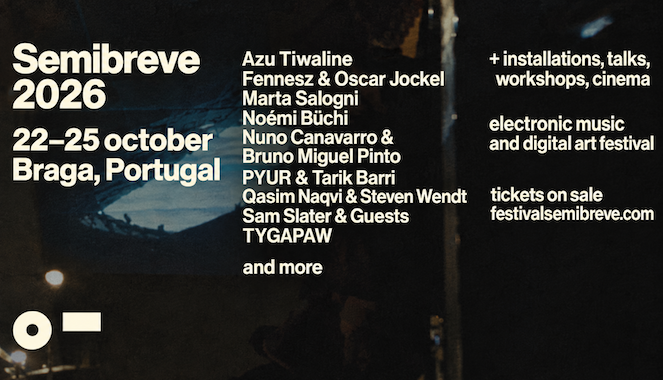
Portuguese electronic music and digital art festival Semibreve returns to Braga from 22 to 25 October for its 16th edition. Taking place across the historic city, this year’s programme brings together electronic music, experimental sound, audiovisual performance and a series of new commissions and world premieres.
How are you? and if you could please introduce yourself to Keyi readers ?
I am well, busy with preparations for this year’s festival. My name is Rafael Machado, and I am one of the founders of the Semibreve Festival, and I have taken on the role of coordinator.
After sixteen editions, what still feels unresolved or urgent about Semibreve’s original mission?
Semibreve’s mission was to bring artistic practices to Braga that were not being explored by existing cultural venues, something we felt was important both for the city and for Portugal. At the time, very few institutions were programming experimental electronic music and digital art. Sixteen editions later, while that landscape has evolved, our mission remains connected to the role of sound in contemporary life. Today, we are increasingly interested in sound not only as an artistic medium, but also as a lens through which to explore wider cultural, social, and technological questions. At the same time, we remain committed to supporting and promoting local talent, because a city without artistic creation is inevitably a poorer and less vibrant place.
The 2026 programme moves between electronic music, film, scientific research, digital art and critical debate. What connects these disciplines beyond simply placing them under one festival banner?
We look at contemporary production through a lens of curiosity, exploring ideas and practices that challenge established norms and habitual ways of thinking. We are drawn to these moments of friction, to the search for the avant-garde, and to the element of surprise. The digital realm is, by its very nature, a space of expanded possibilities, shaped by continuous technological transformation and innovation. We are interested in connecting this perspective with other forms of expression that, in their own ways, also extend the boundaries of experimentation and critical inquiry — whether through film, a concert that brings together a classical ensemble and electronic music, or a theoretical conversation. A festival is always more than the sum of its individual parts, and we want audiences to remain open to experiencing and understanding the different artistic possibilities contained within the programme.
What connects these disciplines is a shared commitment to exploration: a desire to question conventions, create new relationships between ideas and forms, and reveal a sense of cohesion within the multiplicity of perspectives on offer.
Several works confront authority, extraction and the hidden systems behind technology, from Situational Compliance to Brute Force. Was this tension a deliberate curatorial thread, and what questions do you want audiences to leave with?
The festival does not seek to promote a particular agenda or impose a specific perspective. But we do not turn a blind eye to the world or to the complex and often fragile circumstances in which we find ourselves. We don’t intend to impose particular ways of thinking or specific viewpoints, but we aim to present what feels meaningful and relevant to us at a given moment, with the 2026 programme acting as another link in a continuum that connects the past with the future.
A festival is also a space for interpreting the artistic practices of its time, and many of the tensions surrounding authority, extraction and technological systems are clearly present in contemporary artistic production. It’s only natural that these ideas find a home in our programme. When we select and bring these works together—especially in our discussions and films—it’s because we want to create a space for reflection and discussion around certain questions and ideas. What gives us the greatest satisfaction as an organisation is when audiences recognise the artistic quality of the works presented, gain a deeper understanding of the many dimensions of sound, and become more aware of the ways in which sound connects us to one another and to the planet. Personally, I believe that biodiversity is one of the most relevant and fundamental themes that any event of this nature can engage with today.
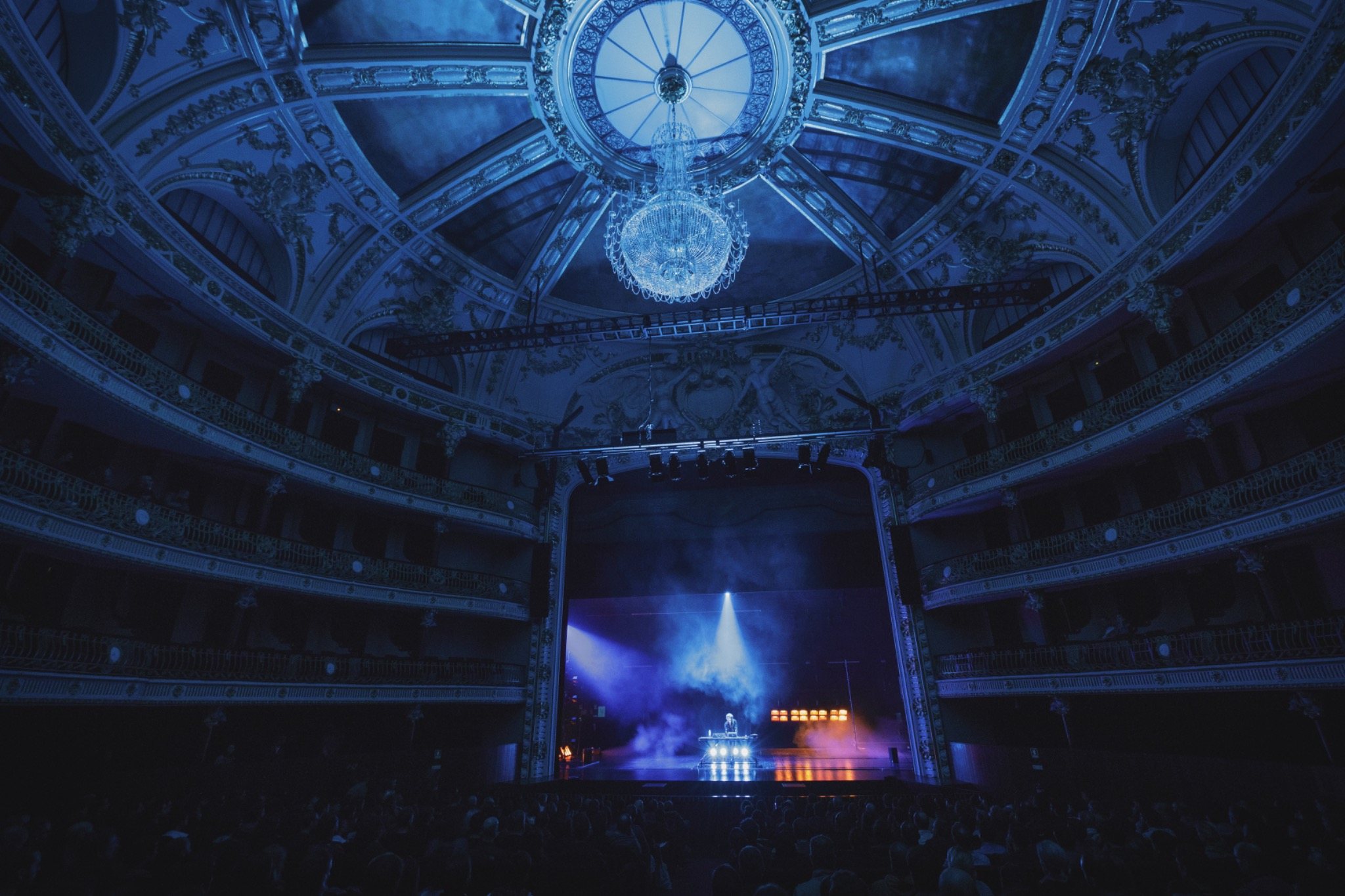
Semibreve unfolds across museums, a former military headquarters, a conservatory and a basilica. How does Braga shape the programme and how do you prevent the city from becoming merely a backdrop?
To be honest, some of our venue decisions are logistical. However, since our first edition, we have always tried to forge a link between the city’s 2,000-year-old historical legacy and artistic innovation. Braga is home to major international tech companies and has been a UNESCO Creative City of Media Arts since 2017; this festival is a direct fusion of those contemporary and historical realities.
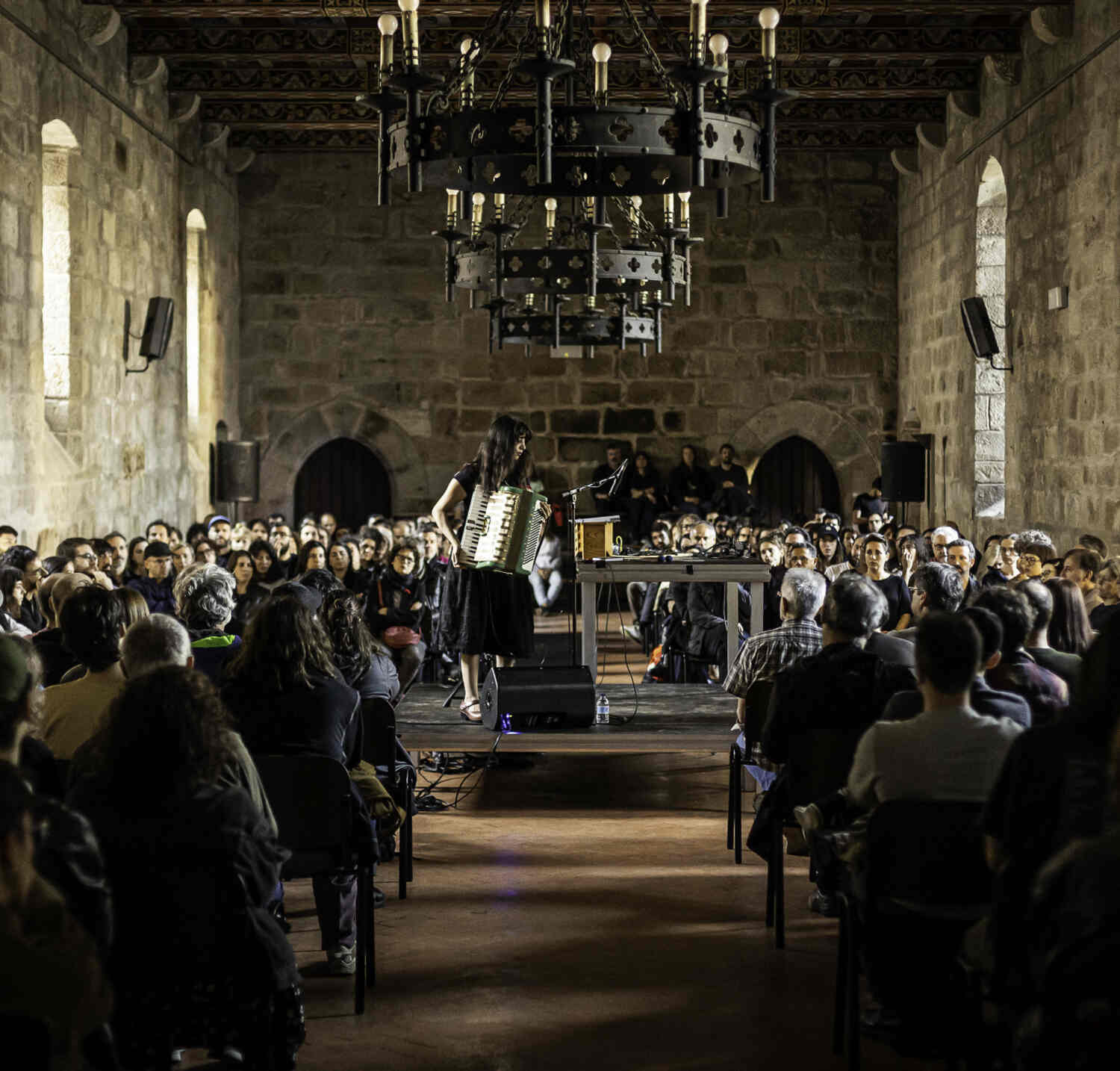
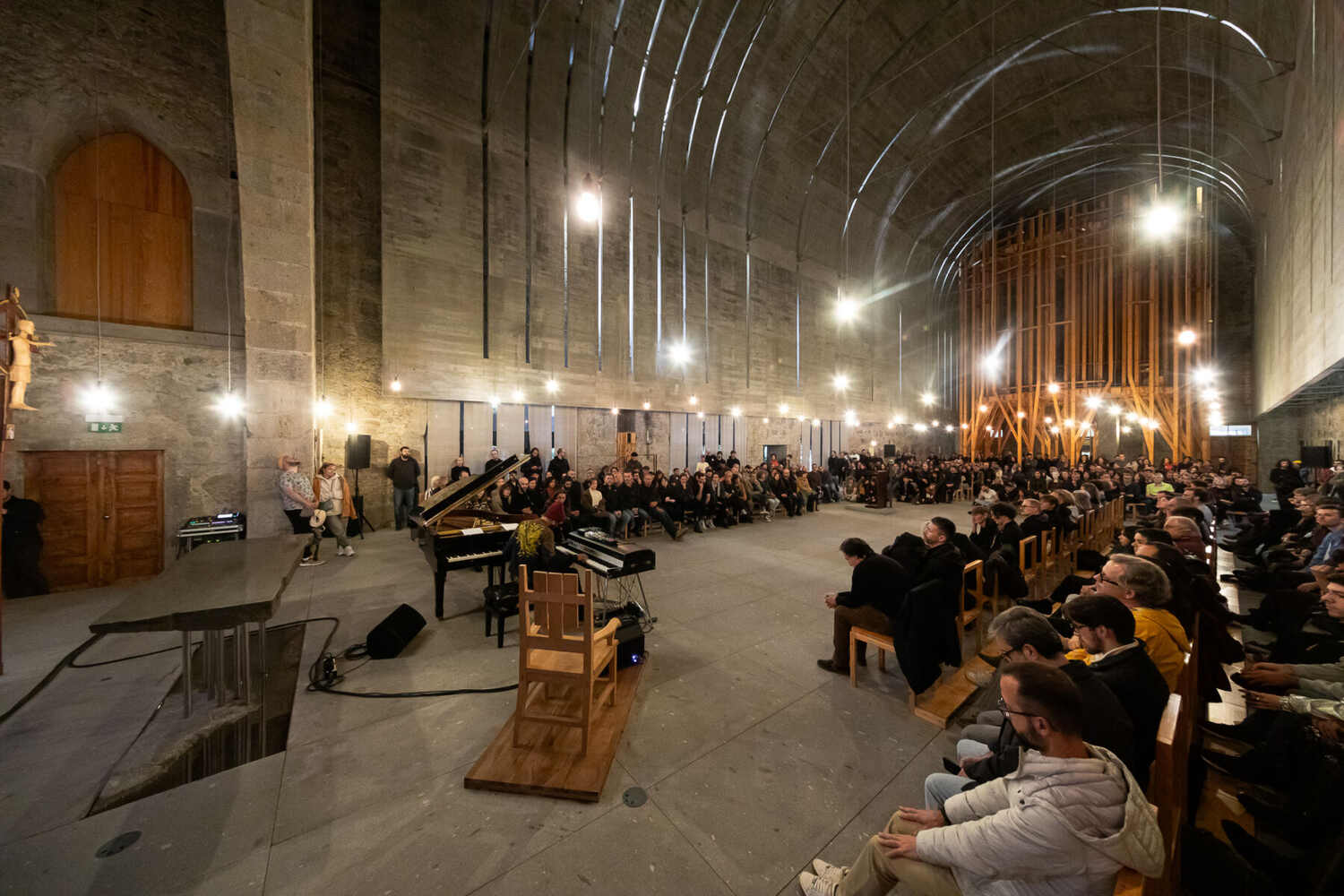
At each venue, we design a program that responds to the physical architecture. We love the idea that a space can become an instrument in itself—that its acoustics, history, and atmosphere can actively shape the work. The venue isn’t just a backdrop; it is part of the audience’s experience.
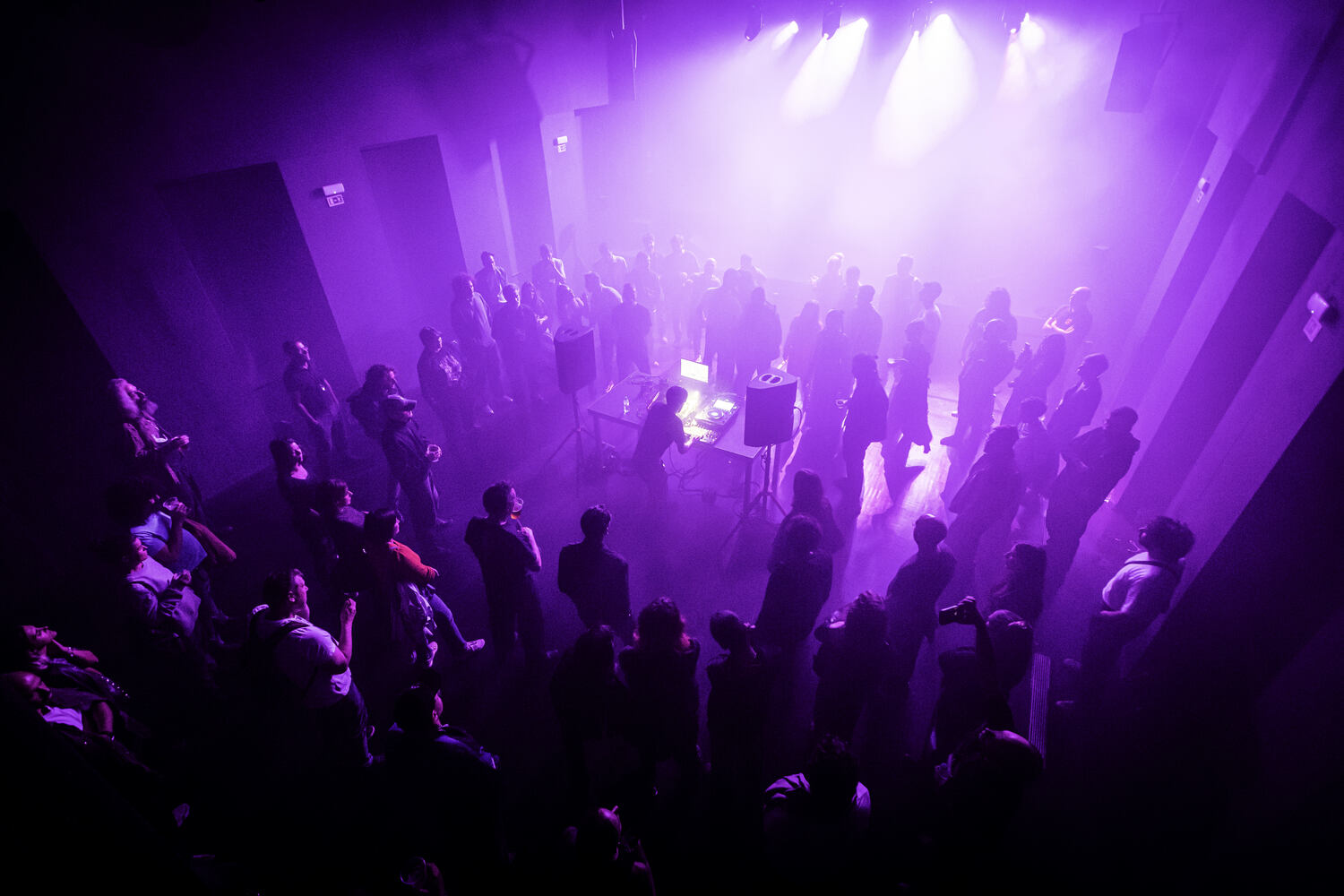
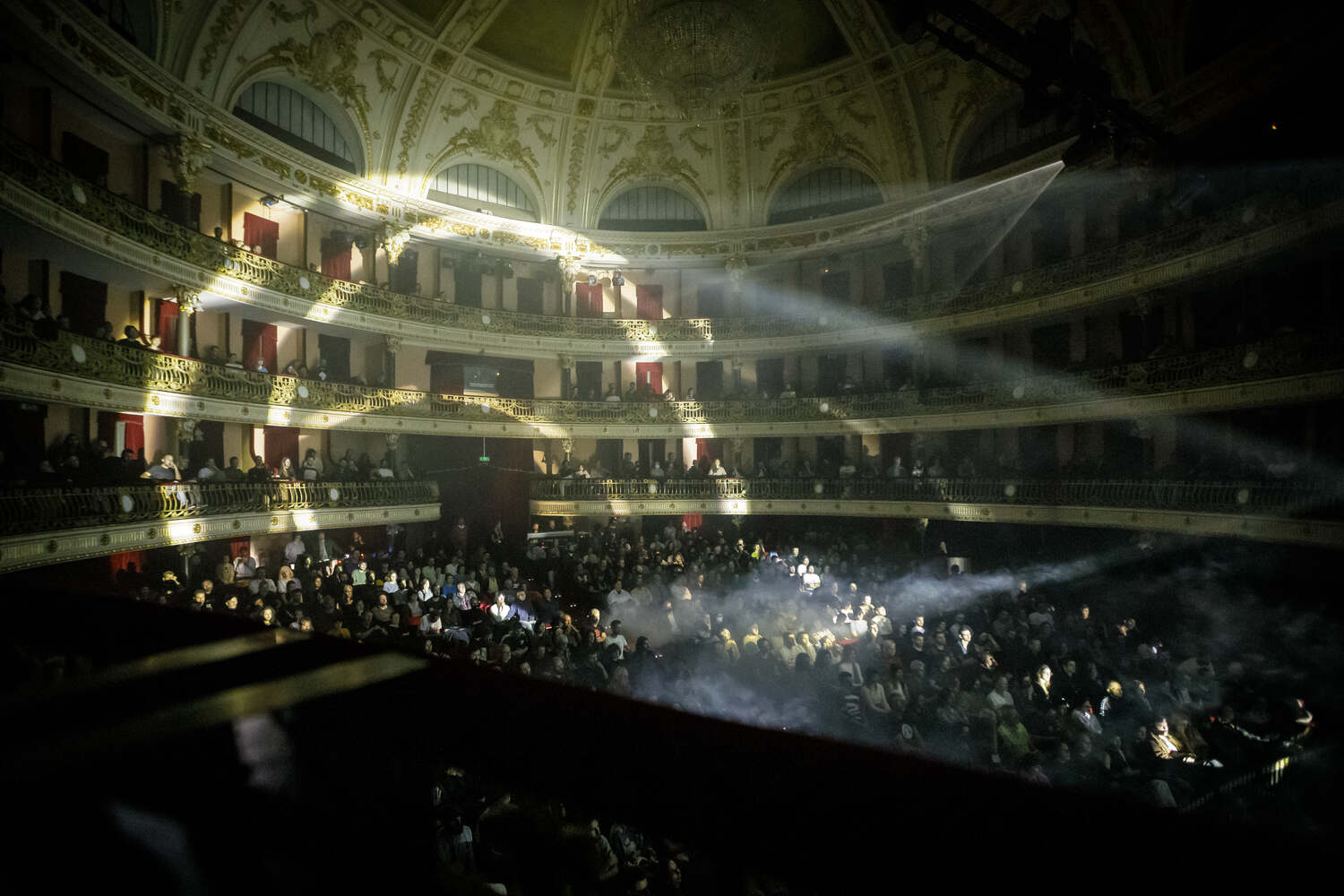
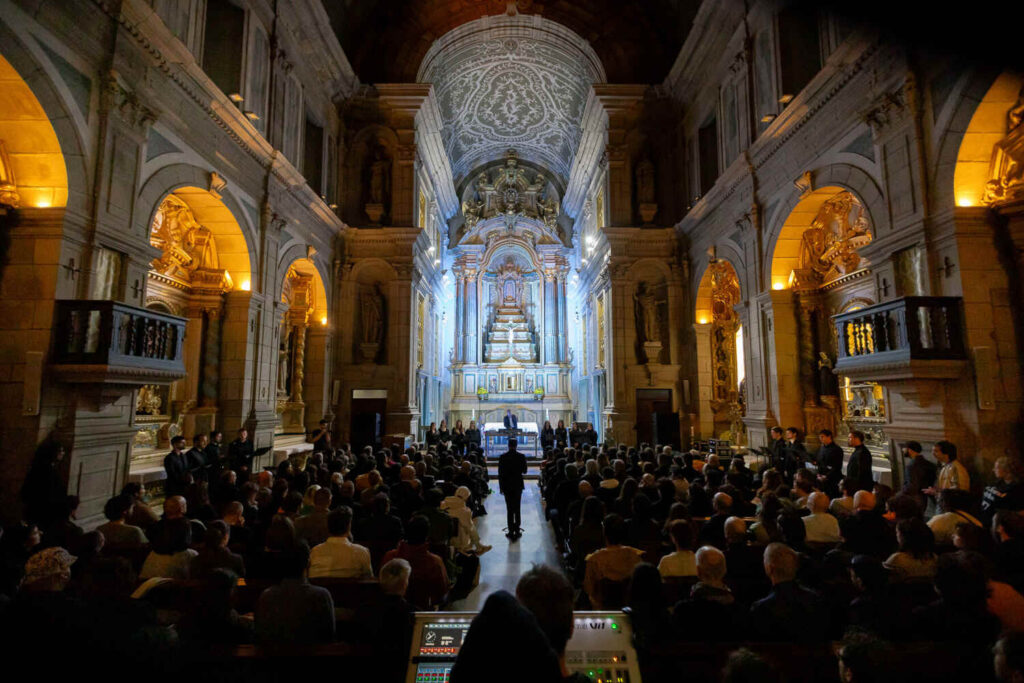
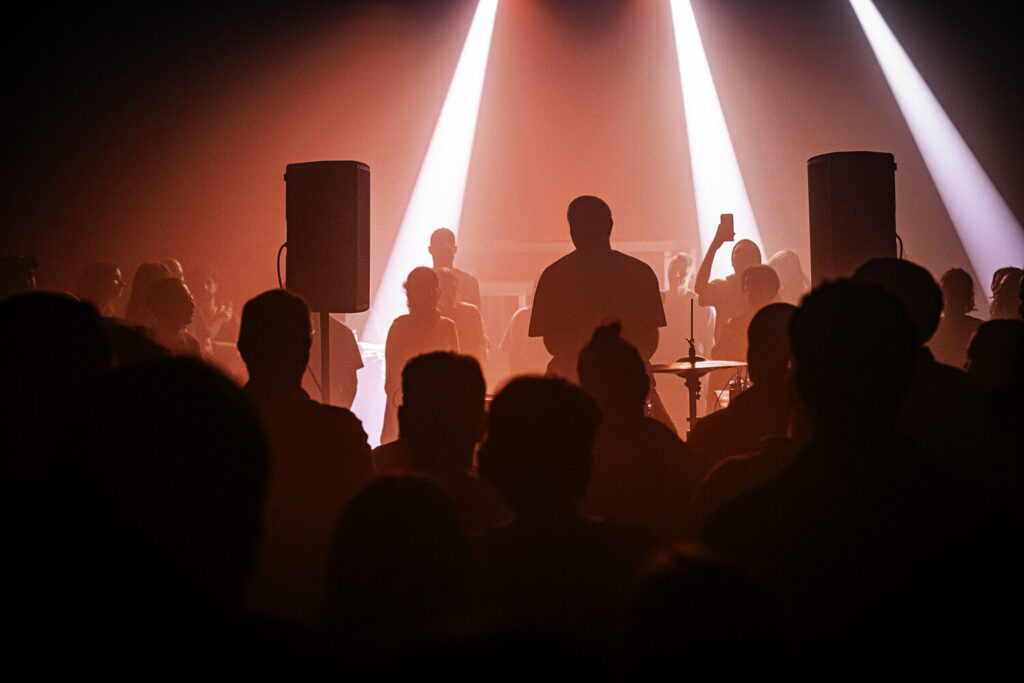
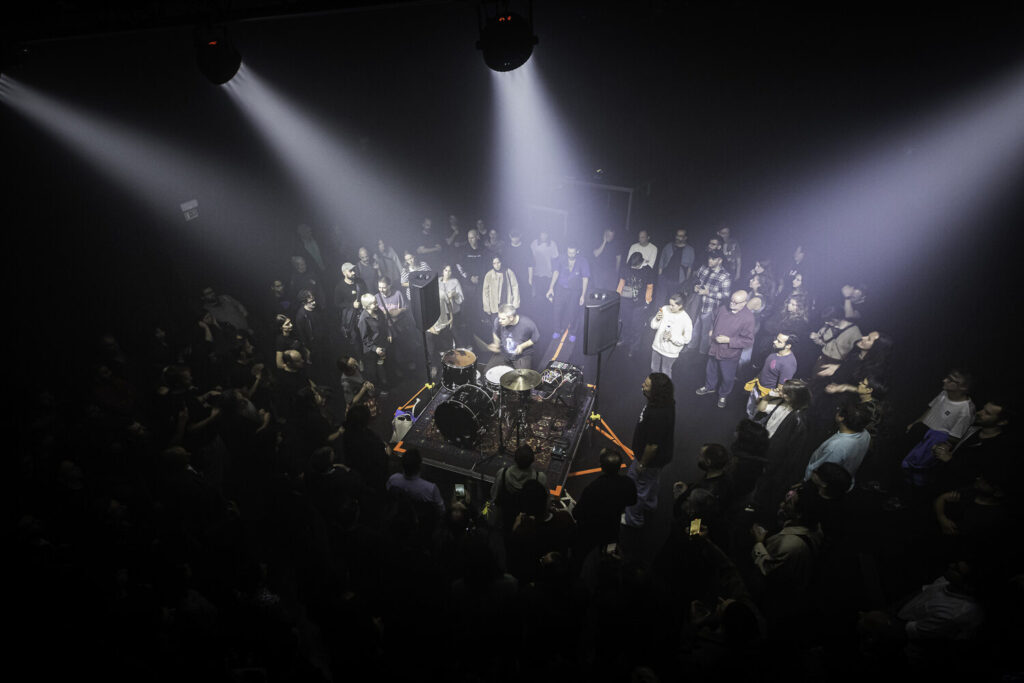
We’ve seen this happen beautifully over the years. Back in 2024, Moritz von Oswald performed with a 16-piece choir inside the Basílica dos Congregados, letting his sound play with the building’s massive acoustics. In 2021, Flora Yin-Wong used the striking blend of religious and contemporary architecture at the Capela Imaculada do Seminário Menor on the edge of town to debut her three-hour improvisational piece, “Sea of Fertility.” Ben Frost brought his heavy, intense style to the historic Theatro Circo, a space that gave his music room to swing from chaotic noise to open avant-garde beauty. This year, that energy shifts to gnration—a creative arts space built inside Braga’s old GNR military barracks—where TYGAPAW is taking over the Blackbox room to perform their new album, “Together You Gather All Power Applied Worldwide,” mixing heavy industrial, dancehall, and techno beats to center Black queer and trans identities. Every single one of these spaces shapes the music with its own echo and vibe.
This approach is particularly powerful in Braga due to the city’s complex relationship with religion and history. A major hub during the Roman Empire and a historical center for the European Catholic Church, Braga still holds a significant ecclesiastical position. Because the city has so many churches, we are fortunate that church coordinators have been willing to let secular artists and audiences enter them in new ways. These encounters give the buildings an entirely new, temporary meaning.
This community relationship remains vital to us, whether we are working in historic churches or bringing artists into the local music conservatoire. These projects allow spaces with fixed histories to be entirely reinterpreted, challenging conventions and opening up a brand-new dialogue between the city, its architecture, and contemporary art.
Through the Edigma Semibreve Scholar programme and the new Conservatório scholarship, you are investing directly in emerging artists. What is missing from traditional arts education that a festival can provide?
We are not education specialists, so I’m not entirely sure what traditional arts education may be lacking. What we can offer is the opportunity to engage with artists who bring different compositional methods and approaches, using both conventional and unconventional tools. Many of them have never had any classical training, and this can lead to very interesting discussions because the way they think about music is so diverse, even when the results may ultimately be similar.
From my interactions with younger audiences and with the world of education, it sometimes seems to me that we are producing too many instrumentalists and not enough music lovers. There is a very utilitarian view of music education, rather than one that focuses on personal and artistic development. We believe that engaging with artistic practices can contribute to developing more curious, open and well-rounded individuals. In that sense, creating opportunities for young people to encounter different ways of thinking and making art feels increasingly important. The world certainly needs more of that.
The opening-night artist will remain secret until they step onstage. In an era driven by advance announcements and headline visibility, what does secrecy give back to the audience?
Only one of the opening-night artists has not yet been announced. The secrecy builds anticipation and, I hope, a willingness to really listen to what is going to be presented — something that will be challenging and demand our full attention. Staying focused while listening is an increasingly difficult task, so I hope the combination of the setting, the music and the element of surprise will encourage the audience to fully engage with the performance. That, alongside the interest and curiosity surrounding the piece and its creator, is part of the challenge.
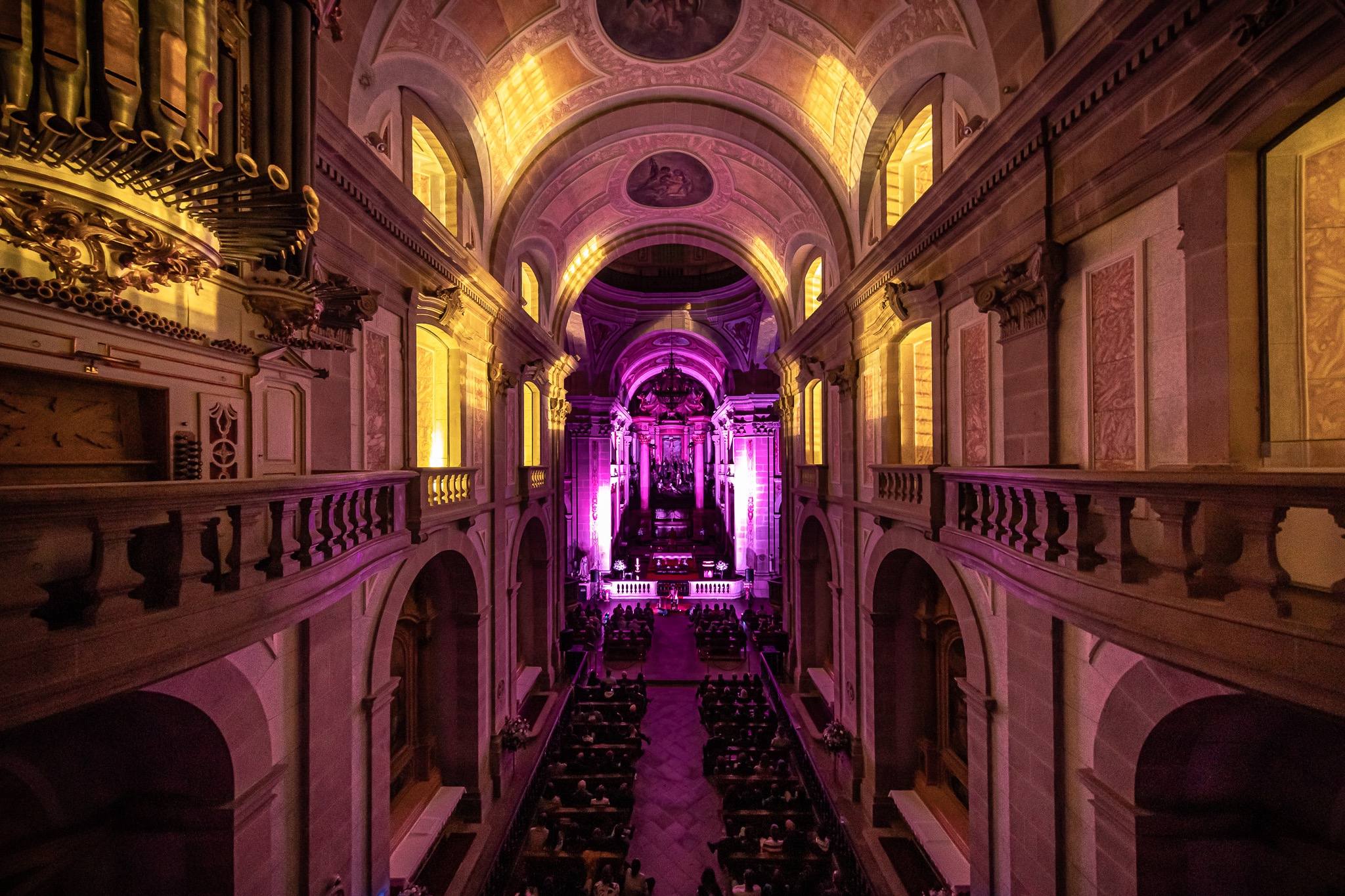
Both performances will take place in the Basílica dos Congregados, designed by the architect André Soares and built in the 16th century. Suzan Peeters will then present her work, Cassottov.
Independent festivals increasingly have to balance artistic risk against financial and institutional pressure. What has Semibreve had to protect most fiercely to remain independent after sixteen years?
What we cherish most is our independence, which we have always regarded as an end in itself. For us, independence does not mean working in isolation or without institutional support. On the contrary, our relationship with our main funders — the local council, the Arts Council and EDIGMA — is essential to the festival’s existence. What matters is that this support allows us to maintain the freedom to make our own artistic and curatorial decisions.
We aim to demonstrate to our funders that we carry out work of public interest, and that the investment they make in the festival has a meaningful cultural impact. We have a responsibility to justify the allocation of these public funds, but we also believe that this responsibility can coexist with artistic freedom. It is a relationship based on trust, and that trust has been fundamental to Semibreve’s continuity over the past sixteen years. Independence also means being able to take risks, to present artists and ideas that may not have an obvious commercial value, and to develop a programme according to what we believe is relevant and meaningful at a particular moment. If we lose that ability, then we lose something fundamental to what Semibreve is.
As long as there is a shared understanding of this, the festival can continue to develop on its own terms. If that were ever to change, and we were asked to compromise the principles that have guided us from the beginning, then we would have to seriously question whether continuing would still make sense. Ultimately, we would rather bring the festival to an end than continue without the independence that has always defined it.
Main Programme
<Thursday 22 October>
The festival opens with a secret performance at Basílica dos Congregados. The artist will remain undisclosed until they take the stage.
<Friday 23 October>
João Carlos Pinto presents A1-0 N3, a world premiere at the Conservatório de Música Calouste Gulbenkian.
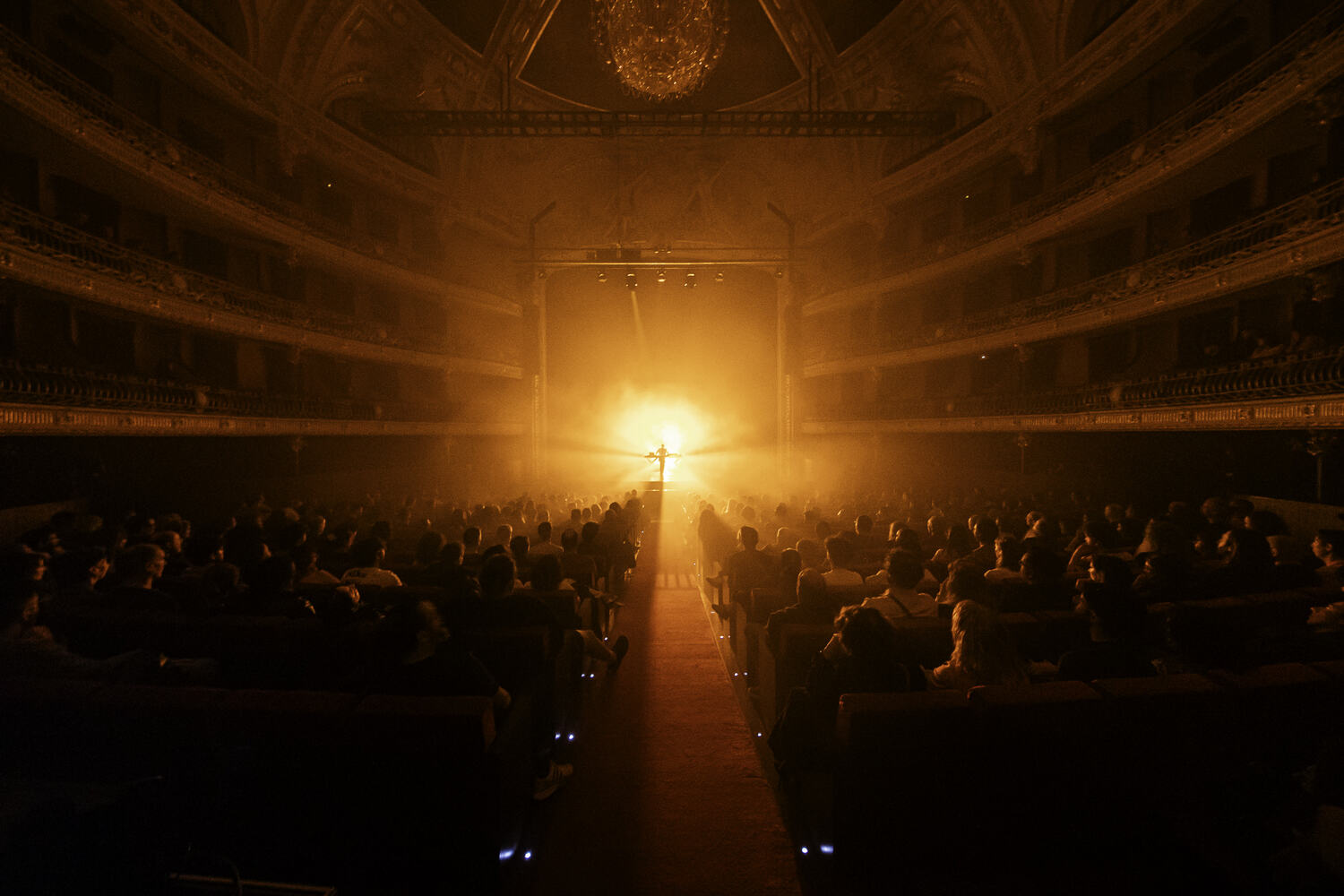
At Theatro Circo, Nuno Canavarro & Bruno Miguel Pinto present /Radiant Rift, followed by Malcolm Pardon & Gustaf Broms with the world premiere of Flesh and Bones.
The programme continues at gnration with Noémi Büchi presenting Exuvie, while Peder Mannerfelt B2B RONI take over the Multiusos. System Sophie closes the night at the Blackbox with the world premiere of Carbolines.
<Saturday 24 October>
João Carlos Pinto returns with A1-0 N3, followed by Marta Salogni’s a,drift, a work commissioned by Semibreve, Berlin Atonal and Unsound.
Theatro Circo hosts the world premiere of Mass Oneiria by PYUR & Tarik Barri, followed by Sam Slater & Guests with Lunng.
The night continues at gnration with Azu Tiwaline and Dawn Dani, followed by TYGAPAW presenting Together You Gather All Power Applied Worldwide and Flora Yin-Wong.
<Sunday 25 October>
The final day begins with Ricardo Jacinto’s world premiere Manto at the Reitoria da Universidade do Minho.
At Theatro Circo, Qasim Naqvi & Steven Wendt present Howlround, followed by Fennesz & Oscar Jockel with Saffron on Grey.

Parallel Programme
Alongside the main performance programme, Semibreve’s Parallel Programme expands into installations, film screenings, talks and masterclasses.
The installation programme brings together works by Edigma Semibreve Scholar participants and Situational Complianceby Matthew Biederman, winner of the 2026 Edigma Semibreve Award. The interactive installation, inspired by Simon Says, runs at Muzeu from 22 October to 29 November.
At gnration, the Edigma Semibreve Scholar programme presents five works by emerging media artists from 22 to 24 October. The Octophonic Listening Room at Museu Nogueira da Silva brings multichannel sound works by Jana Irmert, Sarah Davachi, BJ Nilsen and Maria W. Horn.
The film programme spans Universo Celular, The Talk, Brute Force and Jeffrey Zablotny’s Messengers, exploring music, technology, science, ecology and artistic research.
The talks programme features Music, Media, Affections, a conversation between Manuel Bogalheiro and Júlia Durand, alongside masterclasses by Marta Salogni and Qasim Naqvi.
Full festival passes are already sold out, but audiences can still experience the festival through a combination of Theatro Circo passes and gnration day tickets, both of which remain on sale. Individual tickets for performances at Theatro Circo are also available.
Semibreve 2026 takes place from 22 to 25 October across Braga, Portugal.
Follow Semibreve on IG
More Info on Semibreve Website
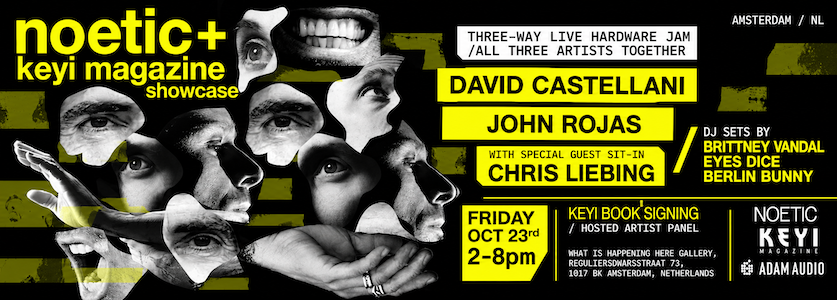
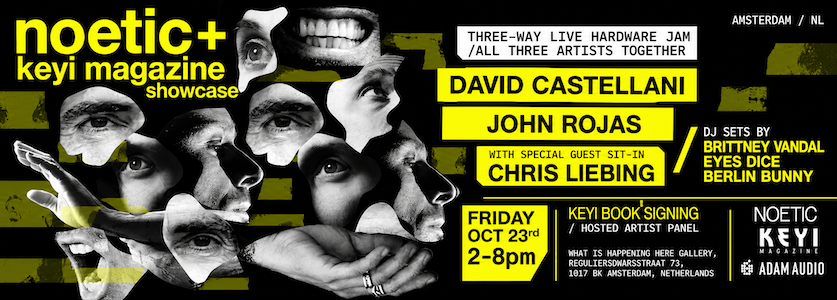
Keyi x ADE, 23th October 2026 RSVP
Check more music related articles here.