Today we’re speaking with BORGBORG, an artist known for blending powerful techno, deep basslines, and experimental textures. With performances across Europe and a sound that moves between introspection and intensity, she continues to shape a distinctive space within the underground electronic scene.
We spoke about creative process, club culture, and what drives her evolving musical vision and the debut solo album: Loveletter.
Your music is described as a mix of solid techno, thick basslines, and deconstructed beats. How did you develop that particular sonic language?
It’s the lowest common denominator that best describes what I’m going for — visceral, slightly dirty, but with a fragility in there at the same time. That tension between the two is really where the sound lives.
Your sets move from ambient textures to rugged patterns and peak-time rhythms. How do you approach storytelling when building a DJ set?
Arpeggios are really just an abstraction of the high energy I usually bring to my techno sets. But honestly, I don’t really do storytelling —
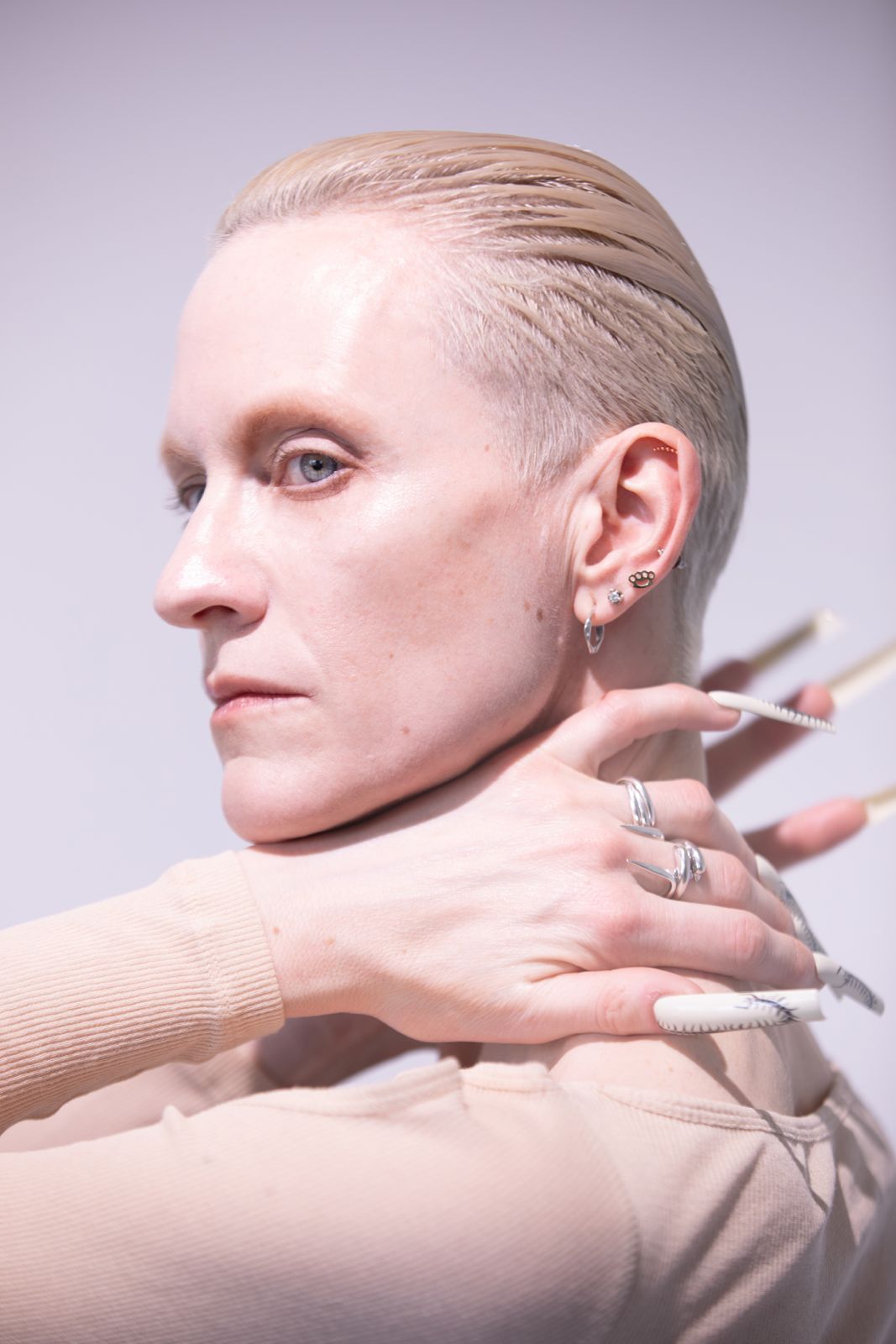
I deliberately leave that out, so that perception can turn inward and engage with itself. That’s what I find truly remarkable about techno music.
There’s a strong sense of introspection in how your sound is described. What emotions or ideas are you usually exploring through music?
I’m not so much chasing specific emotion. Repetition works for me as a framework to create patterns you can settle into, where you’re fully present but also able to let go. It’s more about a state of non‑attachment than about expressing a feeling. I like when the music becomes a space where attention softens and you can drift between focus and release.
You’ve played across Germany, Berlin, Amsterdam, and Tbilisi and venues such as Open Ground, Ursprung Fi, Tresor, Radion, Khidi, TES, and STAUB series, alongside regular appearances at Tresor.West… How does the energy of different cities influence your performances?
It’s fascinating how different the vibes can be. Tresor.West at this point feels like a living room to me — the people there are so warm and genuine, there’s a real sense of familiarity. Open Ground is almost like a museum for electronic music, and alongside Ursprung FI, it belongs to this exciting new generation of clubs that are really pushing things forward.
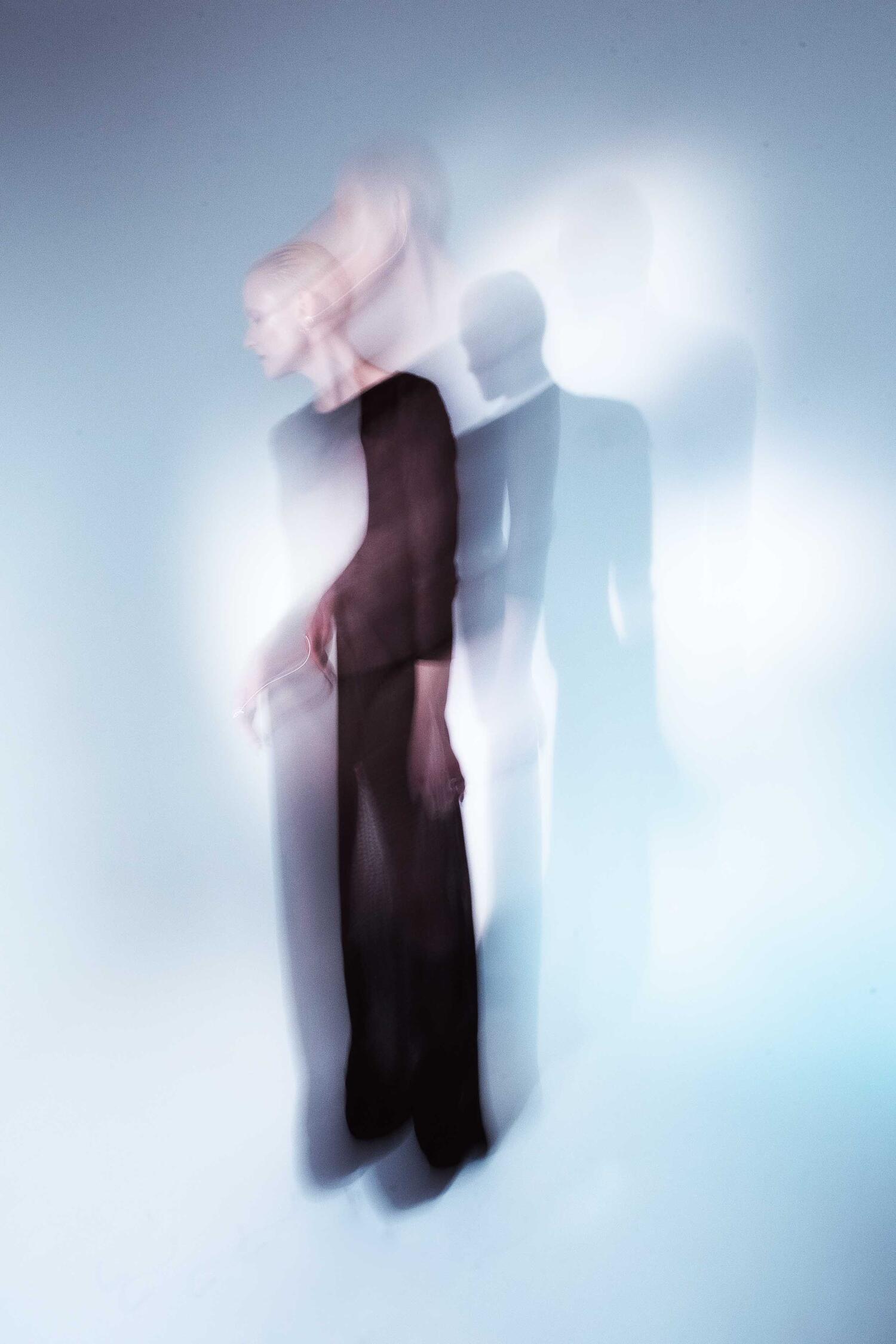
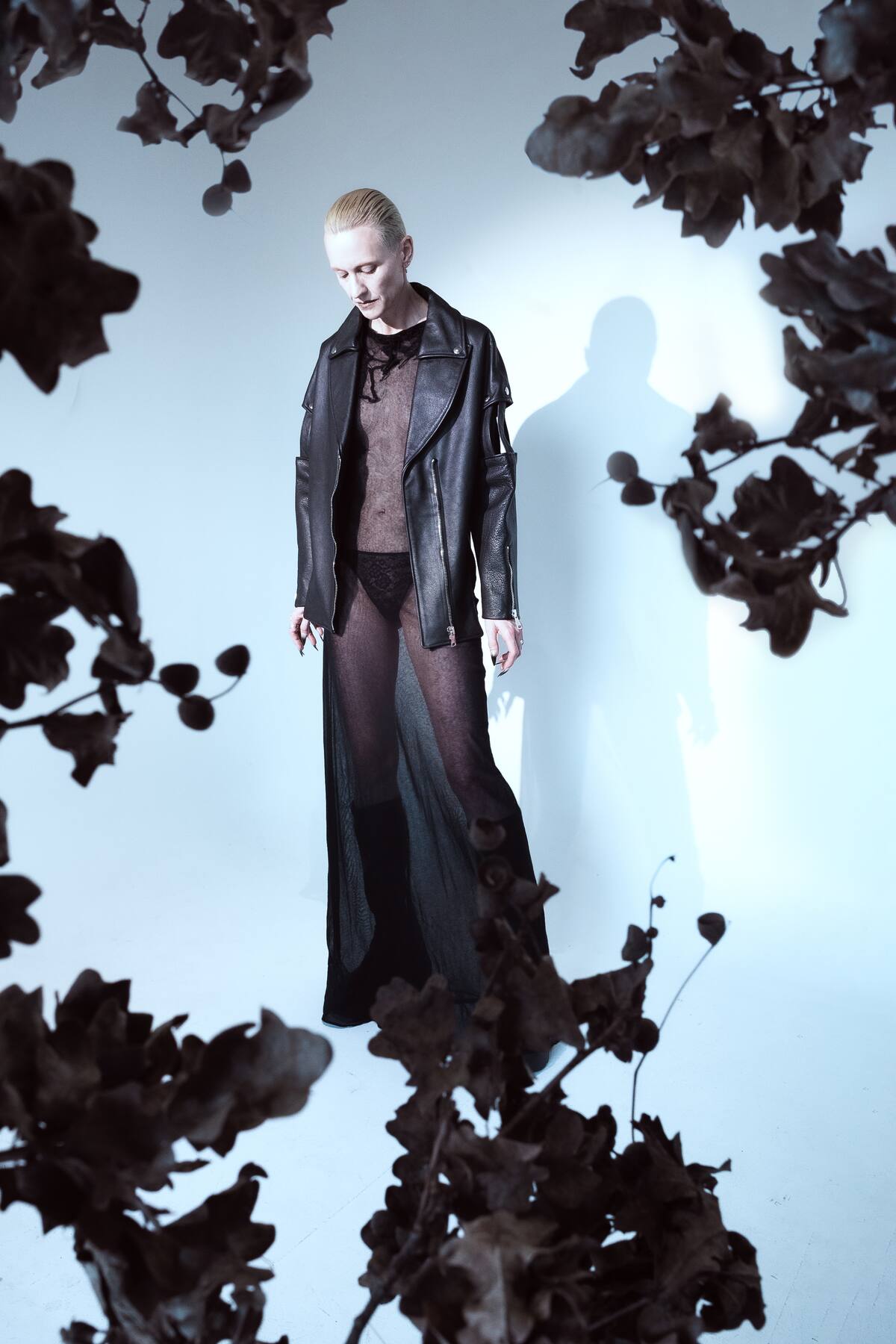
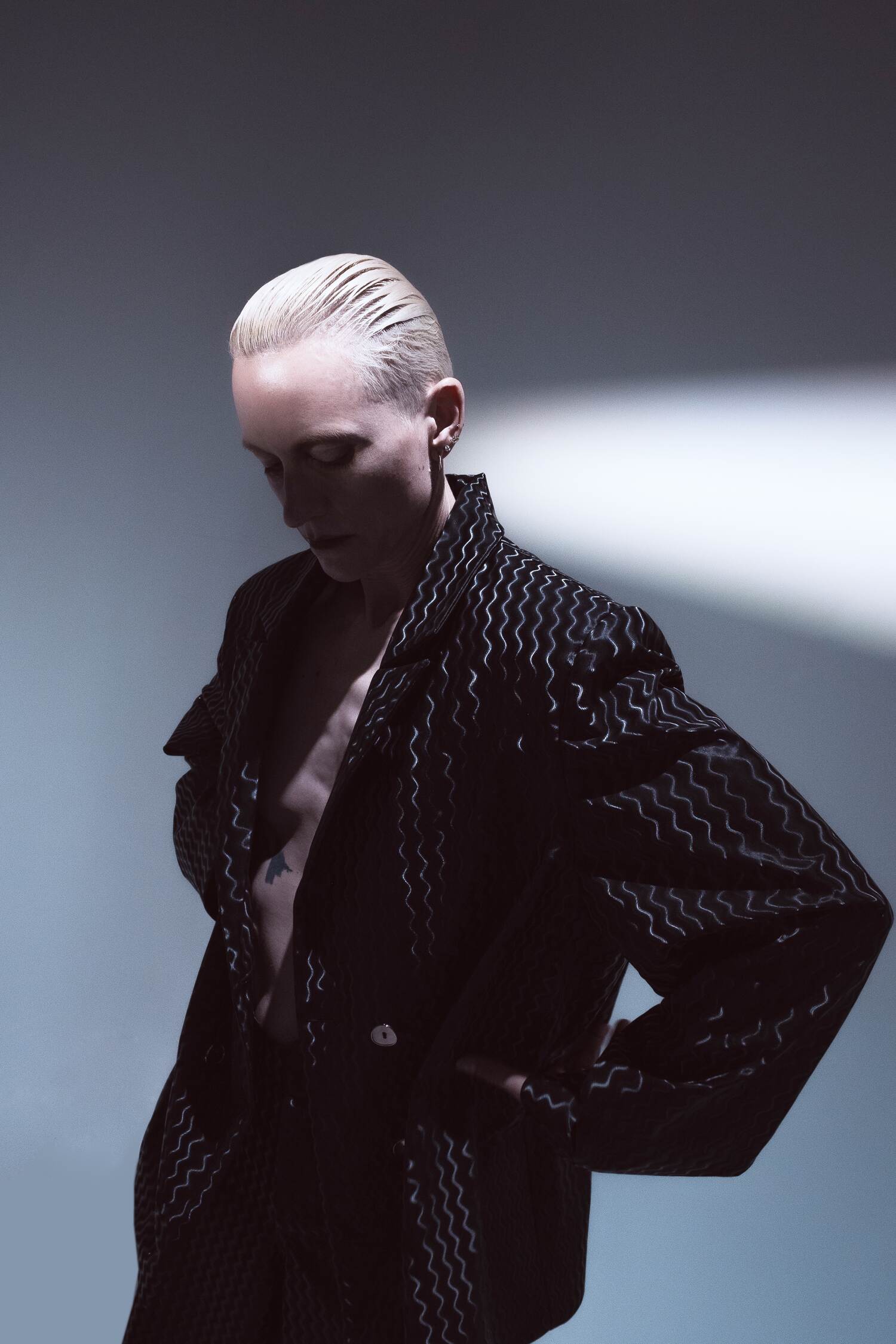
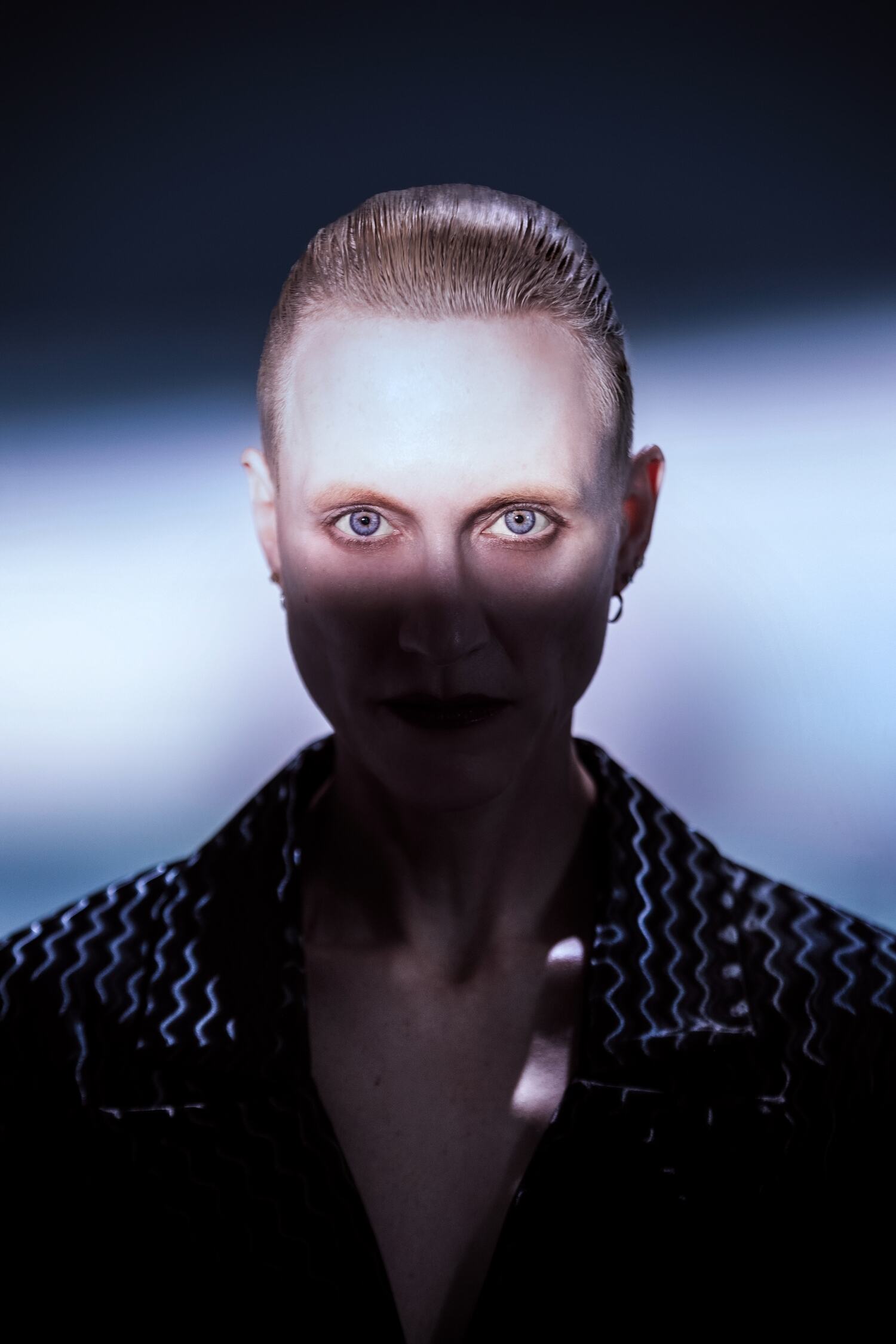
Jacket: Goto Maison @gotomaison @studio183_berlin
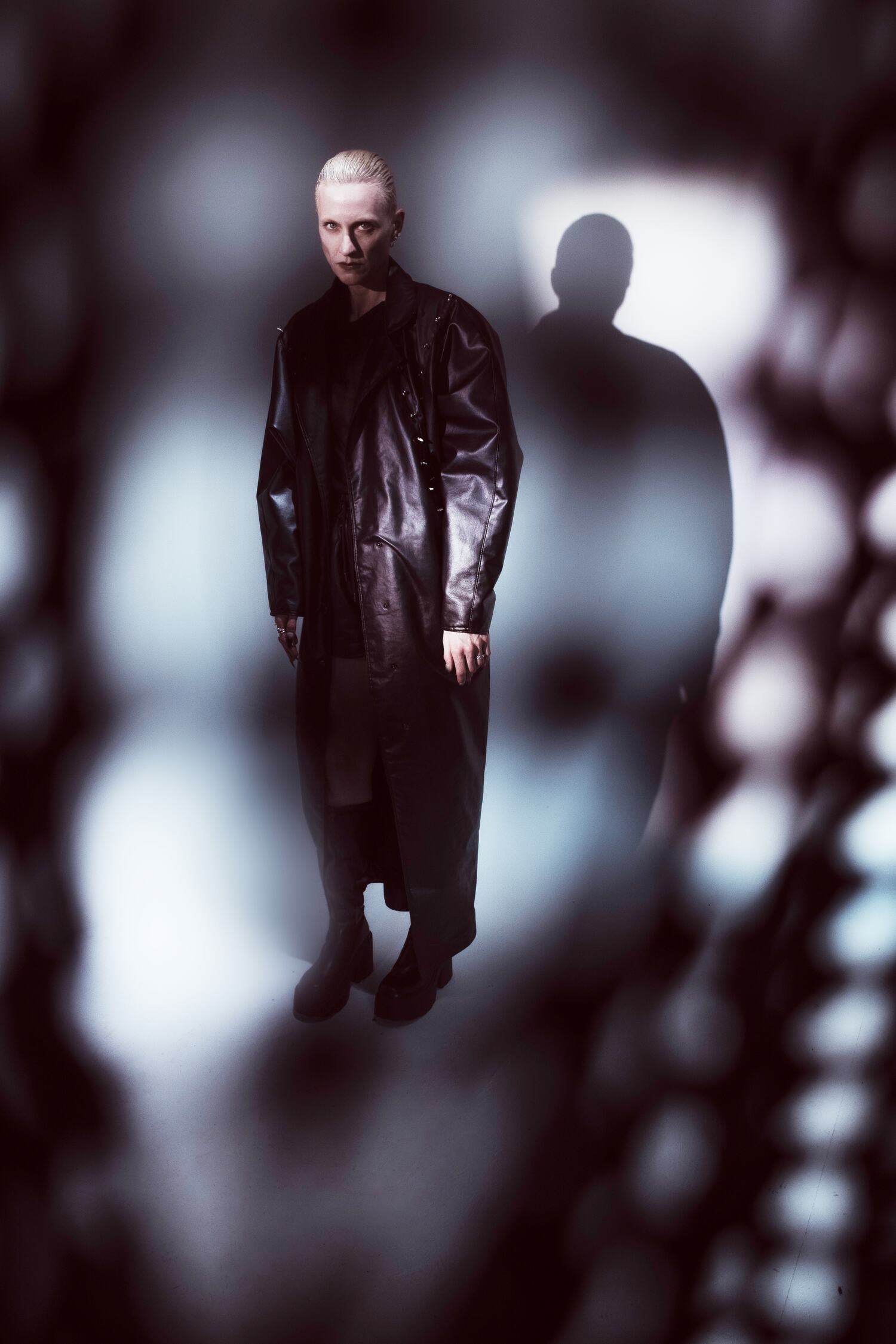
Boots: Buffalo @buffaloshoes
Tbilisi is a whole different chapter. We do a small exchange program there once a year with About Repetition, and the energy is unlike anywhere else. Techno there is one of the very few spaces where the desire for a freer society can actually express itself — and that unleashes something incredible. You feel it immediately when you’re playing.
As part of Fractal Void, you combine electronic and classical composition. What does working in that hybrid space allow you to express differently?
For me, the minimal music of the 1960s and jazz of the 1970s have a really strong structural kinship with techno. That’s the historical lineage I’m working within — trying to find an expression that comes from mathematics rather than subjectivity. The hybrid space just makes that connection more explicit.
Cinematic and futuristic elements are mentioned in your collaborative work. Are there films, books, or visual artists that inspire that world-building?
At the About Repetition headquarters we’ve curated this huge library — the heart of it is around 500 artist books spanning from the 1960s to now. A kind of imaginary museum. Every time I go back I discover something new that sparks something in me. Artist books are such a pure and direct art form, there’s nothing quite like it.
We’ve actually just finished digitizing the whole collection and we’re planning to make it publicly available soon as the About Archive — so that’s something to look out for.
You’re also co-founder of About Repetition. What first drew you to the concept of repetition as an artistic theme?
About Repetition kind of found us rather than the other way around. We’re a mix of musicians, artists, architects, and designers who had been throwing raves in an artist book showroom together — which is already a pretty specific vibe. At some point we wanted to make things more official, start a proper association, and suddenly we had to figure out: okay, what actually holds us together?
And when we looked at what everyone was doing, it was kind of obvious. The musicians are all working with loops, the visual people are always dealing with series and typologies, the writers play with the same words repeated in different contexts. Repetition was already the thread running through everything — we just hadn’t put a name to it yet.
Earlier this year we took another step and launched About Repetition as a label: a natural extension of everything we’d already been building. And this is really just the beginning. We have six more releases in the pipeline from members of the collective, so there’s a lot more coming from within the family soon within this year.
Your album Loveletter feels deeply personal while still designed for the club. What was the emotional starting point behind this project? Can you tell us about the process and inspiration of its creation?
The emotional starting point was really about dissolving fixed melodic and harmonic structures in favor of pure intensities — sound surfaces that resist any kind of hierarchy. The focus was on the beauty of structure, organized chaos, and iterations rather than definitions or genres. Musical expression as a phenotypical variation of a single genotype.
There are no overarching organizing principles, no centers, no fixed identities. Everything exists on the same level, no element subordinate to another. In practice that means zooming in on the smallest possible musical unit — reduction and expansion happening simultaneously, whilst arpeggios are micro-mutations of repetition. A kind of radical horizontality.
Loveletter features remixes by Irakli, Dasha Rush and Lars Hemmerling as LADA, plus Fractal Void. What made these artists the right collaborators to reinterpret the release?
Lars and Irakli are people we’ve been working with for many years, so there’s a real trust and shared language there. Dasha was a different kind of connection — she was one of my earliest and most important influences when I first started getting into electronic music. So having her on this felt very full circle.
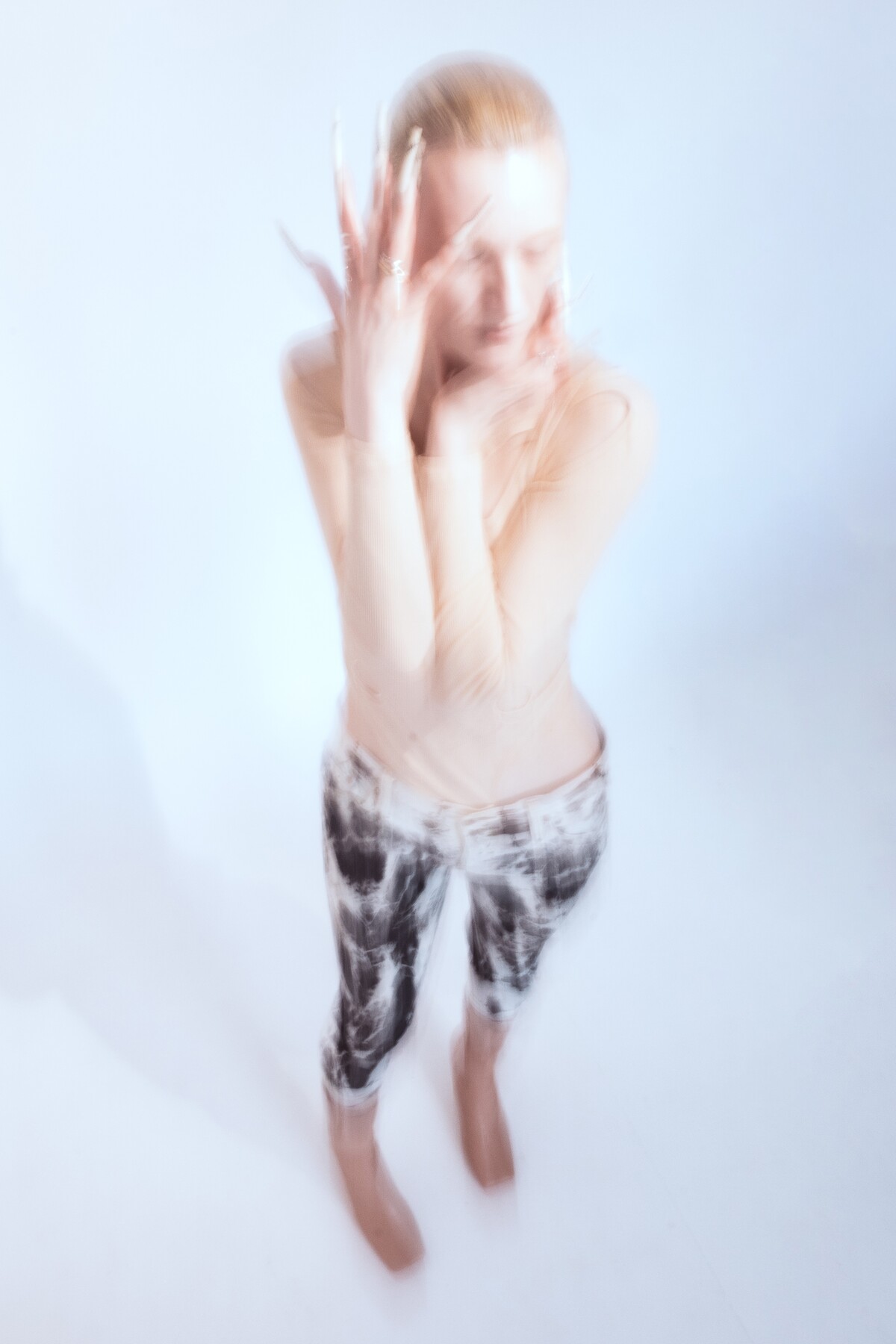
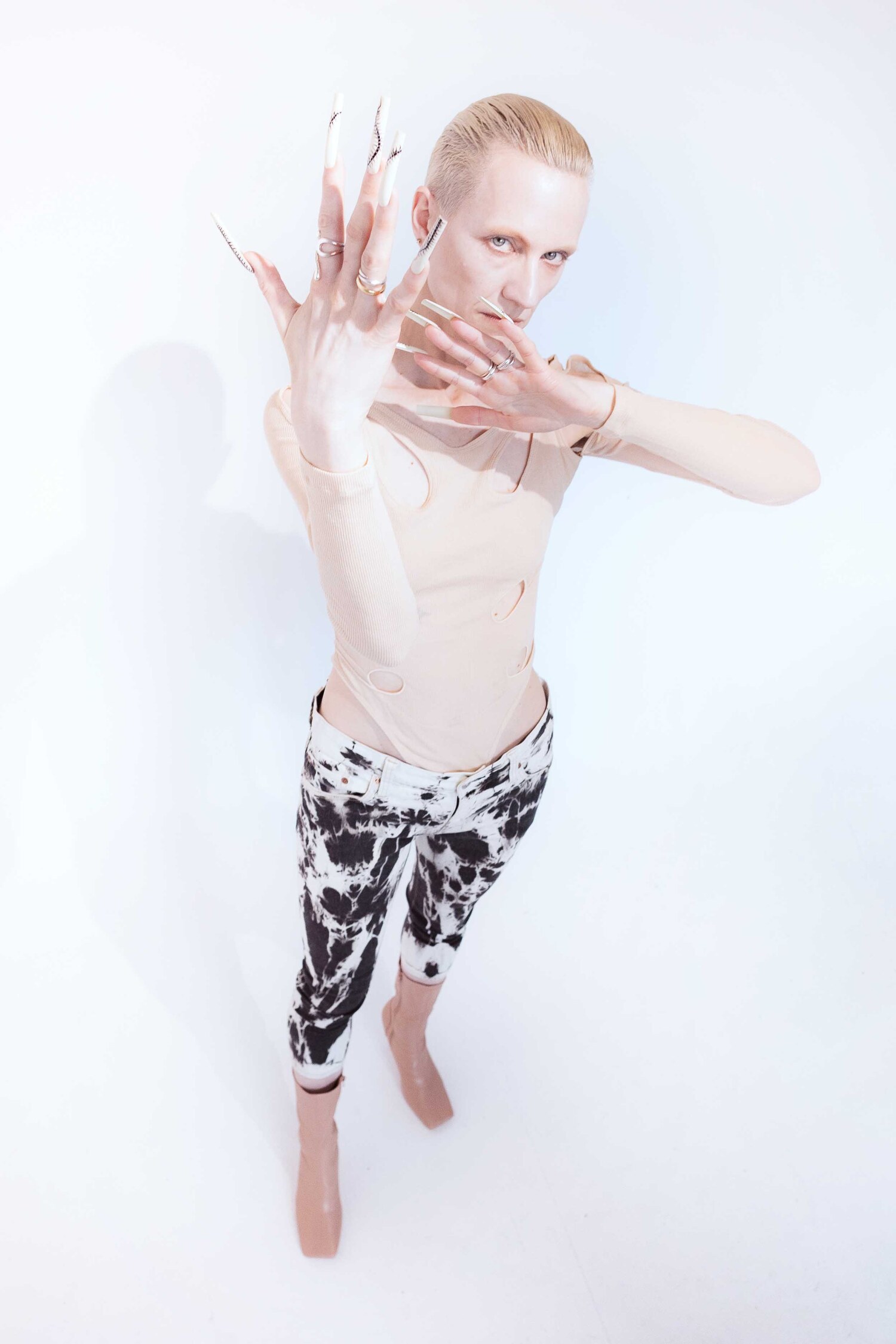
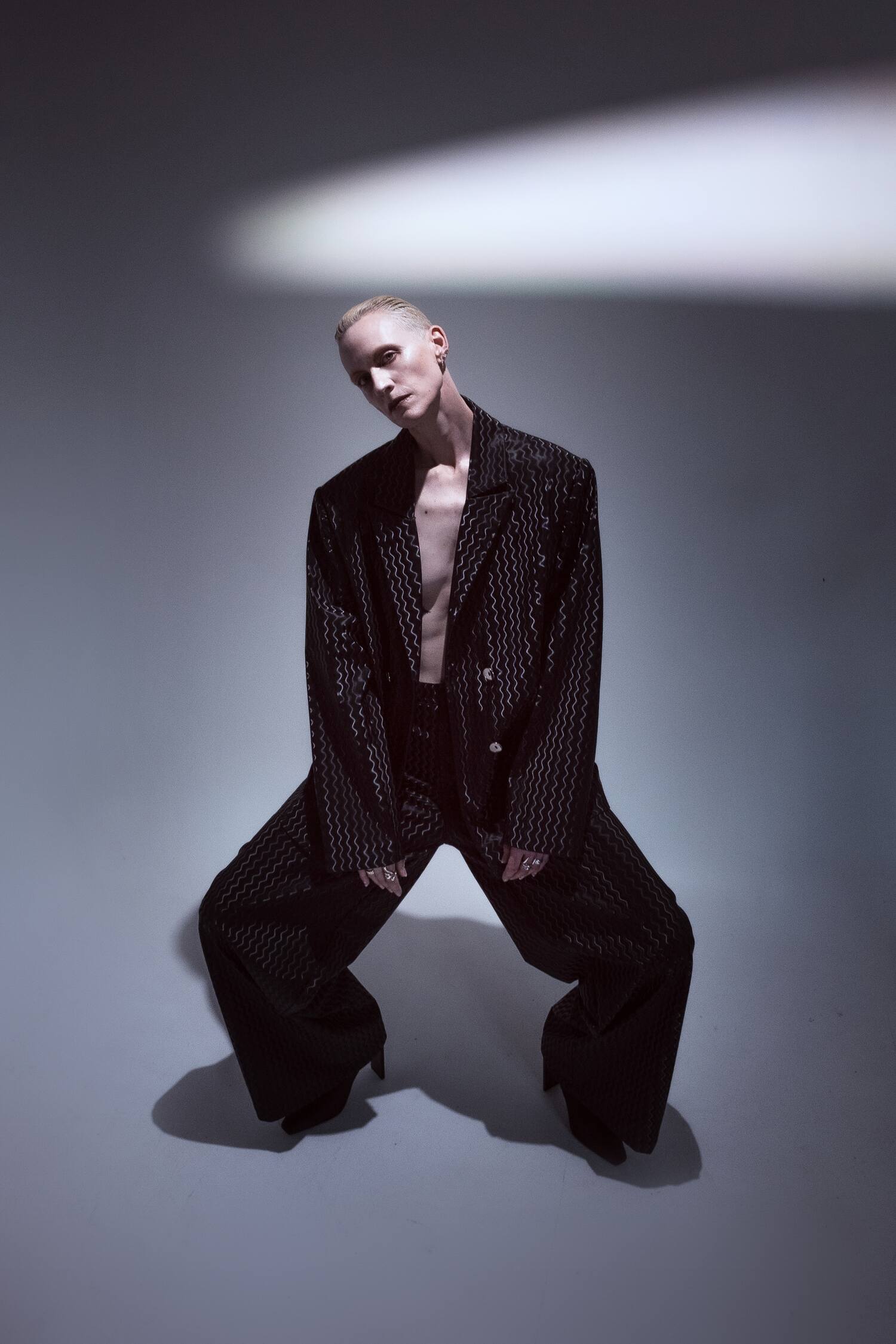
Pants: Junya Watanabe @junyawatanabe
Shoes: Public Desire @publicdesire
Each remixer has a very distinct sonic identity. How interesting was it for you to hear tracks from Loveletter transformed through their individual perspectives?
It was a beautiful coincidence that both of them chose the same track, ‘Mercy’. That alone creates this wonderful shift in perspective. Irakli took the material and compressed it into something really spectacular, this dense, simultaneous layering of everything at once. LADA went in the complete opposite direction — stretching it out, expanding it. Rhapsodic and expansive is probably the best way to describe it.
How do you balance being a DJ, producer, and organizer while keeping your own creative vision fresh?
Honestly, I wish I had a bit more time for my solo productions — that’s the eternal struggle. But the exchange with others is really important to me, it keeps things fresh. Workshops are a great way to do that. Last year we organized one for the first time ourselves and it’s definitely something we want to build on going forward.
What do you think the current underground techno scene needs more of right now – musically or culturally?
Protected spaces for clubs and events, less ego, freedom from trends, more women on the lineup — that one can’t be said enough — and more post-club projects. The scene has so much potential but those things would go a long way.
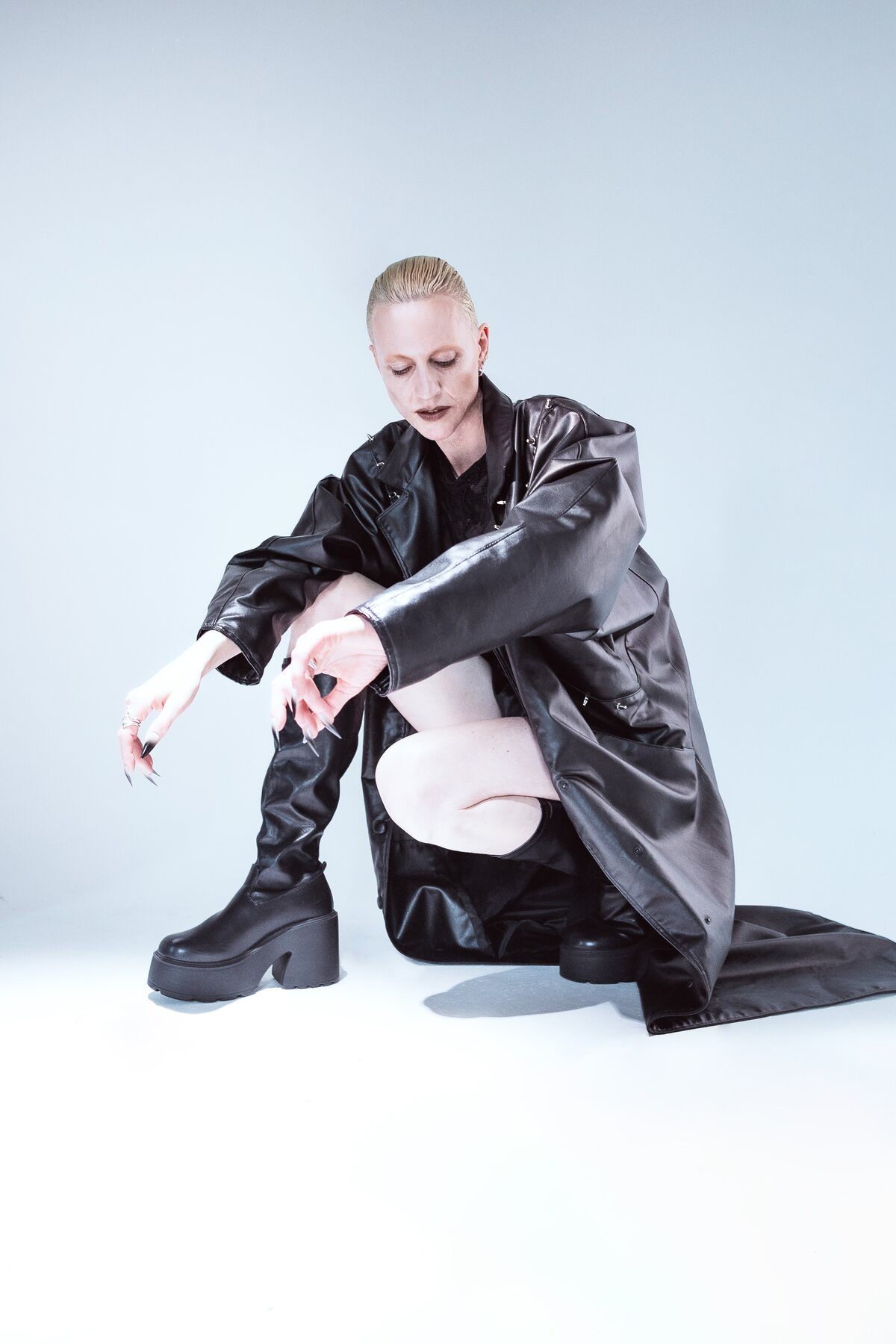
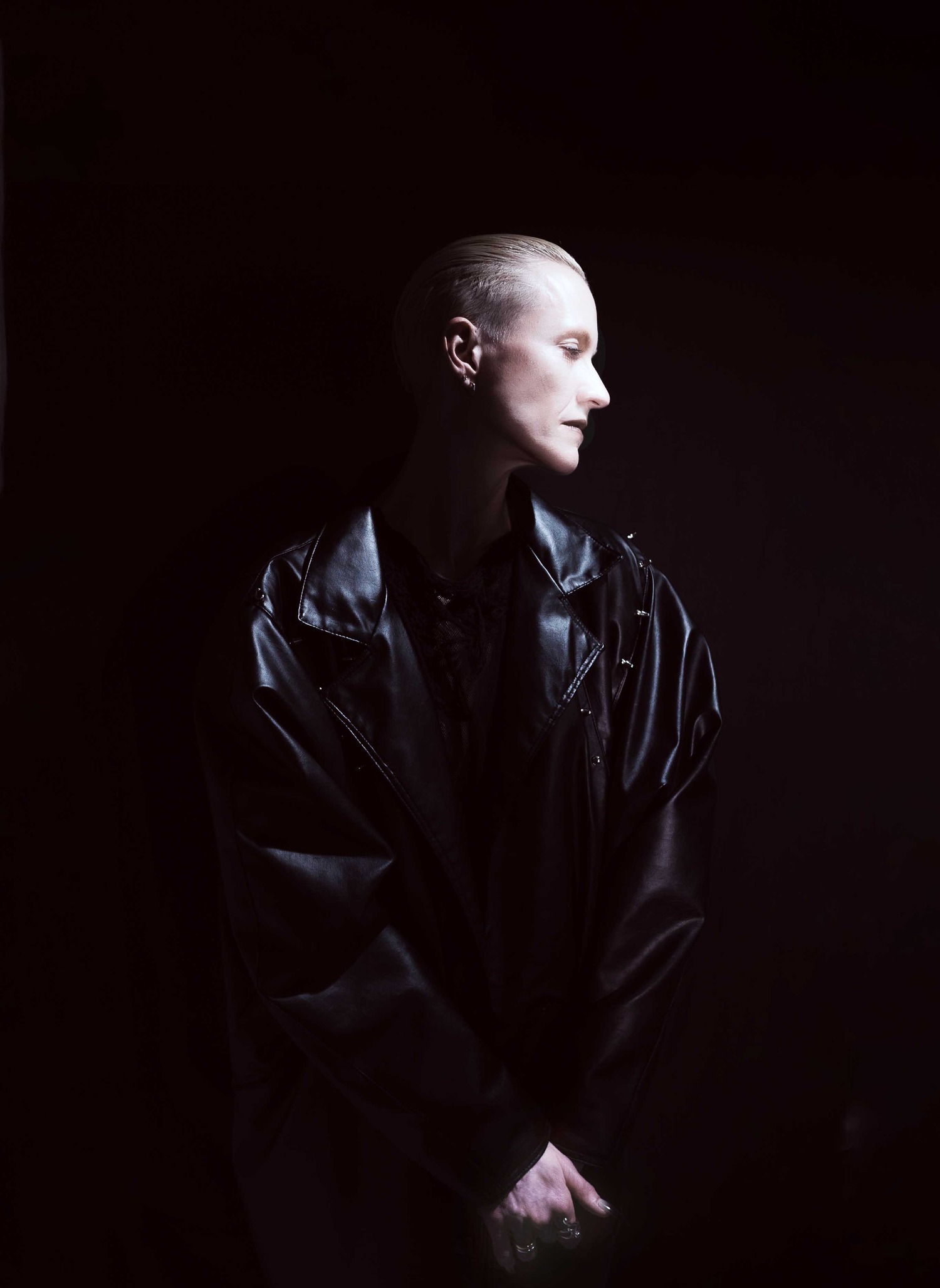
Coat: Maria Chany @chany.maria
Looking ahead, what new directions are you excited to explore in your sound or live performances?
Right now I’m working with Fractal Void on a live show where my partner triggers a synth with a trombone. On my end I’m trying to find a new percussive language for our studio productions. The plan is to bring it all to the stage, so watch that space.
On the solo side, there’s something I’m really keen to explore — bringing the arpeggios from the tonal and atonal work into direct conversation with techno. Merging those two worlds in a way that feels genuine rather than forced.
Follow BORGBORG on IG
Team Credits
Photography & Styling : Keyi Studio @keyistudio ( @eyes_dice + @berlin_bunny_ )
Assistant: Angelina Masi @angelinamasi
Make Up & Hair : Carolina Lazo @lazo_makeup
Wardrobe credits:
- Top: Dion Lee @dionlee
- Pants: Junya Watanabe @junyawatanabe
- Shoes: Public Desire @publicdesire
- Dress: Inlé Studio @inle.studio
- Boots: Buffalo @buffaloshoes
- Coat: Maria Chany @chany.maria
Check more music related articles here.
Our next event : Säule, Berghain – 27.08.2026
Tickets available : click here …